The Art of Prototyping: Engineering the Gen 2 Shark Guard
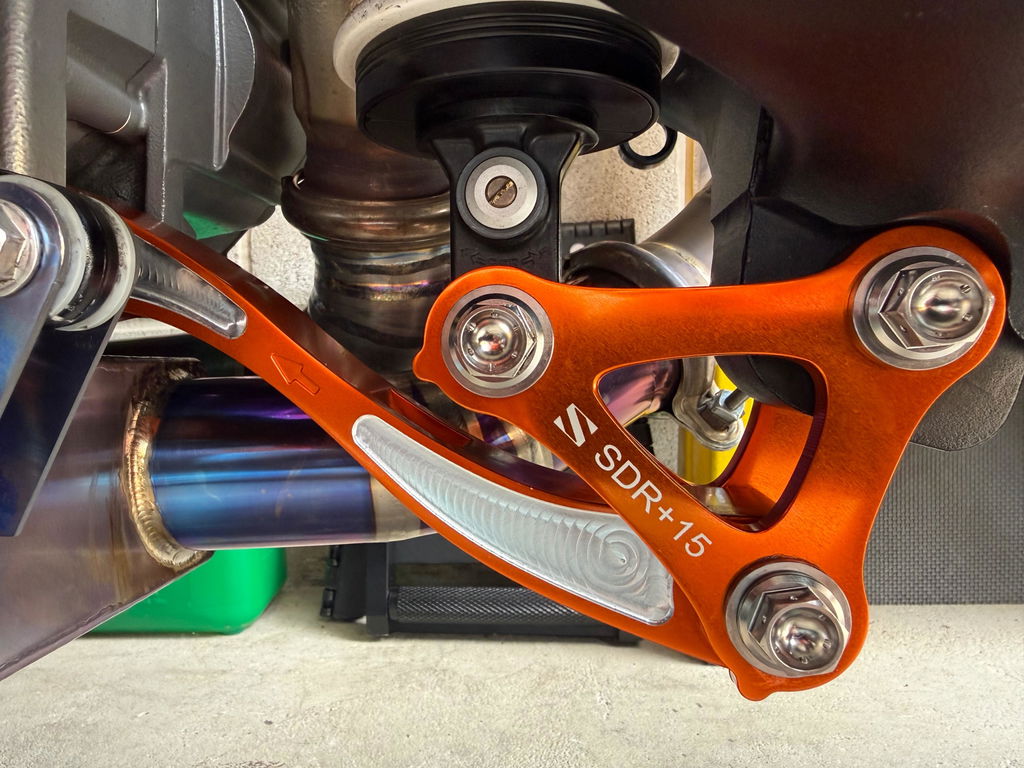
Designing aftermarket parts that survive the violence of street and track riding isn’t just about sketching a cool shape and cutting metal. It is an intensive process of prototyping, test-fitting, and refining. The development of our Gen 2 Shark Guard is a perfect example of how this plays out in the shop.
The Football Problem
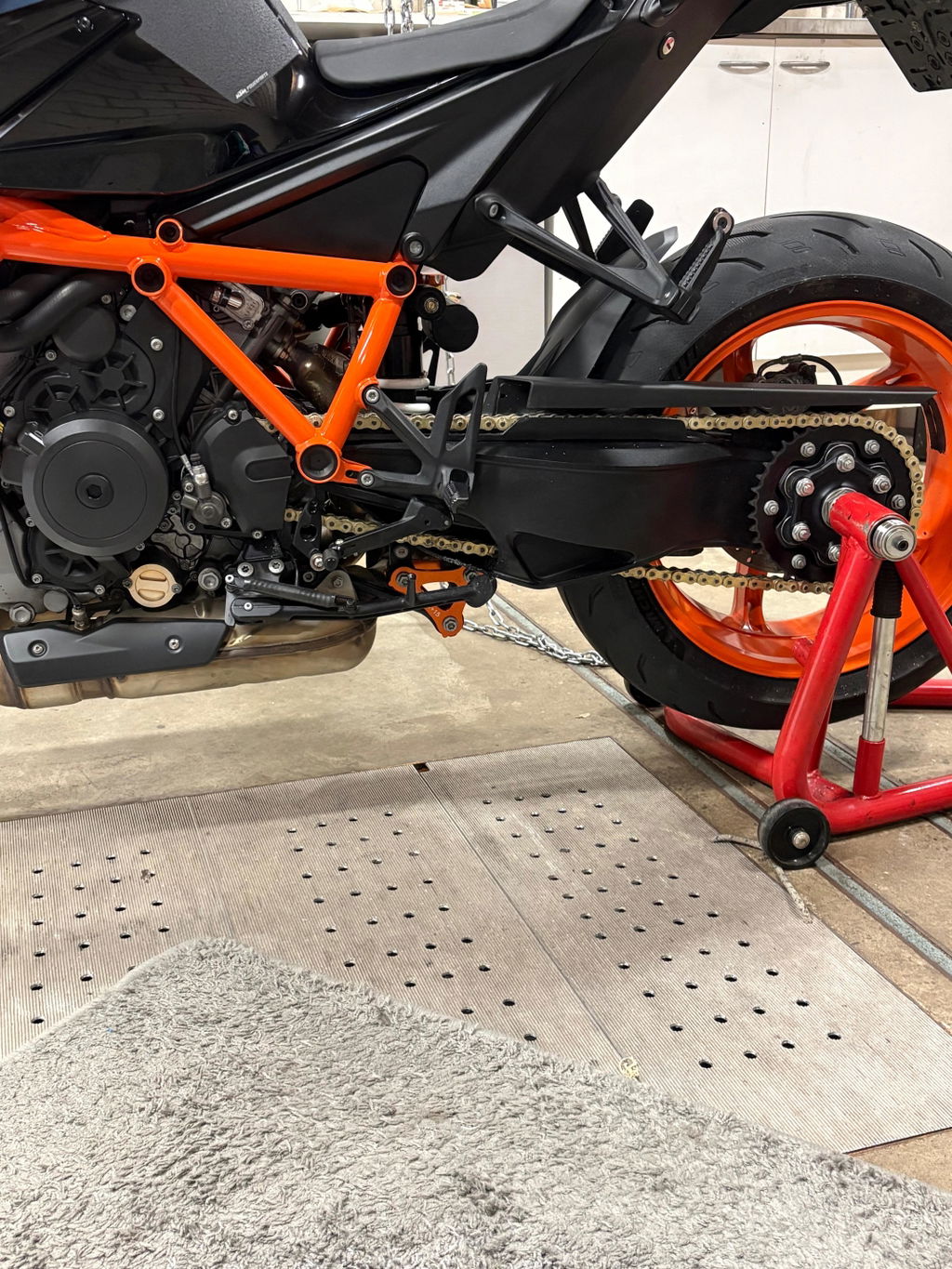
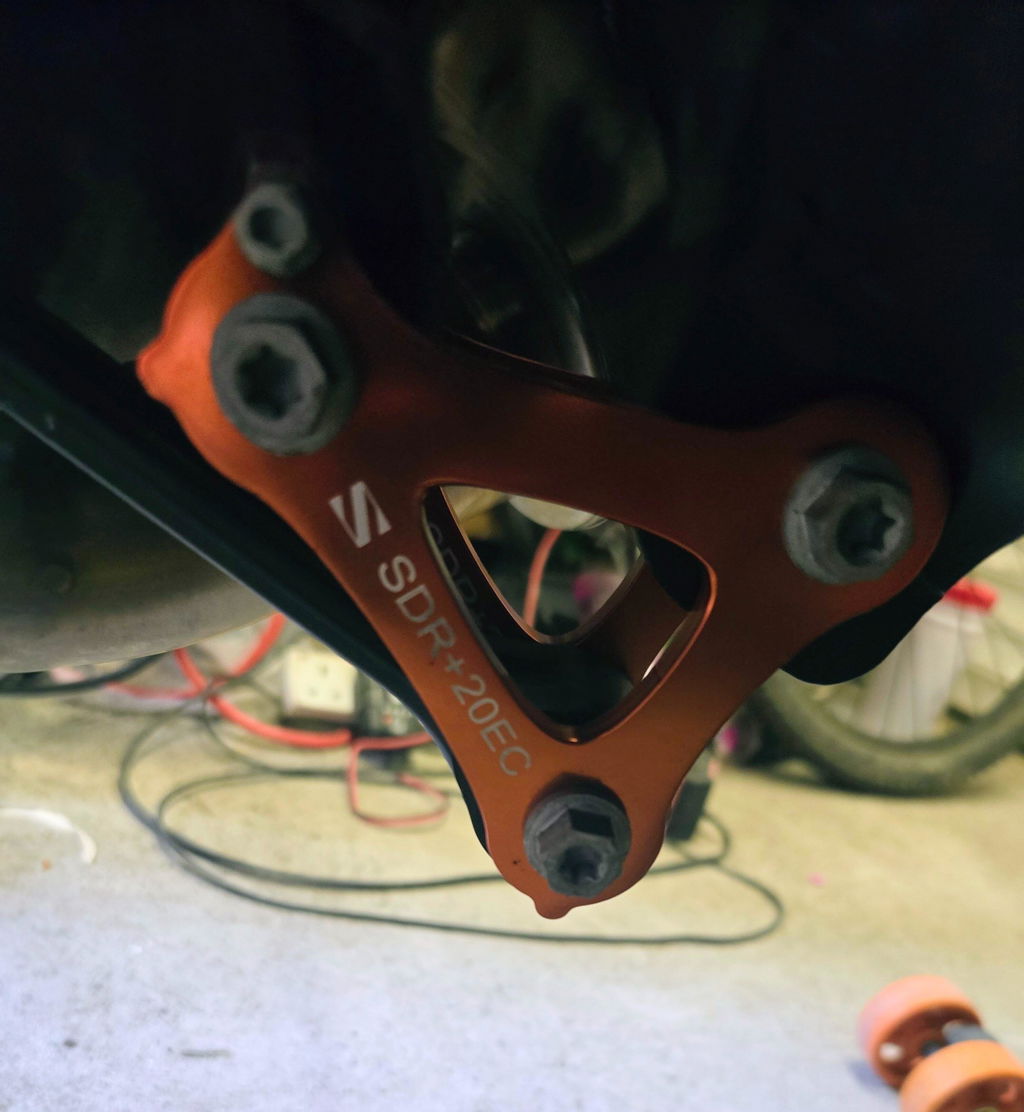
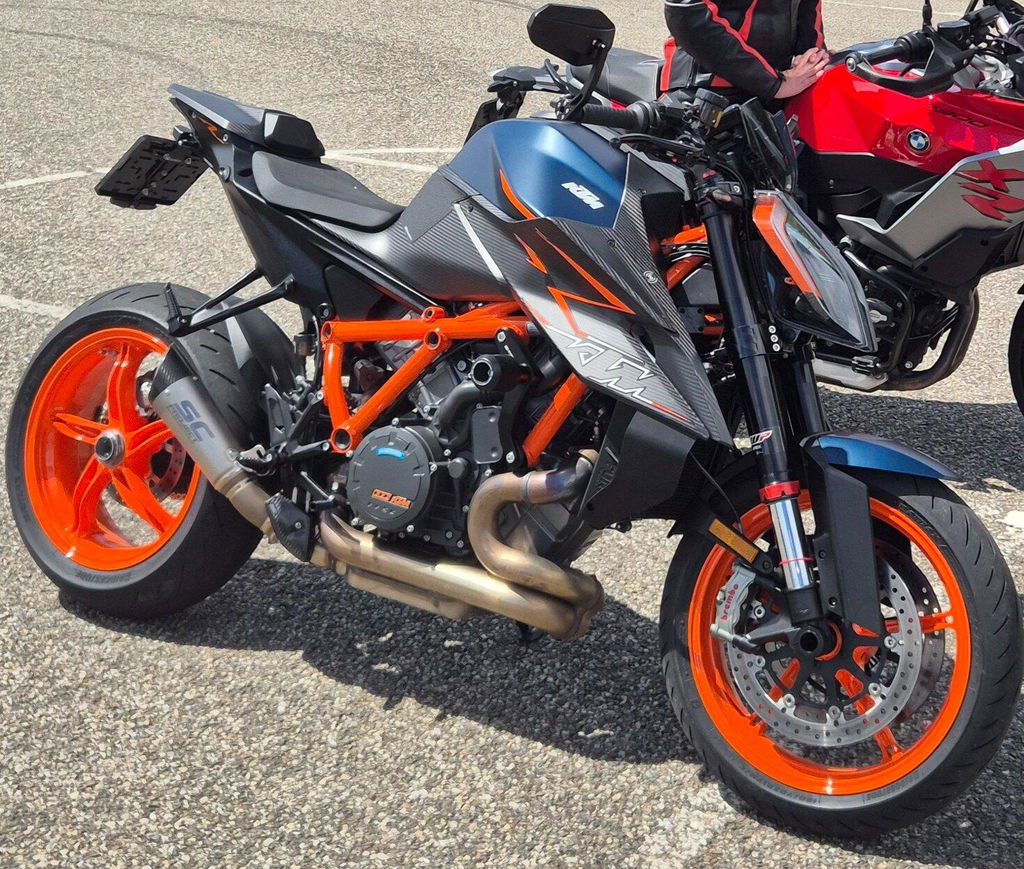
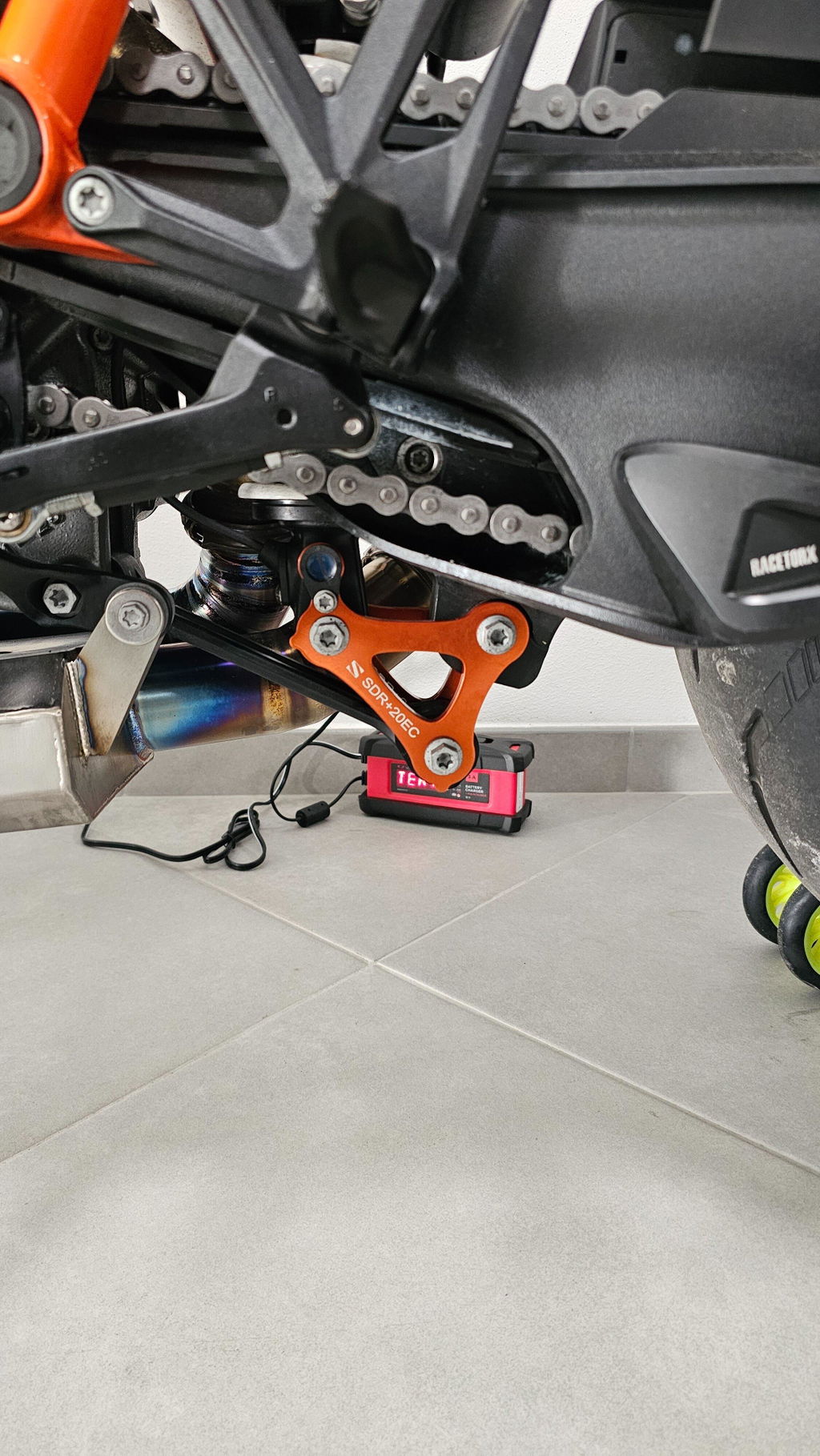
The Gen 2 Superduke swingarm presents a highly specific design challenge. Unlike the mounting surface of the Gen3, this swingarm is rounder absolutely everywhere. Trying to mount a rigid mounting bracket to the Gen 2 swingarm is essentially like trying to mount a flat board to a football. You have to match those complex contours flawlessly — or the part will vibrate, work loose, and eventually fail.
From Screen to Shop Floor
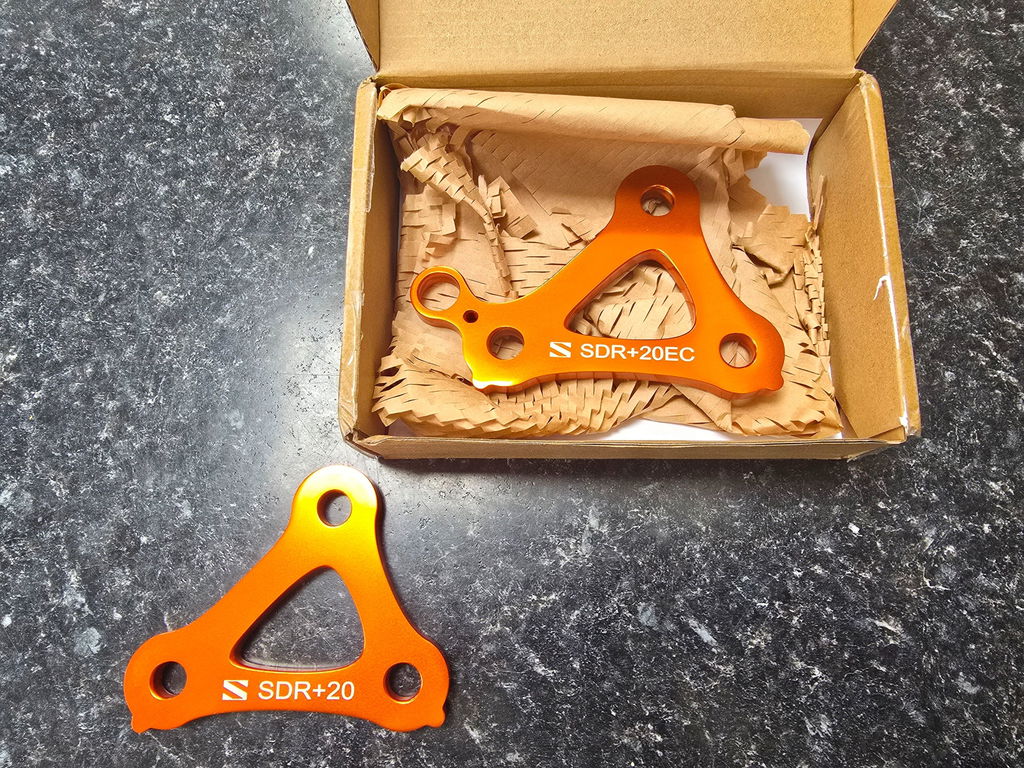
Machining prototypes is crazy expensive. So once the CAD work is (kind of) done, it's off to the 3D printing world. That's a whole other basket of settings to sort out, but it's very rewarding to see a design on a computer screen at 1pm, and hold the design in your hand at 5pm.
The Final Test: Clearance Land
3D scans aside, there is nothing like holding the actual part with the actual dimensions in your hands, and bolting it to the bike. You can see it from all angles, you can measure from it, adjust axle positions, try on every sprocket size combination, etc. Only then, once it passes every hurdle, is it ready for the final refinements. Then it's a big inhale, crossed fingers, and call the machinist to order the first batch..