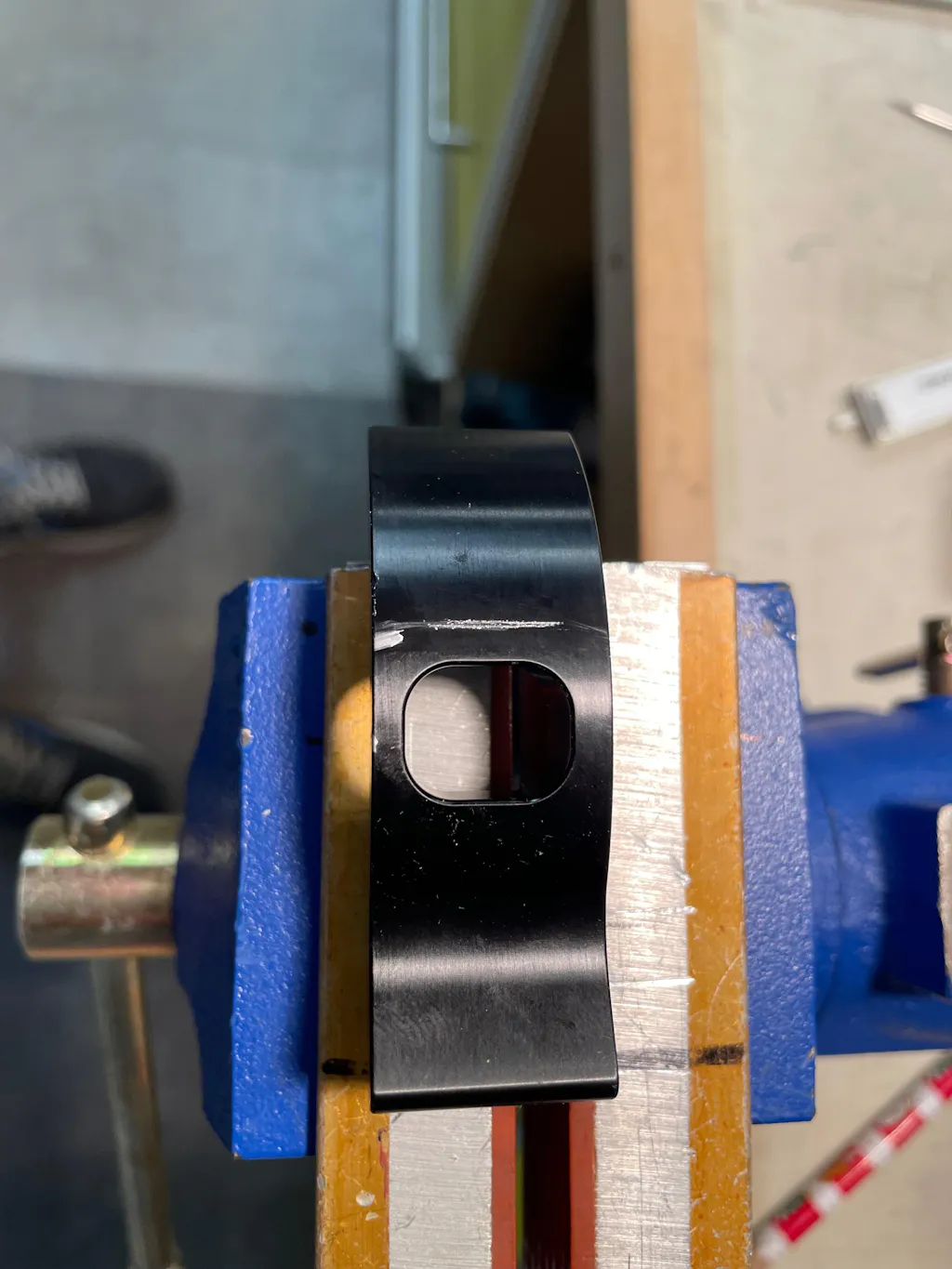
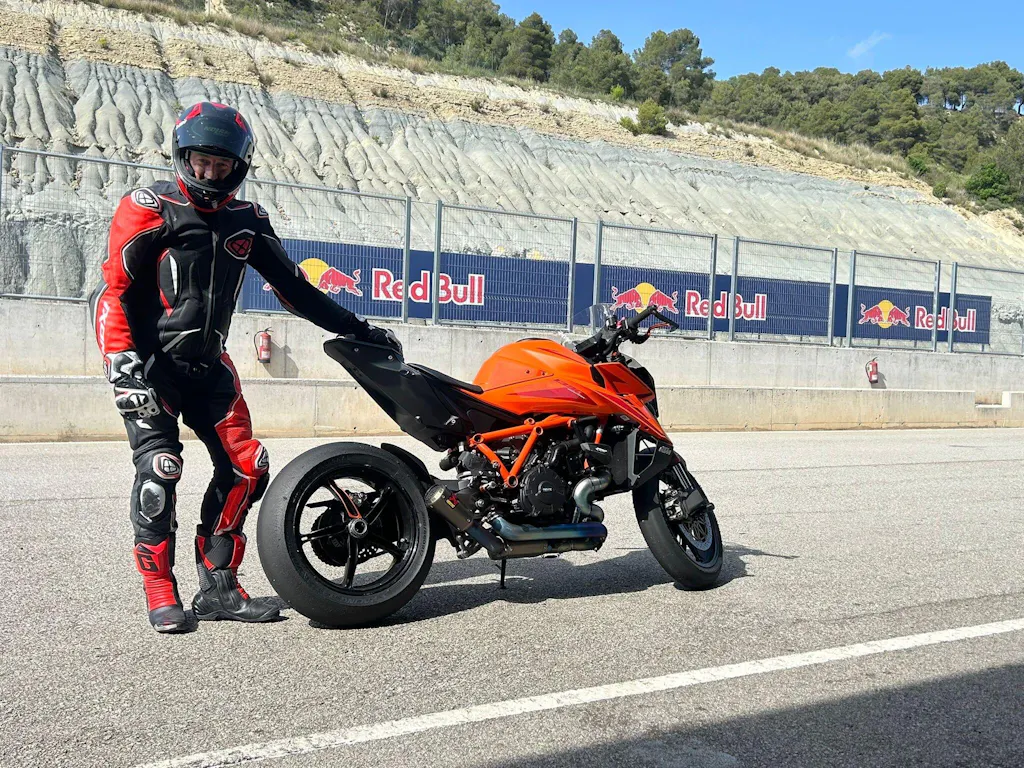
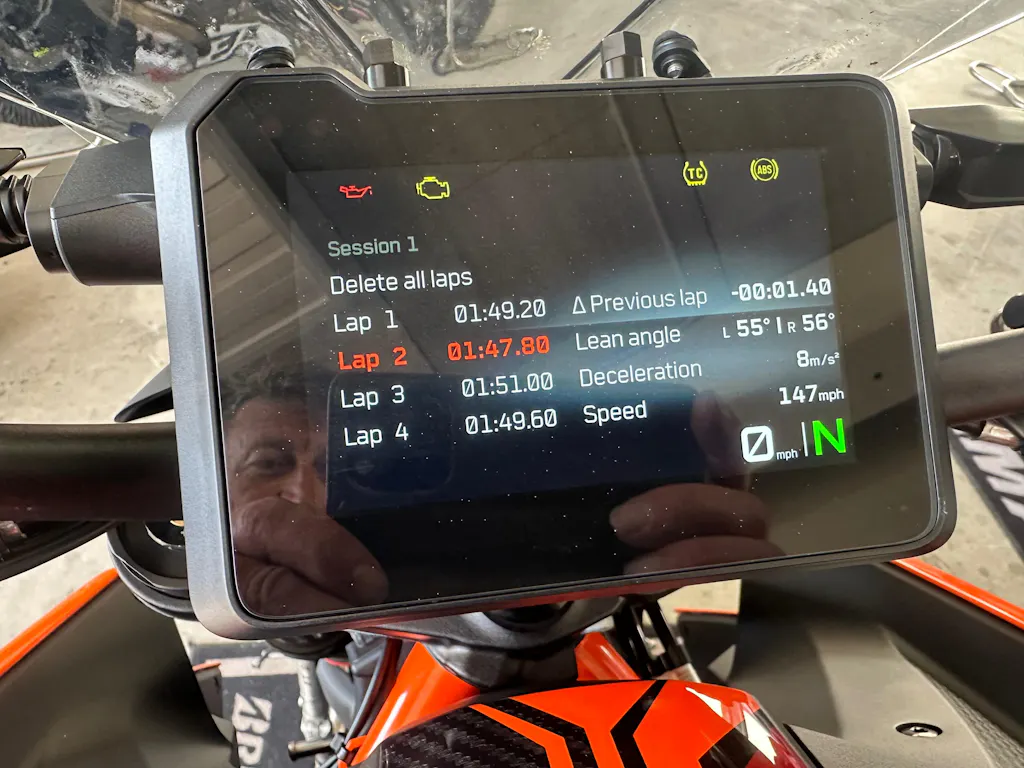
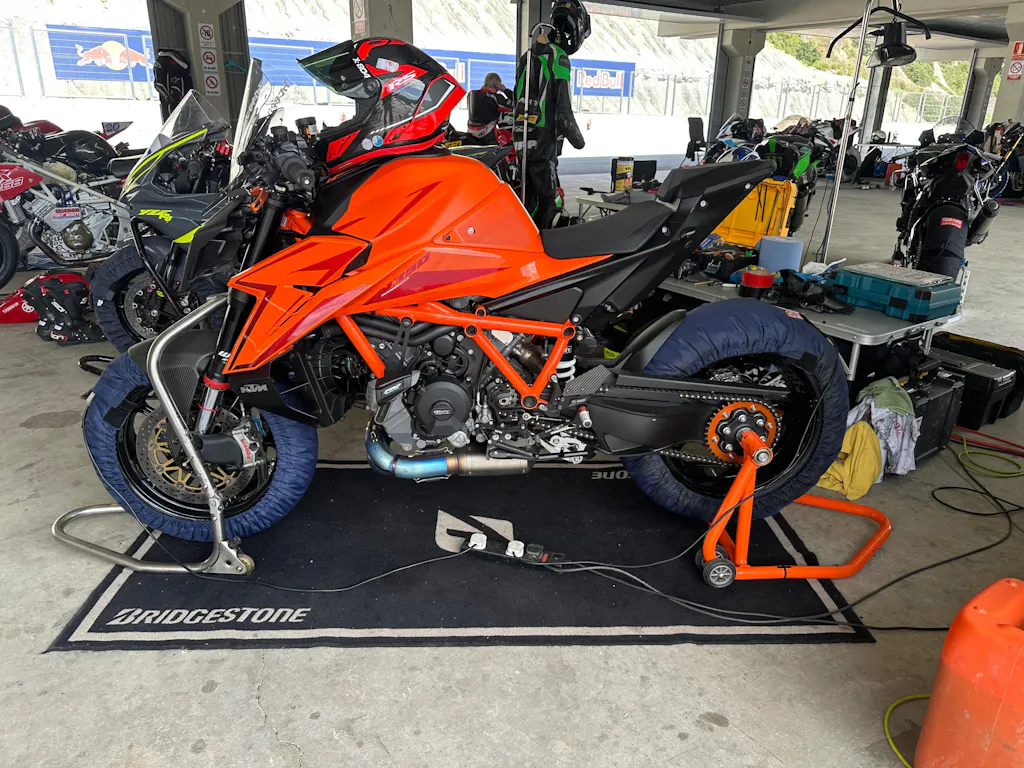
Most riders treat suspension like a "black box"—something they rely on others to understand or adjust. I’ve spent my career, from the AMA Pro pits to designing custom parts, trying to bridge the gap between suspension being something you "just deal with" and something you truly master. To make the invisible forces visible, I built a 3D-printed "teaching shock" that reveals exactly what happens to your bike at the limit.

Whether you're racing a KTM Super Duke or just riding backroads, your bike follows non-negotiable laws of physics. Let’s break down the engineering logic behind your rear suspension.
1. The Shock and the Swingarm: Stroke vs. Travel
A shock is a bridge between two points: the top bolts to your frame, and the bottom bolts to your swingarm. Its only goal is to keep the tire on the ground while keeping the bike's frame on a level plane.
- The Stroke: This is the distance the bottom of the shock physically moves in and out of the shock body.
- Mechanical Limits: Without a shock, your swingarm would have unlimited movement—either hitting the ground or smashing into the tail section. The stroke of the shock is what actually defines the limits of your motorcycle’s travel.
- The Leverage Ratio: On a bike like the Super Duke, there is a specific linkage ratio. Every 1 mm of stroke at the shock translates to 2 mm of actual suspension travel at the rear wheel.
2. Damping: The Hourglass Principle
Damping is not about "hardness"; it’s about time. Inside the shock, fluid must travel from one chamber to another through a tiny orifice.
- The Hourglass Analogy: Think of an hourglass. We are measuring the time it takes for the material to go through that tiny hole.
- Adjusting Clickers: When you adjust your clickers, you are simply changing the size of that hole. A larger hole lets fluid rush through faster, while a smaller hole slows the movement down.
- High-Speed vs. Low-Speed: High-speed damping handles sudden, high-intensity forces like a sharp bump in the road. Low-speed damping handles slower movements, such as the bike squatting under hard acceleration or reacting to the rider's weight shifting on the seat.
3. Spring Rates and "Coil Lock"
Springs are about force and distance. Most performance motorcycle springs are linear, meaning the rate of resistance remains consistent throughout the stroke.
- Understanding the Rating: If you have a 600 lb spring, it requires 600 lbs of force to compress it exactly one inch. If you apply 1,200 lbs, it moves two inches.
- Coil Lock: This occurs when you compress the spring so far that all the coils physically touch each other. At that point, it ceases to be a spring and becomes a solid block. A well-engineered shock is designed to run out of stroke before this happens.
4. The Preload Deception: The "Star Wars" Logic
This is where 90% of riders—including many seasoned ones—get confused. Most people believe that adding preload "stiffens" the spring. It does not.
- The Garbage Compactor: A spring only builds force when it is trapped between two immovable walls—like the garbage compactor in Star Wars. This only occurs when the shock is fully extended and pushing against its own internal stops.
- The Reality of Sag: As soon as you sit on the bike and the suspension "sags," the shock is no longer against its internal limits.
- Ride Height vs. Stiffness: When you turn your preload adjuster while sitting on the bike, you aren't compressing the spring; you are simply making the shock longer and lifting the bike higher. You are adjusting geometry and ride height, not the actual stiffness of the spring.
5. Why You Need Sag (The 33% Rule)
Sag is the amount the bike settles under the weight of the machine and the rider. A great starting place is the "Rule of Thirds": divide your total travel into three equal parts and set your sag so you sit at that first 33% line.
- The Necessity of Extension: Shocks must be able to extend just as much as they compress. The shock's main goal is to keep the tire on the ground during both compression (hitting a bump) and extension (falling into a dip or cresting a rise).
- Braking Performance: When you hit the brakes, the front end dives and the rear rises. If you have zero sag, your shock is already fully extended, and your rear tire will immediately lift off the ground. Sag provides the "room" needed for the shock to extend and keep that tire driving into the pavement.
6. Why Weight is Only Half the Math
I am often asked: "I weigh 200 lbs. What spring should I use?". That is an incomplete equation.
- Force vs. Pounds: I race with a 110 N/mm spring. My buddy Gavin is the exact same weight, but he races with a 100 N/mm spring.
- The Speed Variable: Data acquisition shows that at race pace at Thunderhill Raceway, I generate 1,275 pounds of force through certain sections.
- Rider Style: Because I hit apexes harder, use more of the track, and carry different speeds, I generate more force than Gavin. You must choose a spring that allows you to maintain your 33% sag while still having enough travel left to avoid bottoming out at the speeds you actually ride.

The Superduked Solution
Suspension is a holistic package where springs, preload, sag, and hydraulics must work in harmony. A bike set up for the track will be uncomfortable on the street because it’s designed for forces you’ll never reach at legal speeds. Conversely, a street setup will twist and bottom out the moment you push it in a racing environment.
I design 3D-printed prototypes to prove these concepts and manufacture the solid metal parts required to solve LC8 handling issues. You can find the exact race-proven components I use to refine Super Duke geometry at https://superduked.com/collections/catalog.