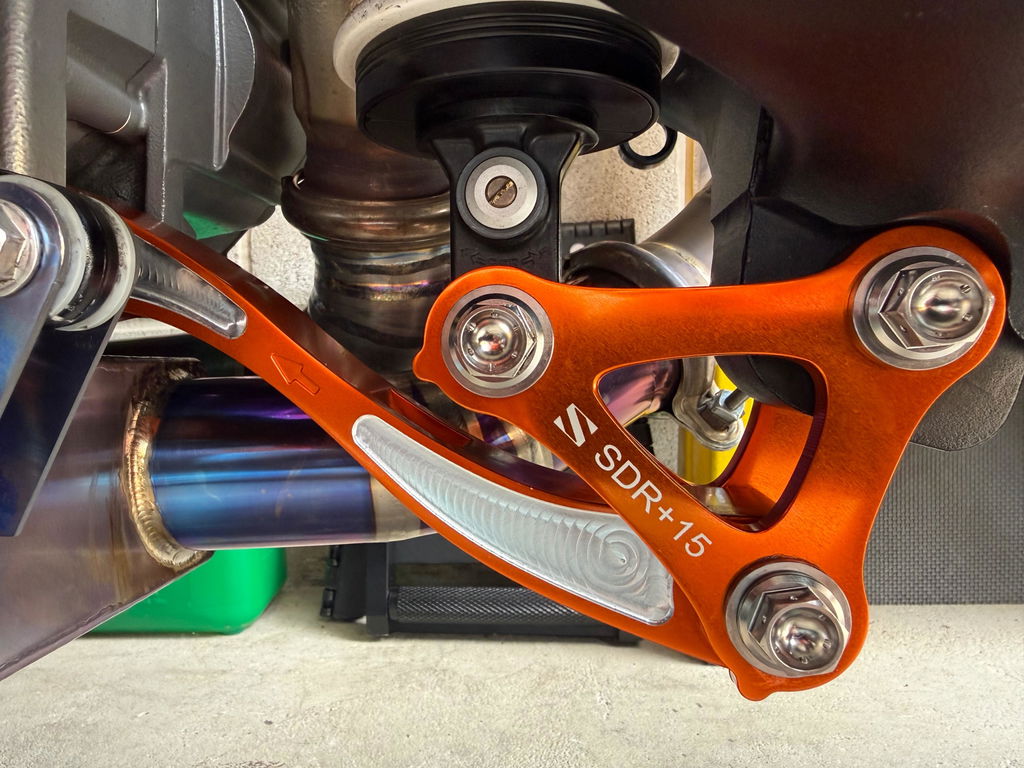
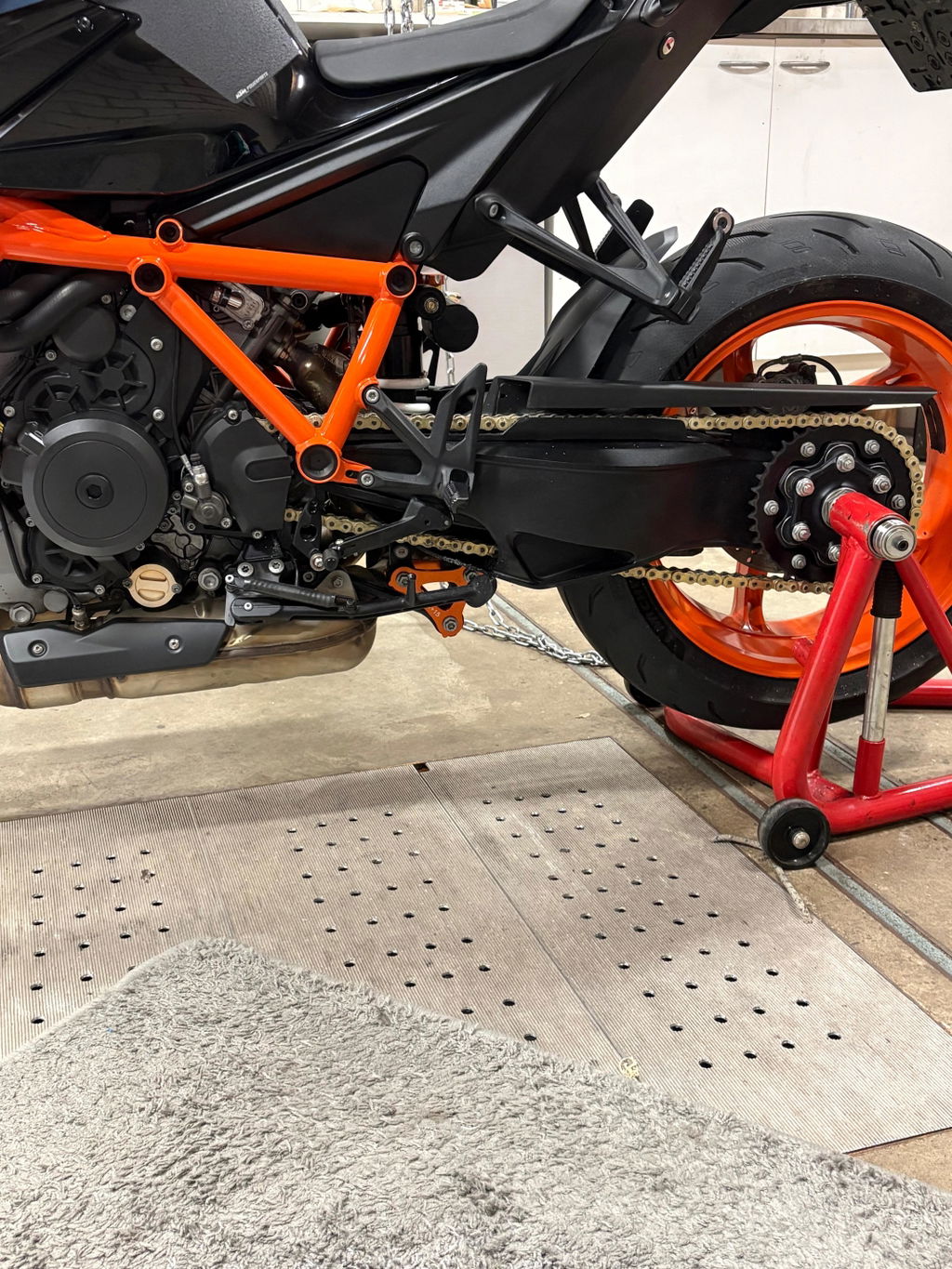
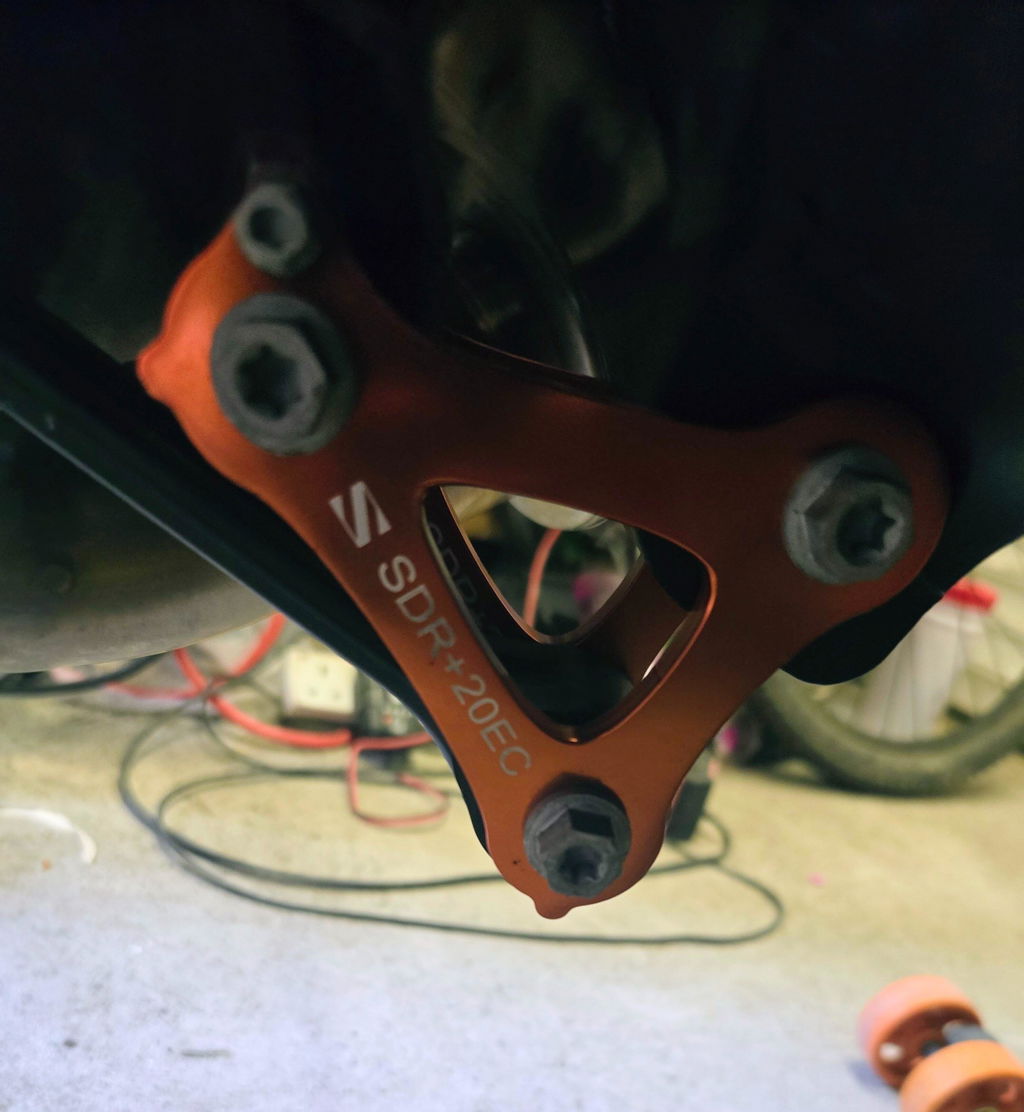
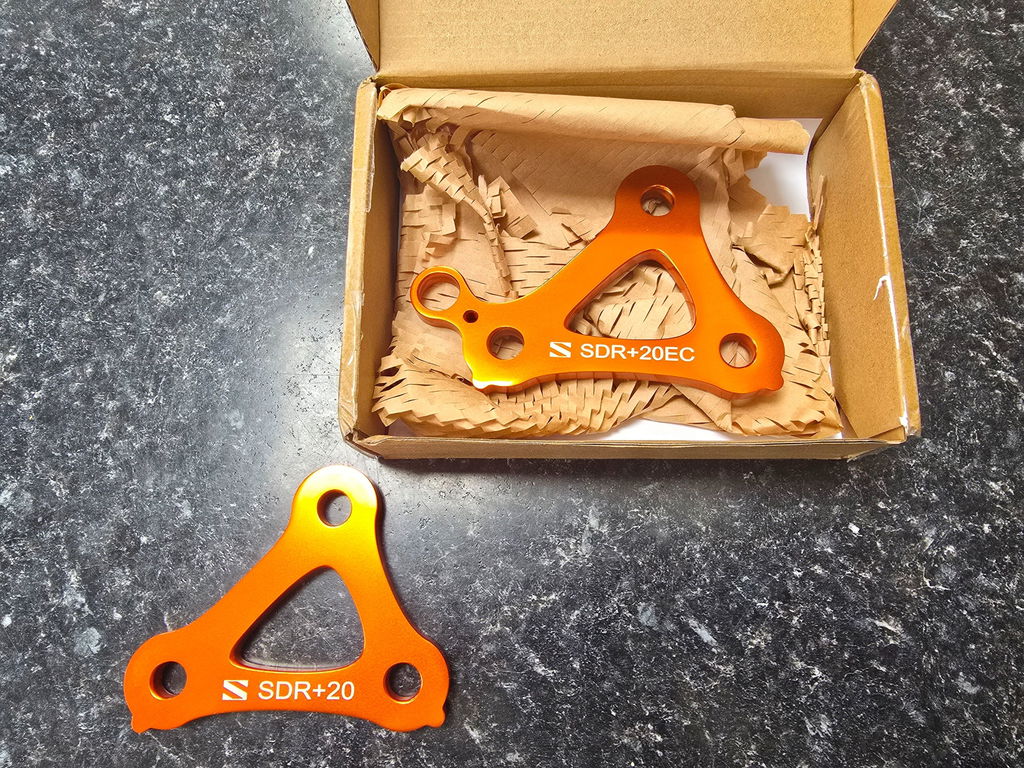
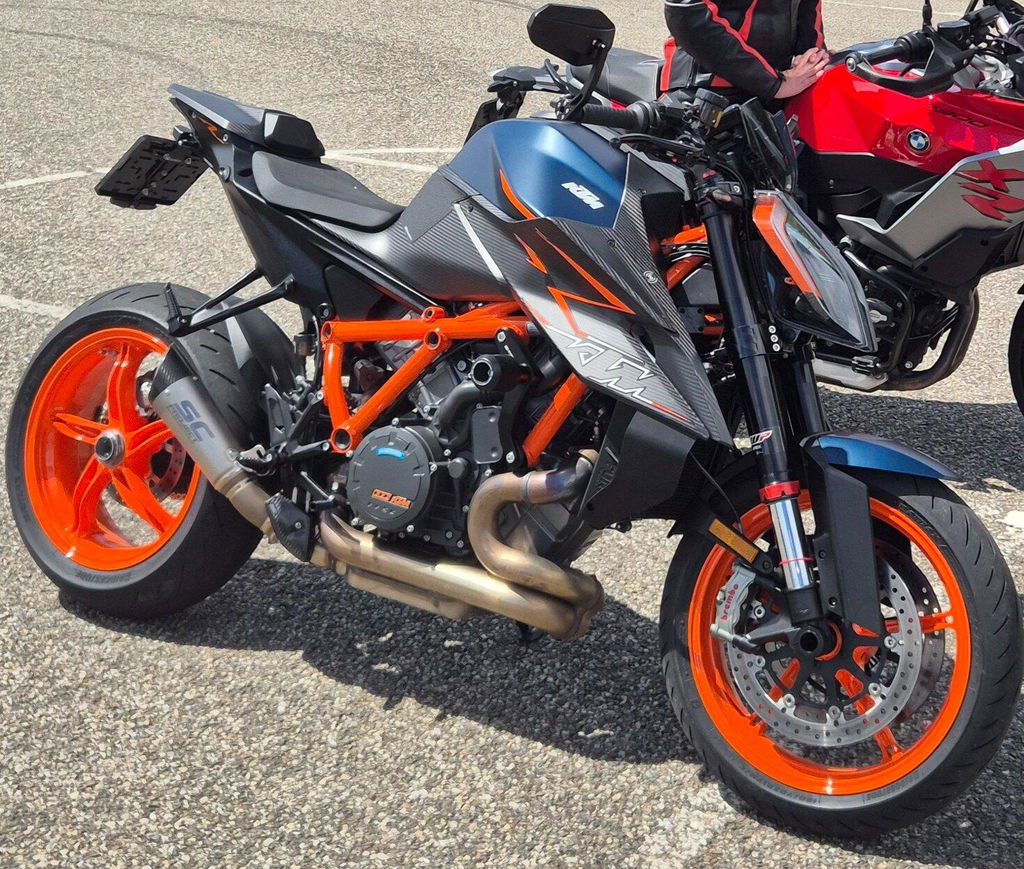
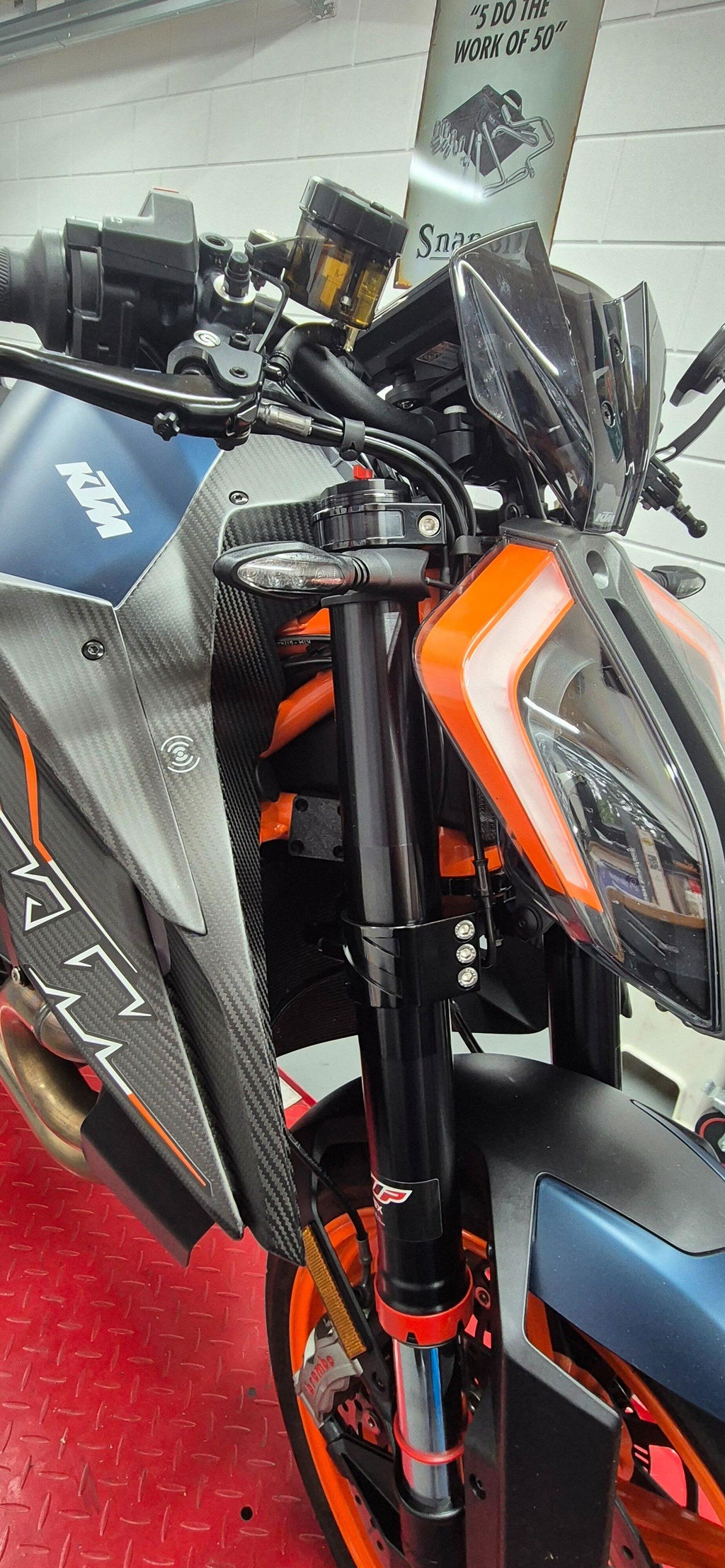
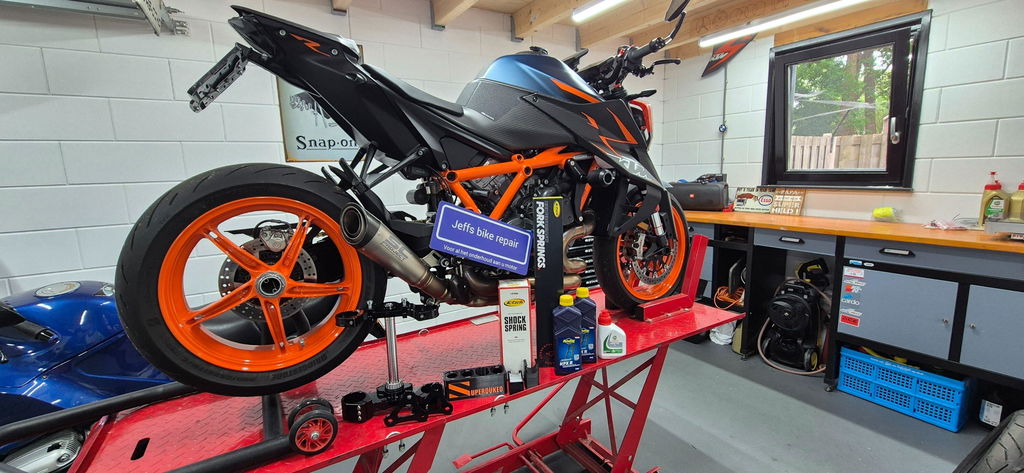
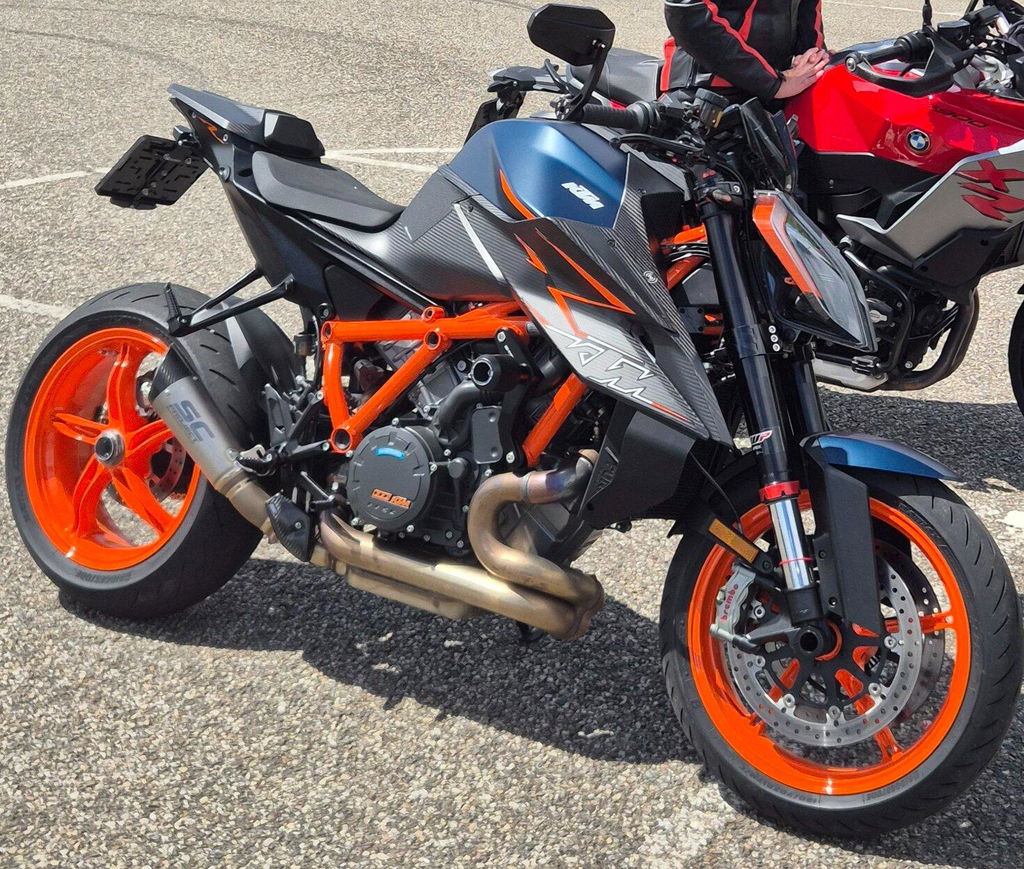
Engineered for a Superduke racer, by a Superduke racer, and now used on Superdukes all over the world, the Superduked Sport Link fixes the factory geometry limitations of the Gen 3 1290 and Gen 4 1390 Super Duke. Stock geometry causes the bike to feel lazy on corner entry, sluggish during side-to-side transitions, and prone to running wide on exits. But perhaps the most haunting characteristic of the factory setup is the slower roll speed created by excessive factory trail—you experience the sluggishness mid-corner, but unless you fully understand chassis geometry, you don't know why you are slower. By increasing rear ride height, decreasing trail, steepening the swingarm angle, and maximizing anti-squat, we completely transform how the Superduke corners and puts power to the ground.
Choosing the right link comes down to balancing three main factors: Trail, Swingarm Angle, and Progression. Here is exactly how it works.
1. The Trail Equation The Gen 3 1290 rolls off the showroom floor with just under 108mm of trail. The Gen 4 1390 is slightly better at 104mm (both confirmed via CMM - digital coordinate measuring machine). Both are simply too much for aggressive riding. To give you some perspective, I race my Superduke with 99mm (and sometimes 98mm) of trail, and my bike feels absolutely amazing.
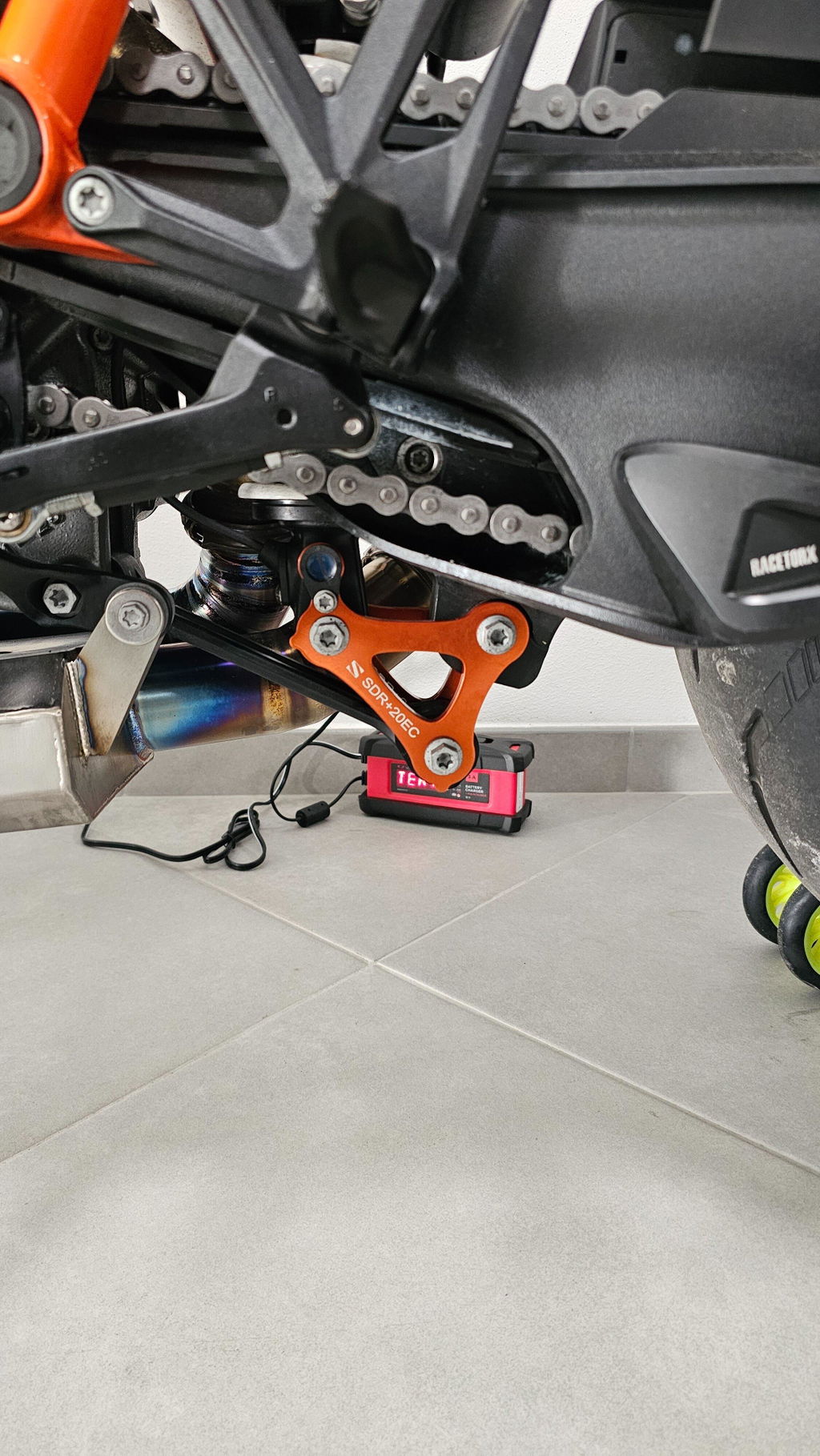
From a purely handling perspective, everyone would prefer the +20 Sportlink because it reduces the most trail for the least amount of money. It achieves this by very carefully changing all three dimensions of the OEM link to not only raise the rear of the bike, but also to reduce the progressive nature of the OEM link design. These dimensional changes work brilliantly, but there is one consideration: creating all of these positive changes also raises the seat height. For most riders, this is a welcome change, but if you already struggle to touch the ground, this is the primary factor you need to weigh when choosing between the +10, +15, and +20 options.
2. The Right Way to Raise the Rear (Anti-Squat) You might wonder: Why not just rotate the eccentric hub and axle to raise the rear?
Raising the rear via a custom linkage is a far superior method because it not only raises the rear of the bike to reduce trail, but it also raises the swingarm pivot. Raising the rear with a link, or longer shock, also increases the swingarm angle, which in turn creates significantly more anti-squat when you accelerate.
More anti-squat keeps the rear of the bike from collapsing under hard acceleration. When a bike squats, it loses trail while also making the front very light, which is exactly what causes you to run wide on corner exits, and can introduce instability under hard acceleration. Sportlinks help improve all these traits. And they do this at a very low price point. Keep in mind though, Sportlinks are just the beginning. We can do so much more of this with Superlinks, and for the elite among us there are Superclamps which create uncompromised improvements to your Superduke's handling, feel, feedback, and confidence.
3. The Progression Problem (Progressive vs. Linear) KTM designed the OEM link to add a massive amount of progression to the rear spring. This was a purposeful, one-size-fits-all compromise so they could sell the exact same bike to a 95lb ballerina and a 380lb linebacker. Progressive rates make the spring soft in its initial stroke, but much stronger as the shock compresses.
For general street riding, this works fine. But for high-performance riding, it leaves endless room for improvement. A progressive spring rate essentially feels like riding with two or three different springs. Hitting a bump at 80mph might feel perfectly fine, but hit that exact same bump at 100mph and suddenly the bike bounces into the air because the now-stronger spring refused to compress at that point in the progressive stroke.
Remember, suspension settings, spring rates, valving, preload - they are all adjustable. Negotiable. But bumps are not negotiable. Your suspension either absorbs the force of a bump, keeping your tires on the ground, or it doesn't... Bumps, and the speeds you hit them at, create forces that you cannot argue with. So do your homework before you go fast, or you won't actually be able to.
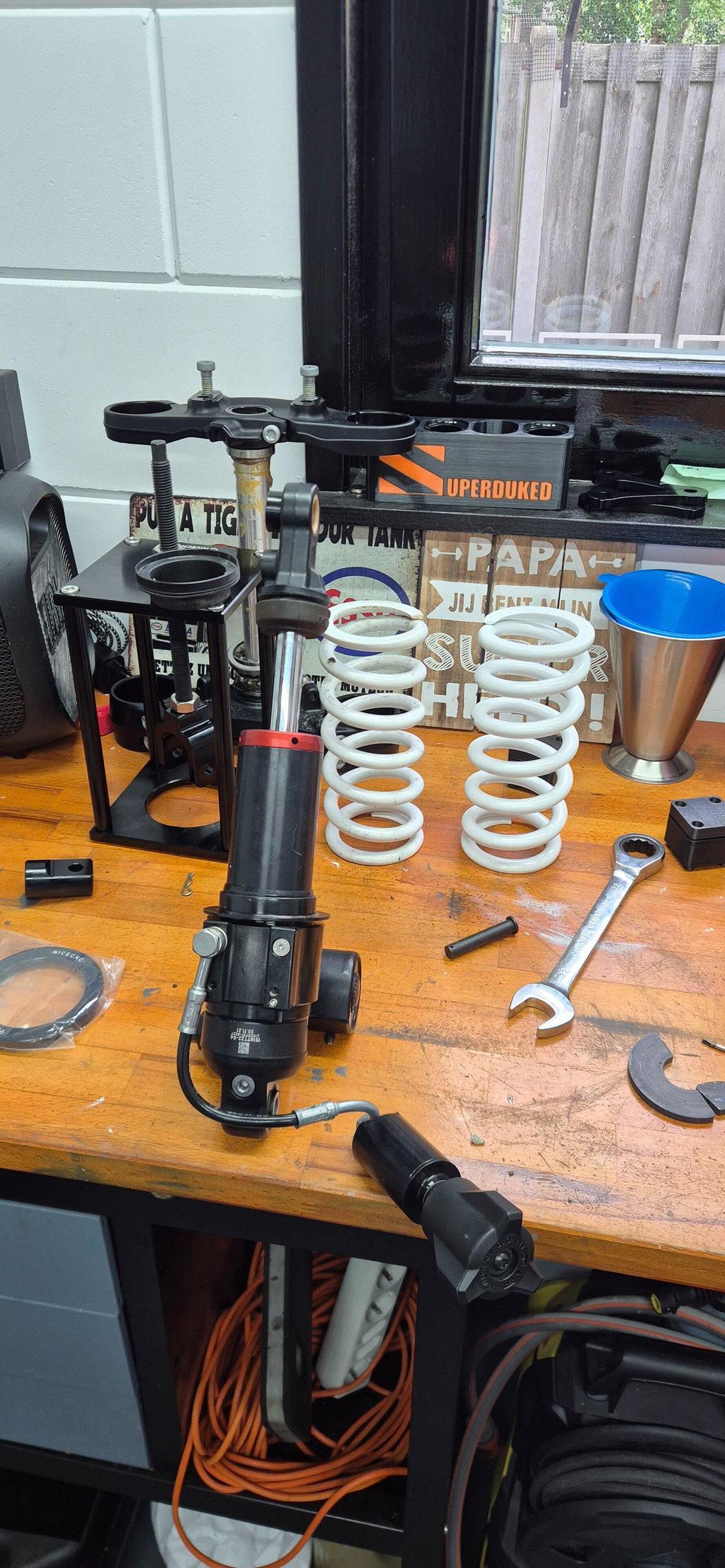
If you take the time to install the right spring for your specific weight, you can utilize a more linear link. A more linear spring rate means your bike feels and behaves consistently throughout its entire stroke.

Choosing Your Setup All Superduked links reduce KTM's factory progression. The larger the link size, the more the progression is reduced.
-
The +10 Sportlink: Ideal for riders who want sharper geometry and better turn-in, but are restricted by seat height and need to keep the rear as low as possible. Reduces trail by 2mm, increases anti-squat from factory 7.5% to 9.8%, and factory progression from 11.8% to 10.2%.
-
The +15 Sportlink: The aggressive hybrid. A massive improvement in handling and anti-squat with a moderate increase in seat height. Further reduces trail by 3mm, increases anti-squat from factory 7.5% to 11%, and factory progression from 11.8% to 9.35%.
-
The +20 Sportlink: The ultimate choice for trail reduction and aggressive cornering. If your inseam allows for the taller seat height, this gets you closest to the geometric sweet spot that links can create on their own. Further reduces trail by 4mm, increases anti-squat from factory 7.5% to 12.2%, and factory progression from 11.8% to 8.5%.
-
The Superlink: Designed for serious sport riders (who do not carry passengers) and dedicated racers. The Superlink reduces the rate the most, from factory 11.8% to just 3.5%, nearly eliminating progression altogether to provide a beautifully consistent, linear feel. Note: it is wise to leave some progression in link design, unless you plan to ride only on pool tables. :)