In motorcycle racing, there is a classic adage popularized by Kenny Roberts: "You have to go slow to go fast." While most riders have heard this, few truly understand the where, the why, and the how. Understanding cornering isn't about riding reactively; it’s about having a proactive plan that dictates exactly where the bike should be at every coordinate of the track.
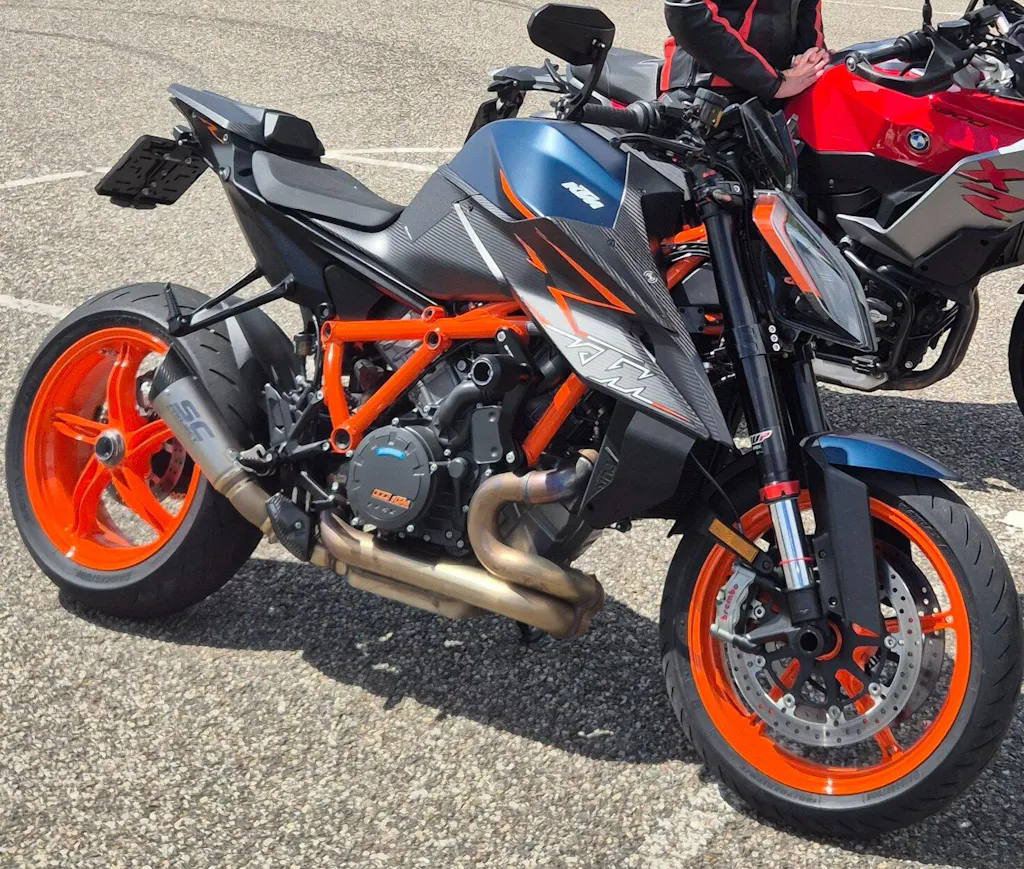
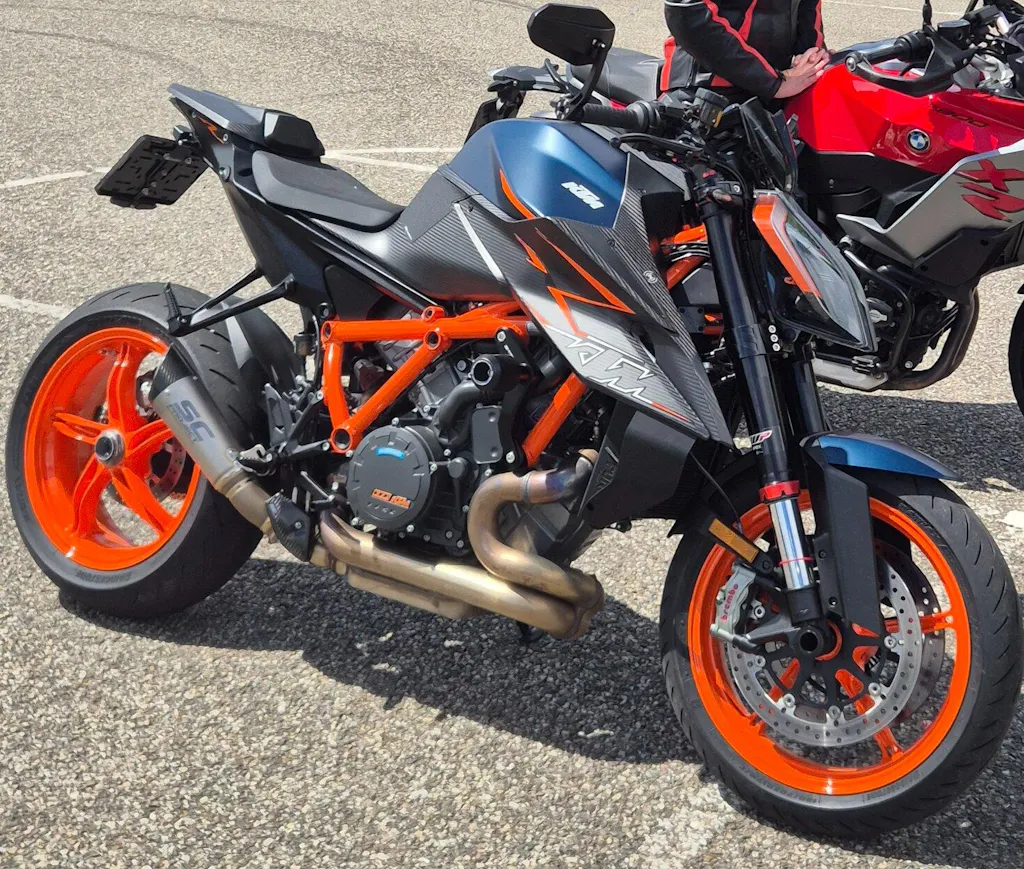
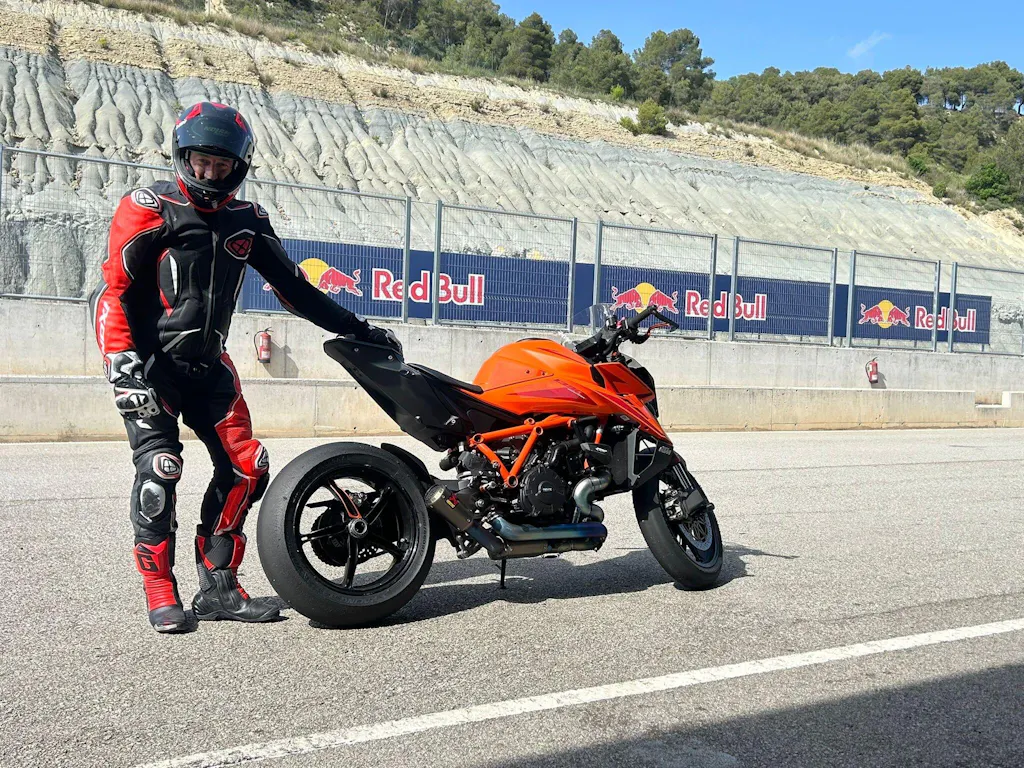
To go fast—especially on a high-torque machine like the KTM Super Duke 1290 or 1390—it is necessary to stop riding "greedily" and start identifying the "Slow Point."
Proactive vs. Reactive Riding
Most riders approach a corner reactively. They enter, lean the bike over, and wait for the exit to appear before they start thinking about the throttle. This is reactive riding, and it’s often where high-sides and "running wide" incidents occur.
A proactive mindset means being so far ahead of the bike that if a coach were to freeze the frame at any moment, the rider could explain not just why they are there, but how that position sets up a move three steps up the road. It is the difference between surviving a turn and attacking it.
The Triangle Theory: Deconstructing the 180-Degree Turn
 At tracks like Thunderhill, Turn 2 is a massive, 180-degree horseshoe. It feels like you are in the turn forever. The common mistake is to treat this as a perfect semi-circle, maintaining a constant "greedy" mid-corner speed in an attempt to keep the momentum up.
Instead, visualize that horseshoe as a triangle.
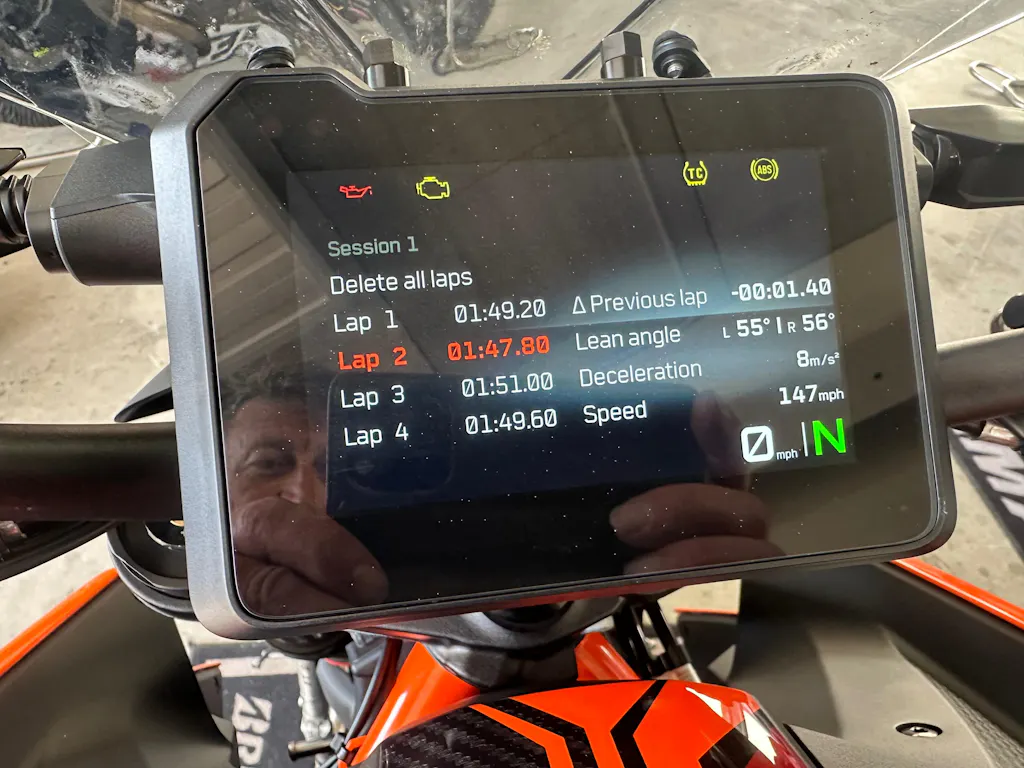
When looking at the data from a fast lap, the line might look like a smooth arc to a helicopter, but the speed and throttle trace tell a different story. The turn is actually two apexes. The first half of the turn is spent scrubbing off speed, gently letting the front tire find its way as the bike drifts from the first apex toward the outside.
The "point" of that triangle is the Slow Point. Usually occurring at the 75% mark of the turn, this is the specific coordinate where the bike reaches its minimum speed. By purposefully reaching a slow point, the most intense turning force can be generated. It’s a moment of peak efficiency: the bike is going slow enough to have maximum traction available for direction change, allowing for a "snap" of the bike's orientation before the drive begins.
The Art of "Letting Go" and Front-End Feedback
There is a blurry, neutral zone during corner entry where the bike is decelerating, but the heavy braking is over. This is a critical moment for front-end feel. Veteran racer Randy Renfro once gave a piece of advice that takes decades to truly master: "When you’re trail braking and you feel like you’re losing the front... just let the bars go."
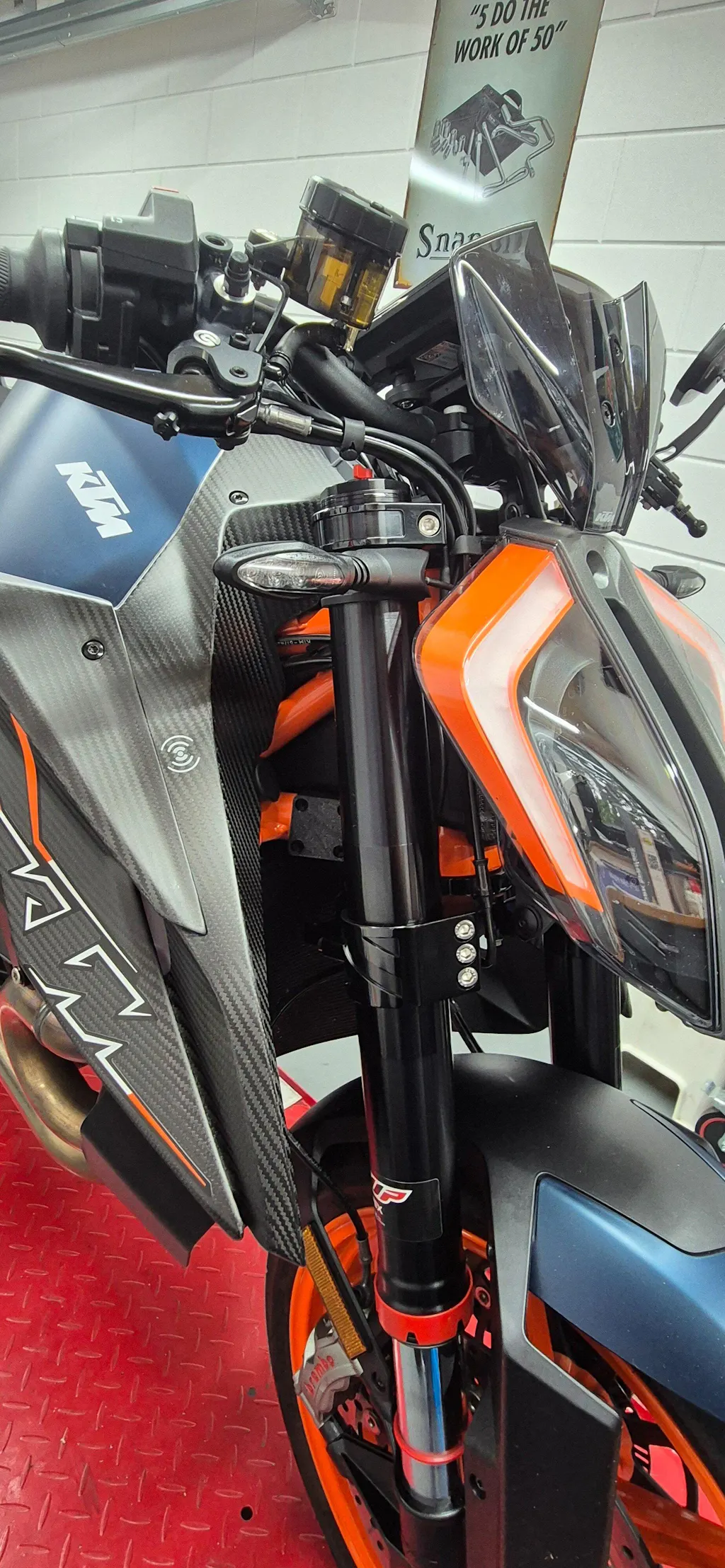
It sounds counterintuitive, but by going neutral on the bars and not overpowering the front end, the tire is allowed to find its own way. However, you can’t feel that "drift" if your hardware is flexing and twisting.
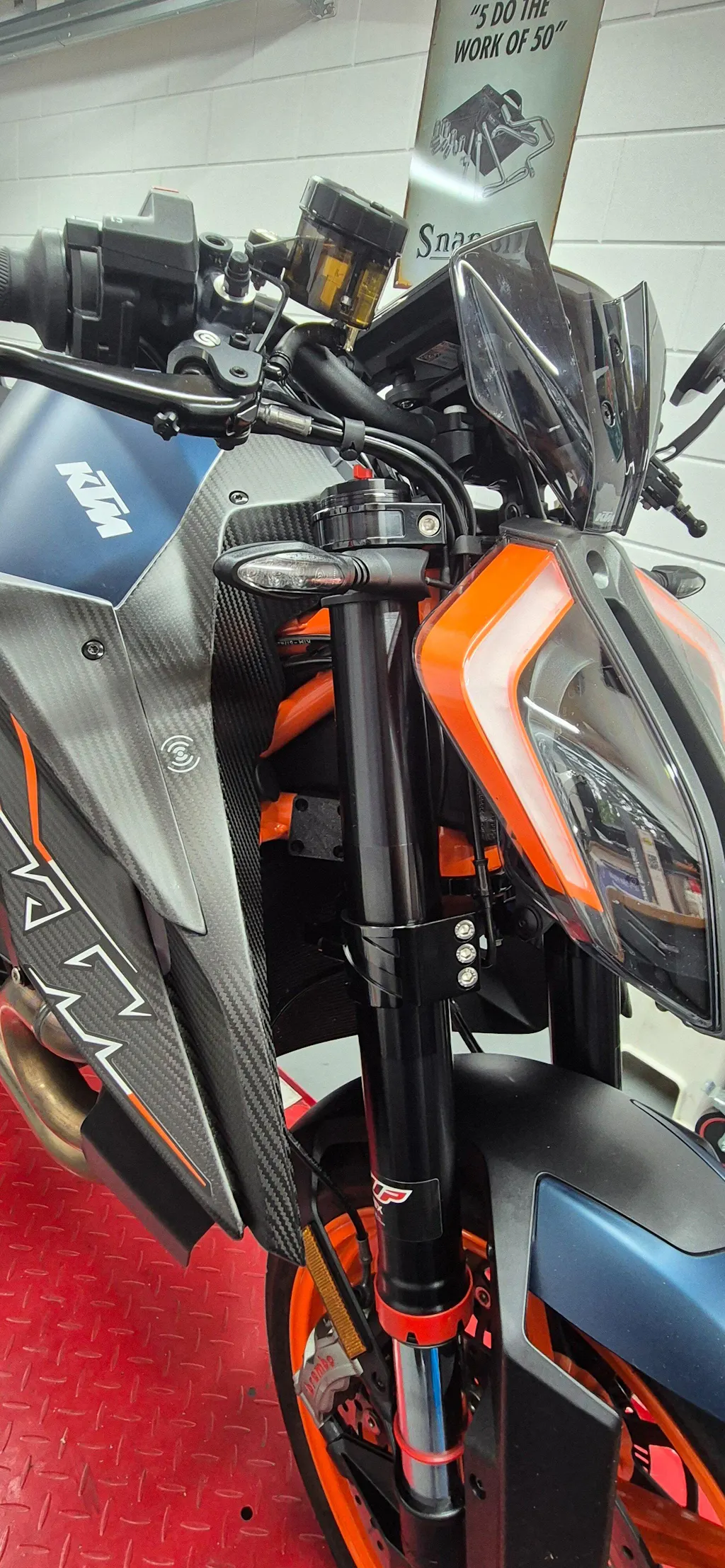
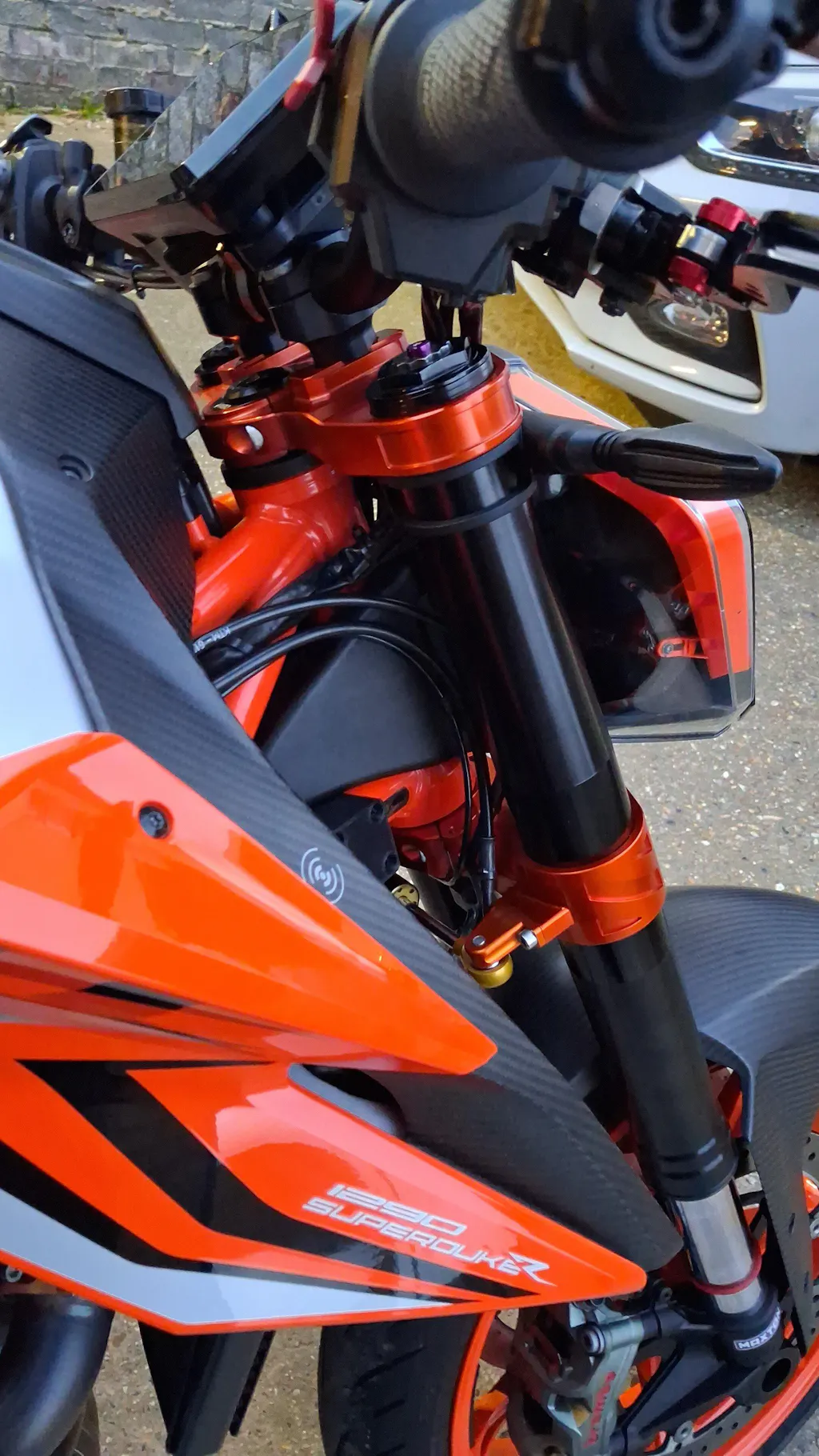
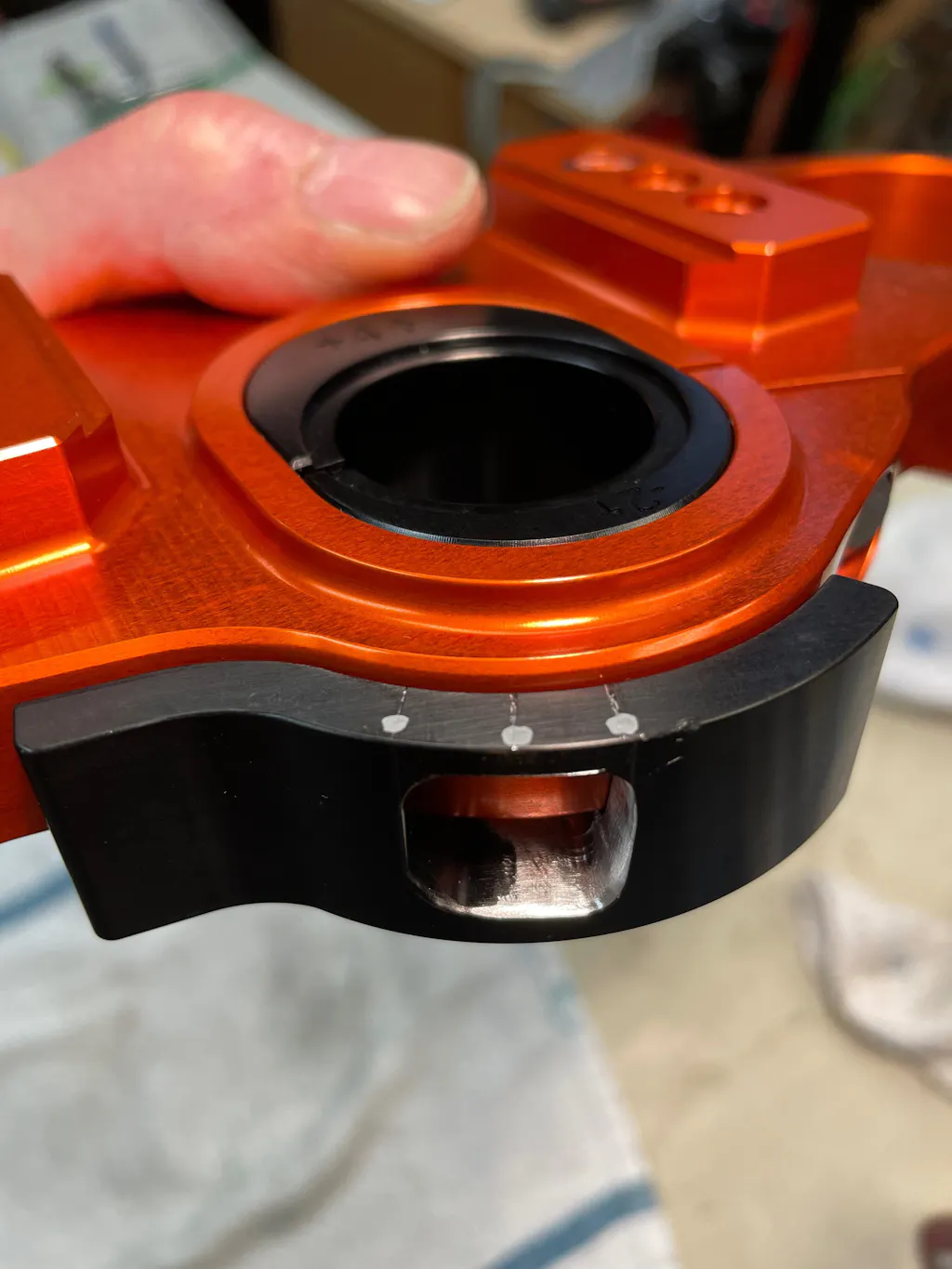
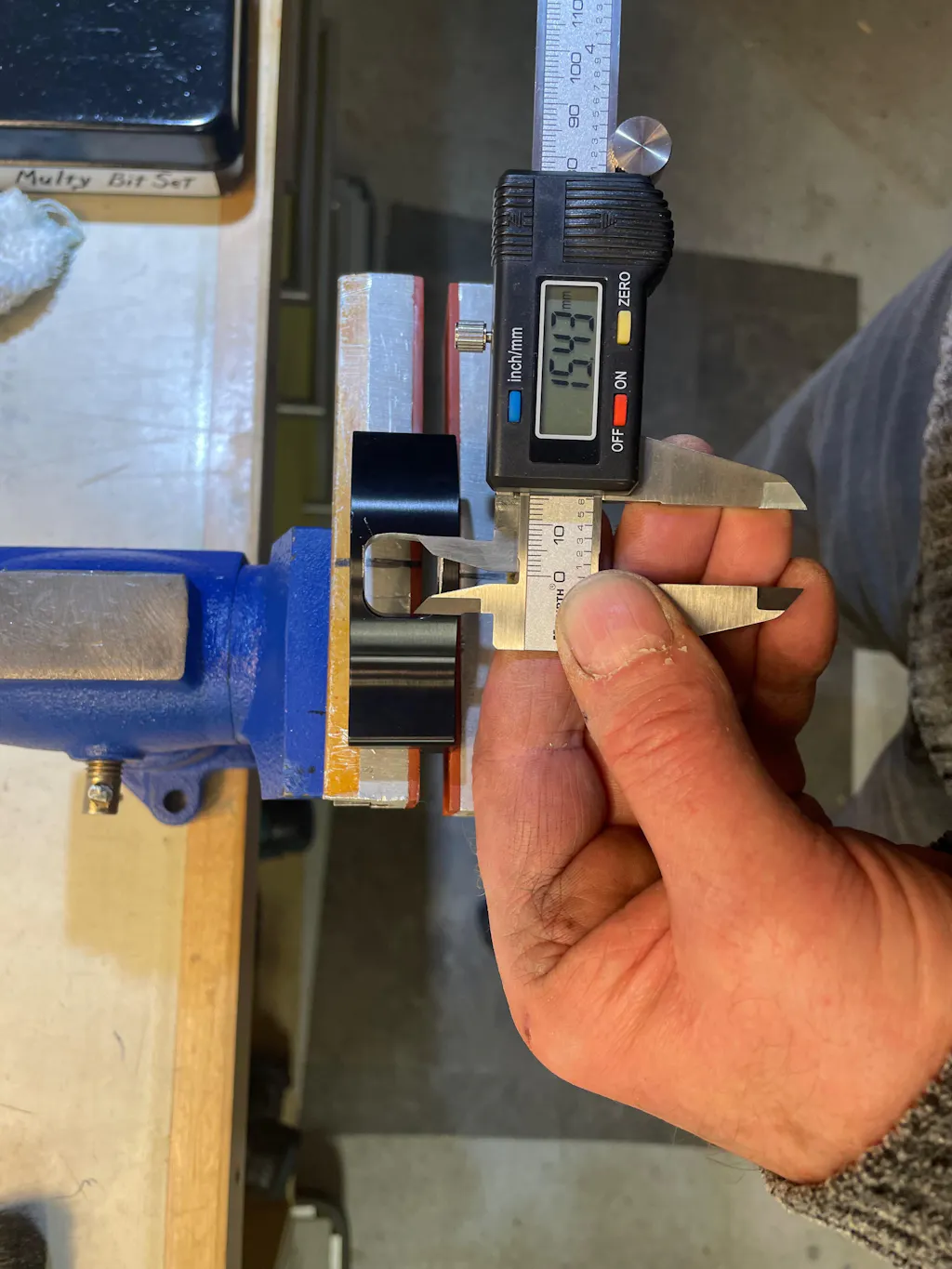
This is where the Super Clamp becomes an essential tool. By keeping the forks better aligned and removing the "wiggle" found in stock components, the triple clamps provide the confidence-inspiring feedback needed to navigate that neutral zone. When the triple clamps are rigid and the feedback is clear, the front end becomes a source of information rather than a source of anxiety.
Physics, Body English, and the "Sailboat" Strategy
Finishing a corner safely requires a specific strategy for the drive-out. If a rider is still leaned over at a high angle when they demand massive power from a 1390, the tire is likely to break traction.
The timing should be like a drummer hitting a cymbal: the moment the Slow Point is reached and the bike is turned, the "beat" changes. It’s time to stand the bike up.
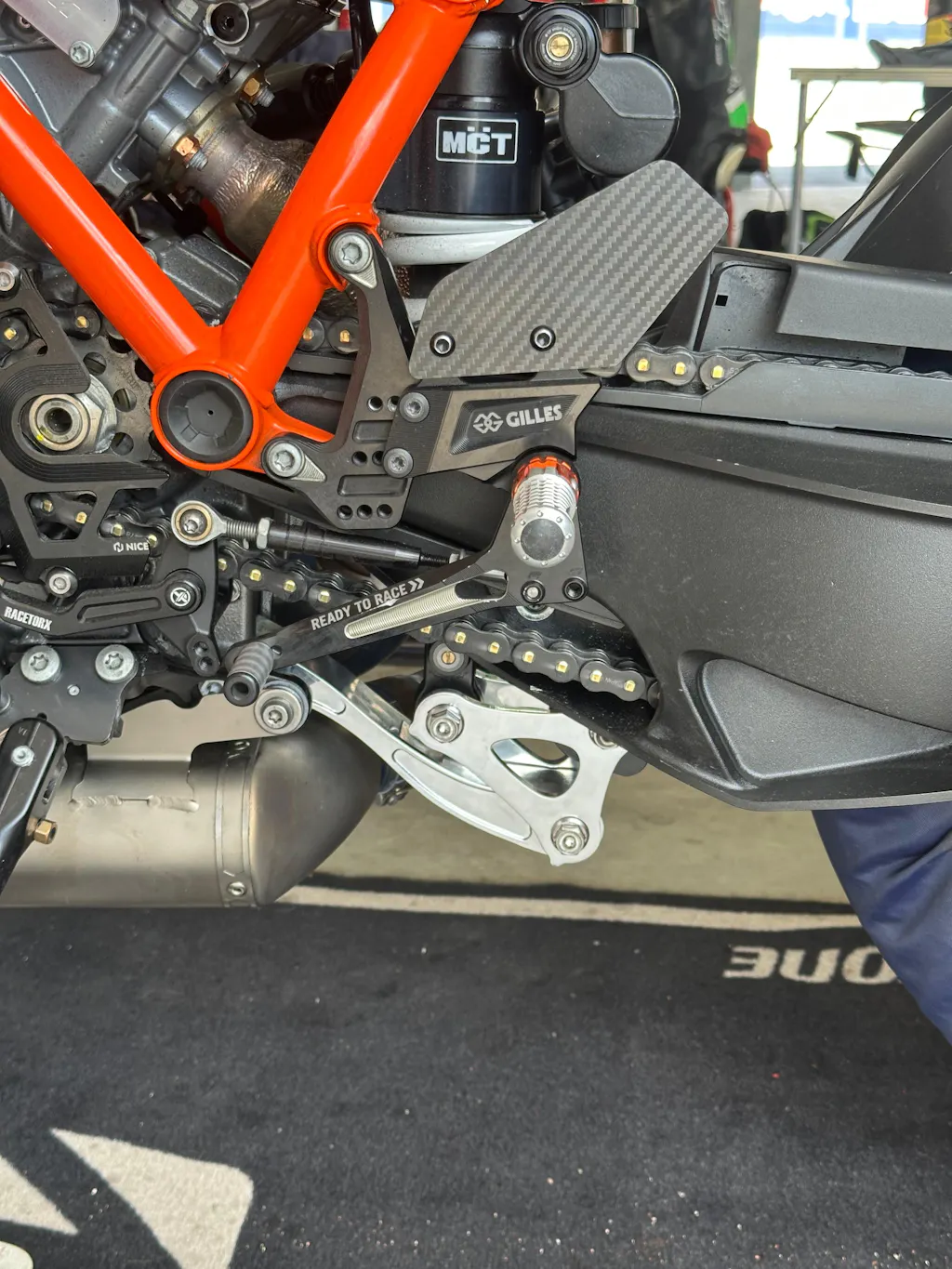
Using body English as "ballast"—similar to how a sailboat crew hangs off the side to fight the wind—weight must be transitioned to the outside peg.
-
Inside Peg Weighting: If the tire spins while weight is on the inside, the bike tends to fall inward, catch, and high-side.
-
Outside Peg Weighting: If the bike breaks traction while the weight is on the outside peg, it results in a predictable, friendly sideways drift.
By standing the bike up and weighting the outside, the rider puts the power down on the fat part of the tire, allowing for a much more aggressive exit.
Geometry: The Foundation of the Slow Point
To hit a Slow Point consistently, the bike must be predictable. If the chassis geometry is off, the bike will feel "lazy" or "heavy," making it nearly impossible to execute a sharp direction change at the 75% mark.
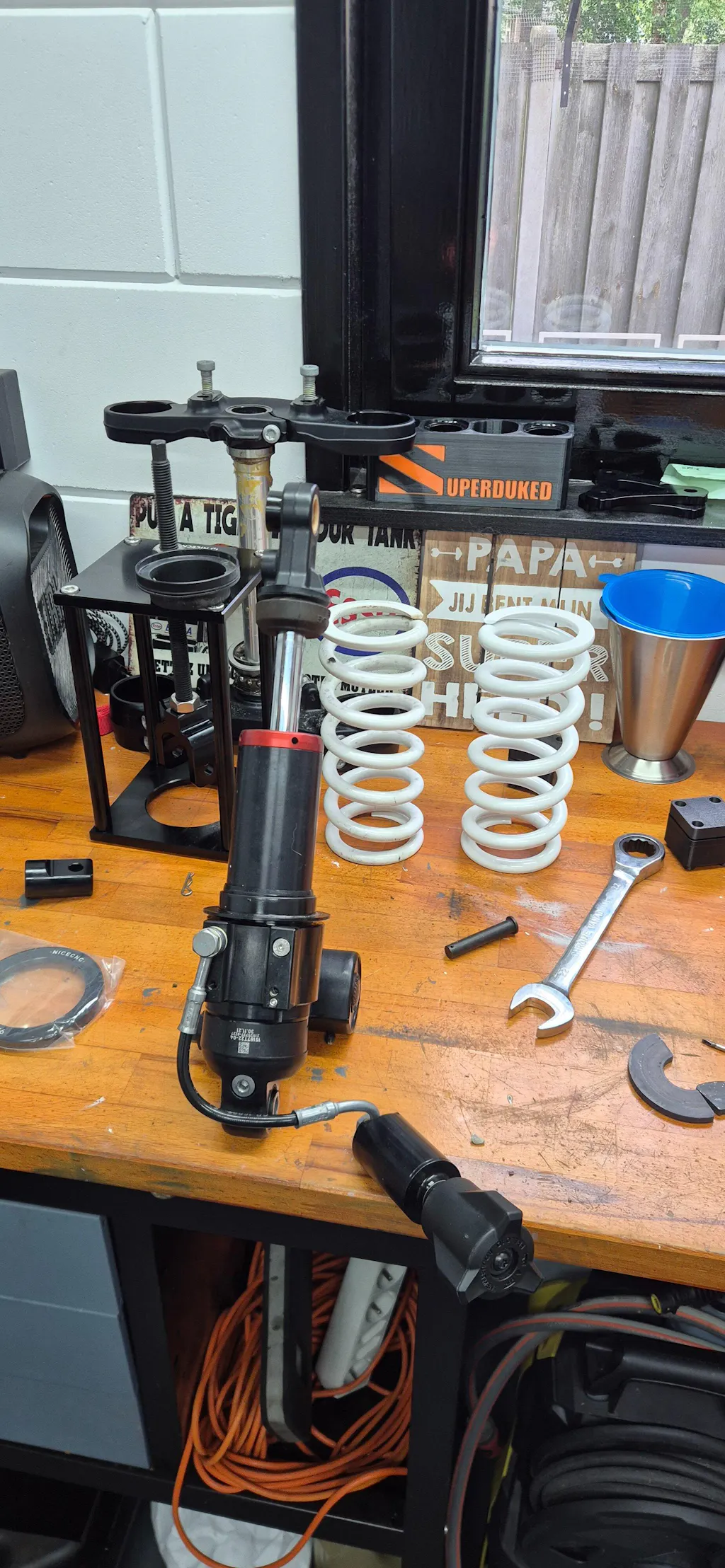
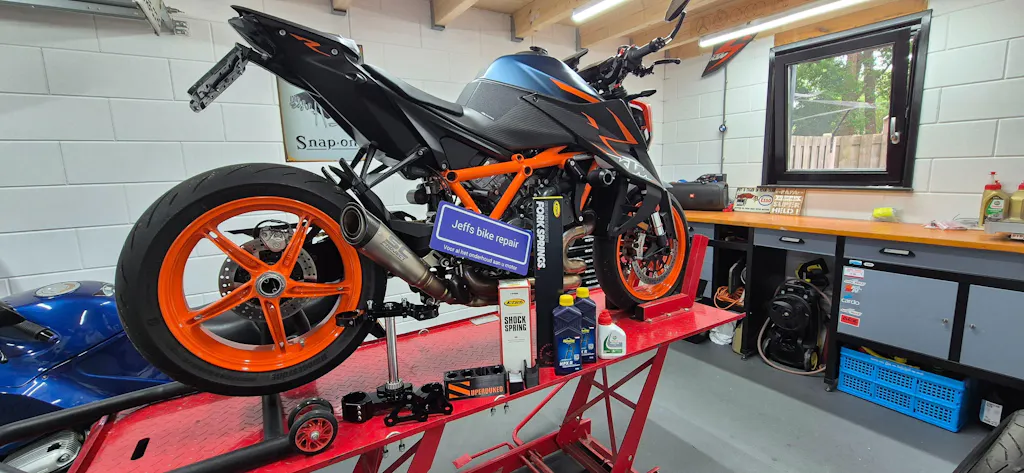
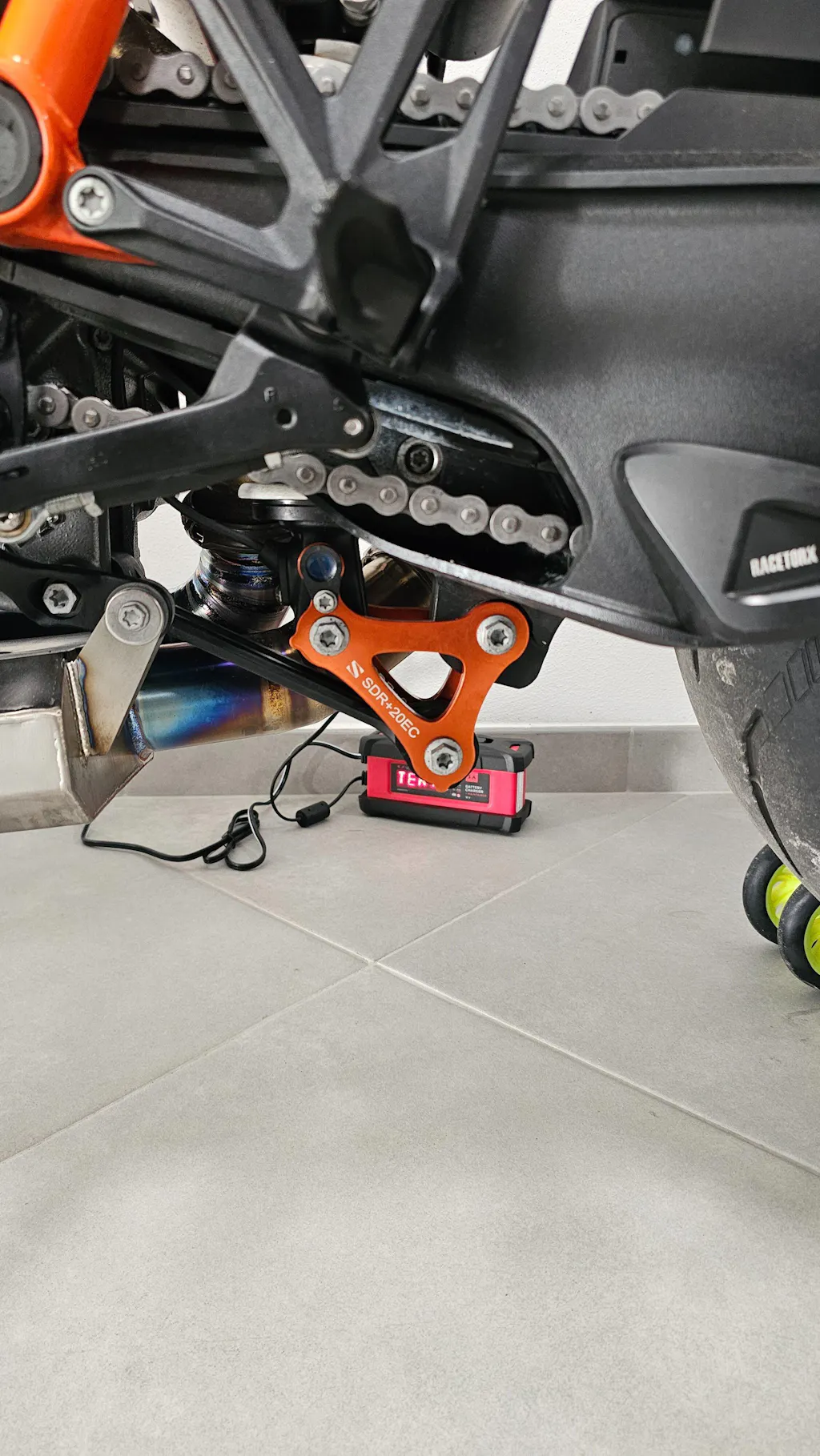
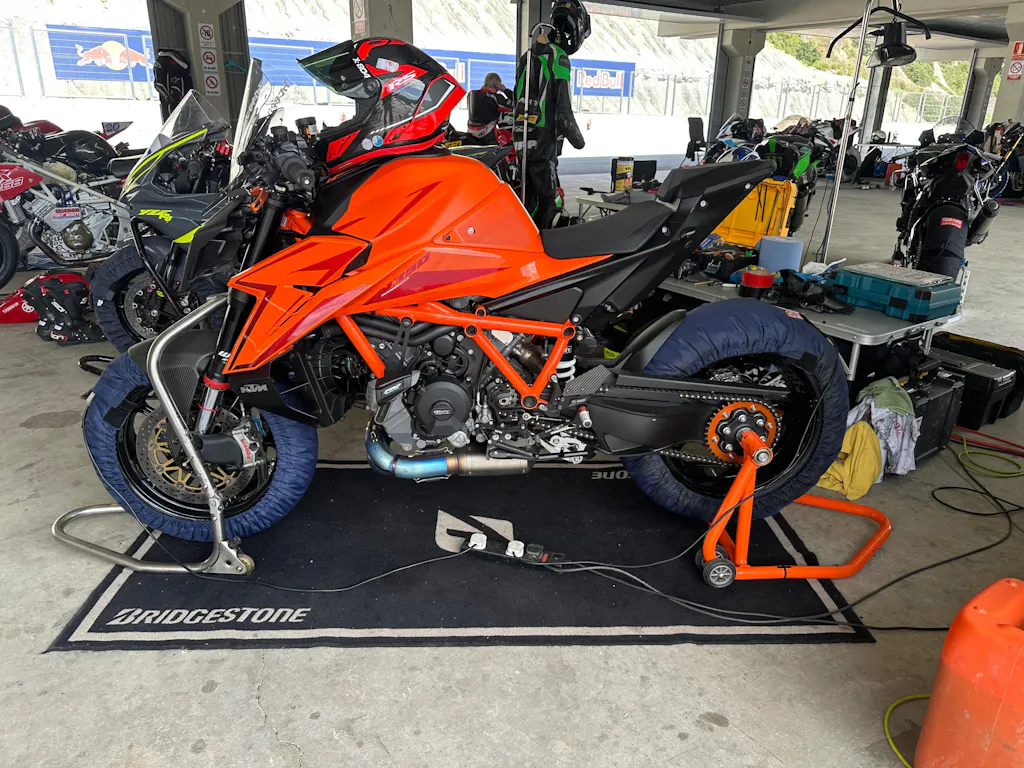
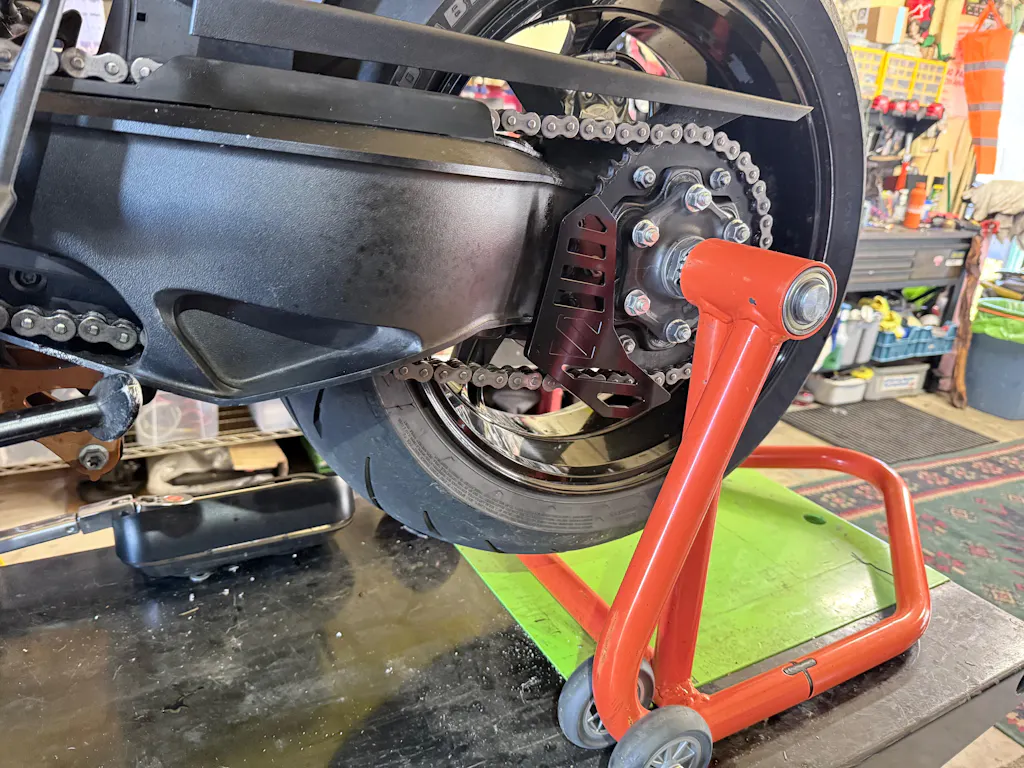
Utilizing the Ride Height Tool and the Superlink allows for the precision tuning of the rear of the bike. These adjustments ensure the chassis stays in its optimal window during the transition from entry to apex, providing the stability needed to commit to the "Triangle Theory."
Conclusion: Stop Being Greedy
The biggest hurdle for most riders is the ego-driven desire to maintain mid-corner MPH. They feel they’ve worked hard for that 80 mph and don't want to give up a single digit. But that "greed" ties the bike in knots. They end up wide, still turning when they should be accelerating, and vulnerable to anyone behind them who has picked a Slow Point.
Sacrificing mid-corner speed to reach a Slow Point isn't "going slow"—it’s setting up the fastest possible exit.
This technical breakdown is based on the principles utilized in professional racing to maximize the performance of the KTM Super Duke platform. For a visual demonstration of these data traces and onboard footage from Thunderhill and Buttonwillow, view the full Masterclass here: How to Finish Corners: The SECRET of the Slow Point