Editor’s Note: This video/post was originally recorded and releasted during the launch of the KTM 1390 in early 2024. While the context is specific to that release, the technical principles remain the "gold standard" for the platform.
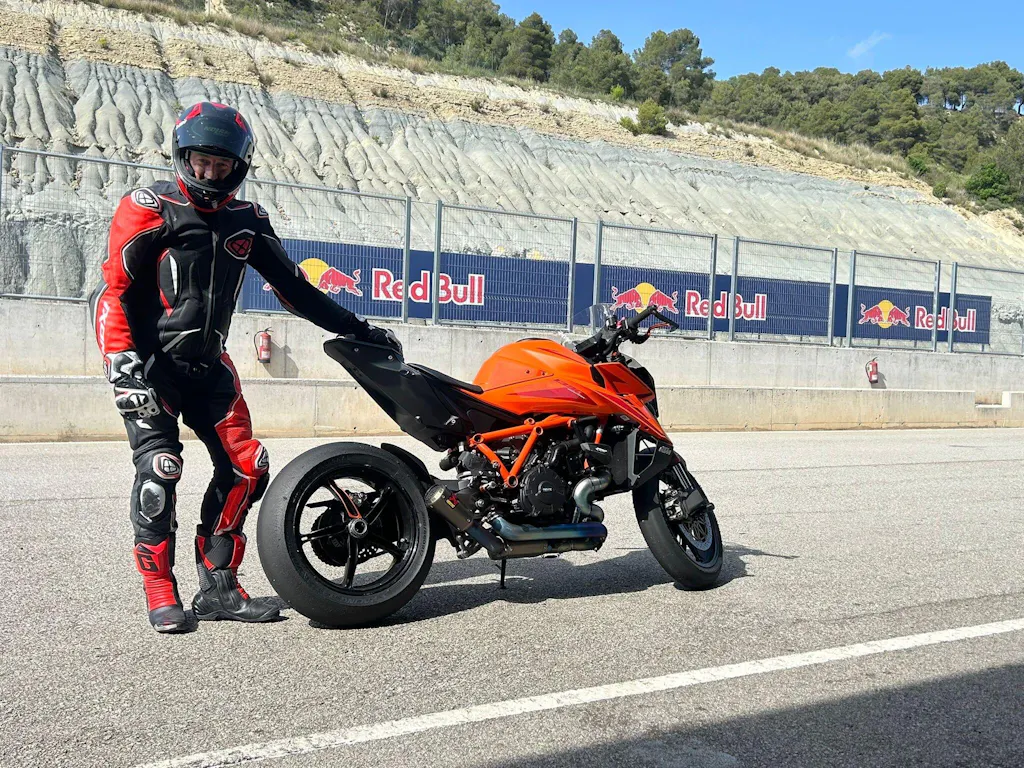
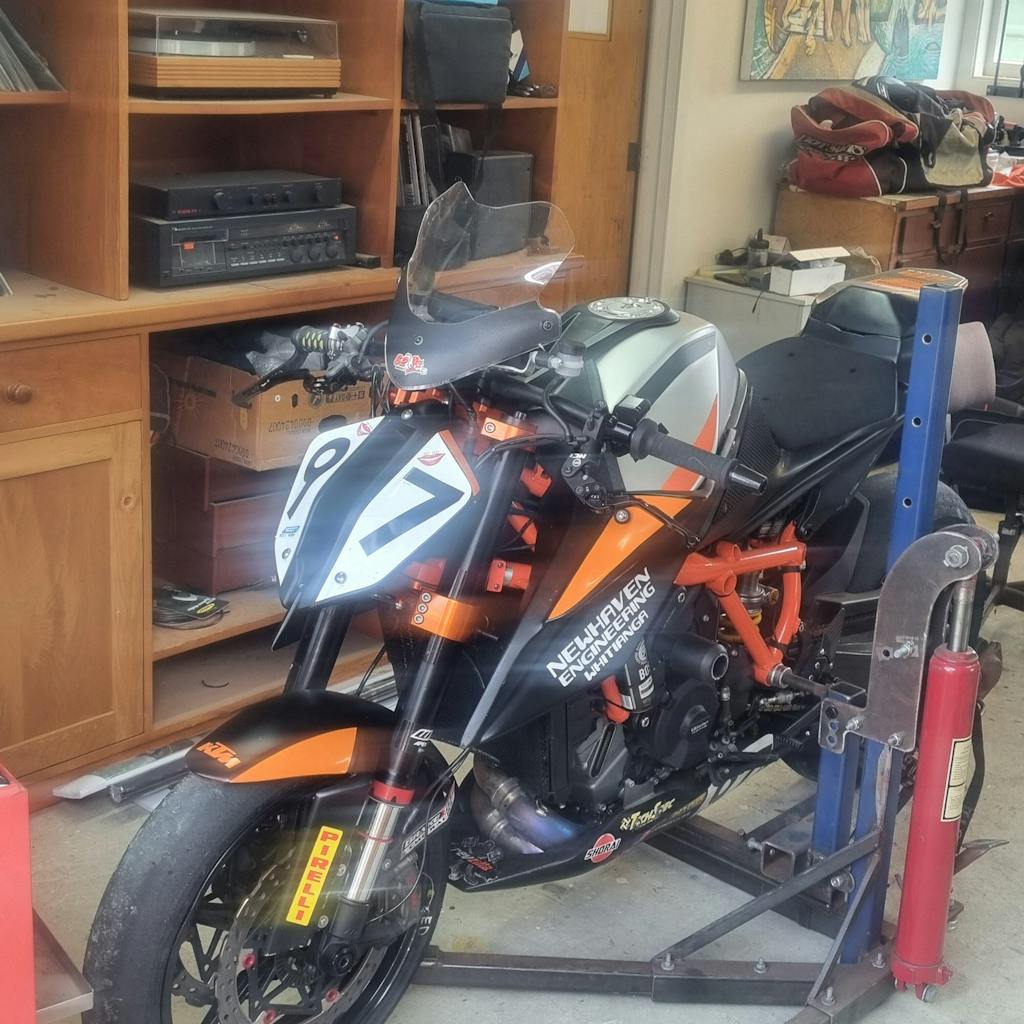
It’s 2024, and with the arrival of the fourth-generation KTM Super Duke, many Gen 3 owners might feel like their bikes are suddenly outdated. I’m here to tell you that’s not the case. Chassis-wise, the Gen 3 and Gen 4 are incredibly similar, and the "New World" of setup I’ve been developing over the last few years applies to both.
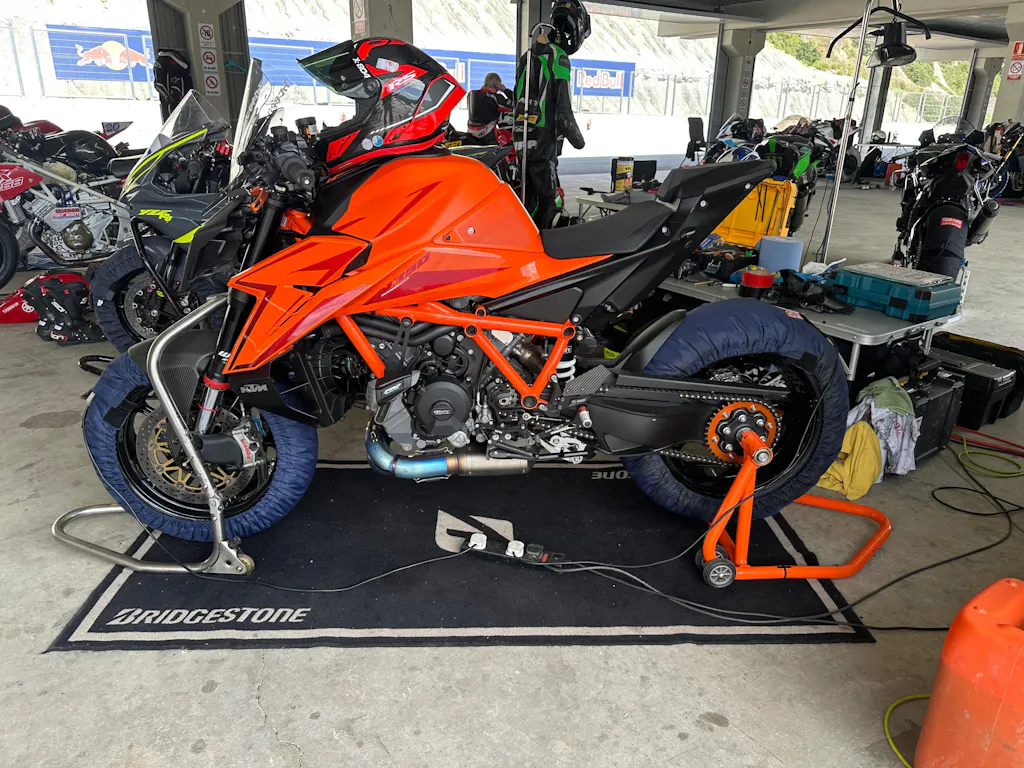
In this masterclass, we’re focusing on the front end. When you push a bike on the racetrack, you access limits you simply can’t find on the street. You start to see where the bike struggles. For the Super Duke, it has always been two main "Achilles heels": it squats under power, and it has too much trail, which makes the steering feel lazy.
The Trap of High Ride Height
For years, the standard fix for these problems was to raise the rear ride height. I eventually got to a point where I was racing my bike 38mm higher than stock. While that steepened the swingarm and reduced trail, it created a new set of problems.
The higher you go, the higher your center of gravity becomes. Ironically, a higher center of gravity can actually generate more squatting force. Plus, there is the issue of confidence. I’m 6'3", and even for me, being that far from the ground felt uneasy.
The Science of Confidence: Why "Knee Down" Matters
Think about balance. If you stand on one foot, you’re constantly wobbling, using your inner ear and vision to correct. But if you just touch a finger to a wall, you’re instantly steady.
On a motorcycle, your knee is that finger. When your knee is firmly on the pavement, you have a direct, physical feedback loop. If the front tire starts to tuck, you don't have to wait for your brain to process the falling sensation; your knee feels the pavement push back, and you instinctively push the bike back up. By jacking the rear up to the moon, I was losing that contact and, with it, my confidence. I spent this past winter figuring out how to get the performance of 101mm (or less) of trail without the massive seat height.
Superclamp: Steering Without the Sacrifice
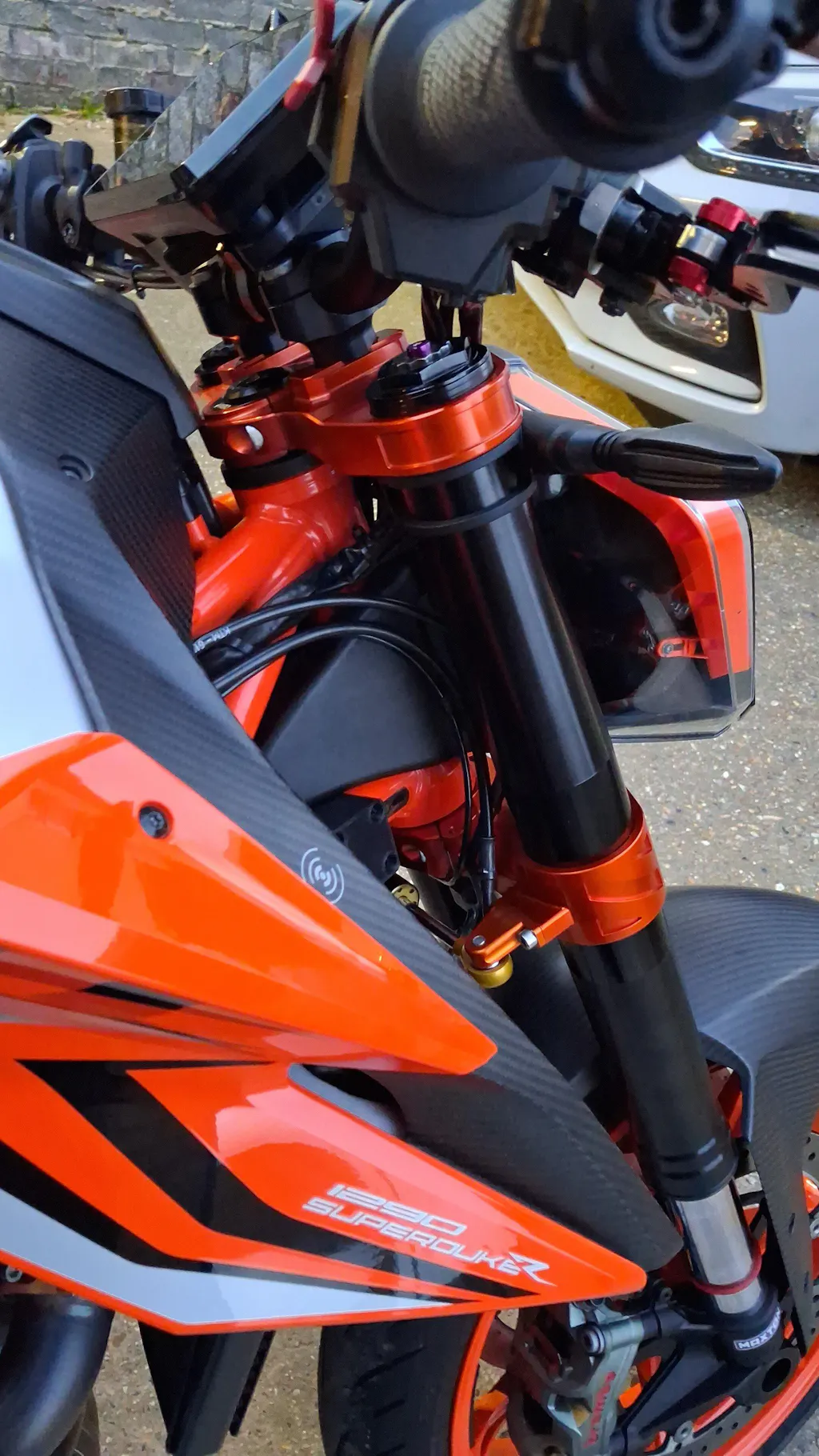
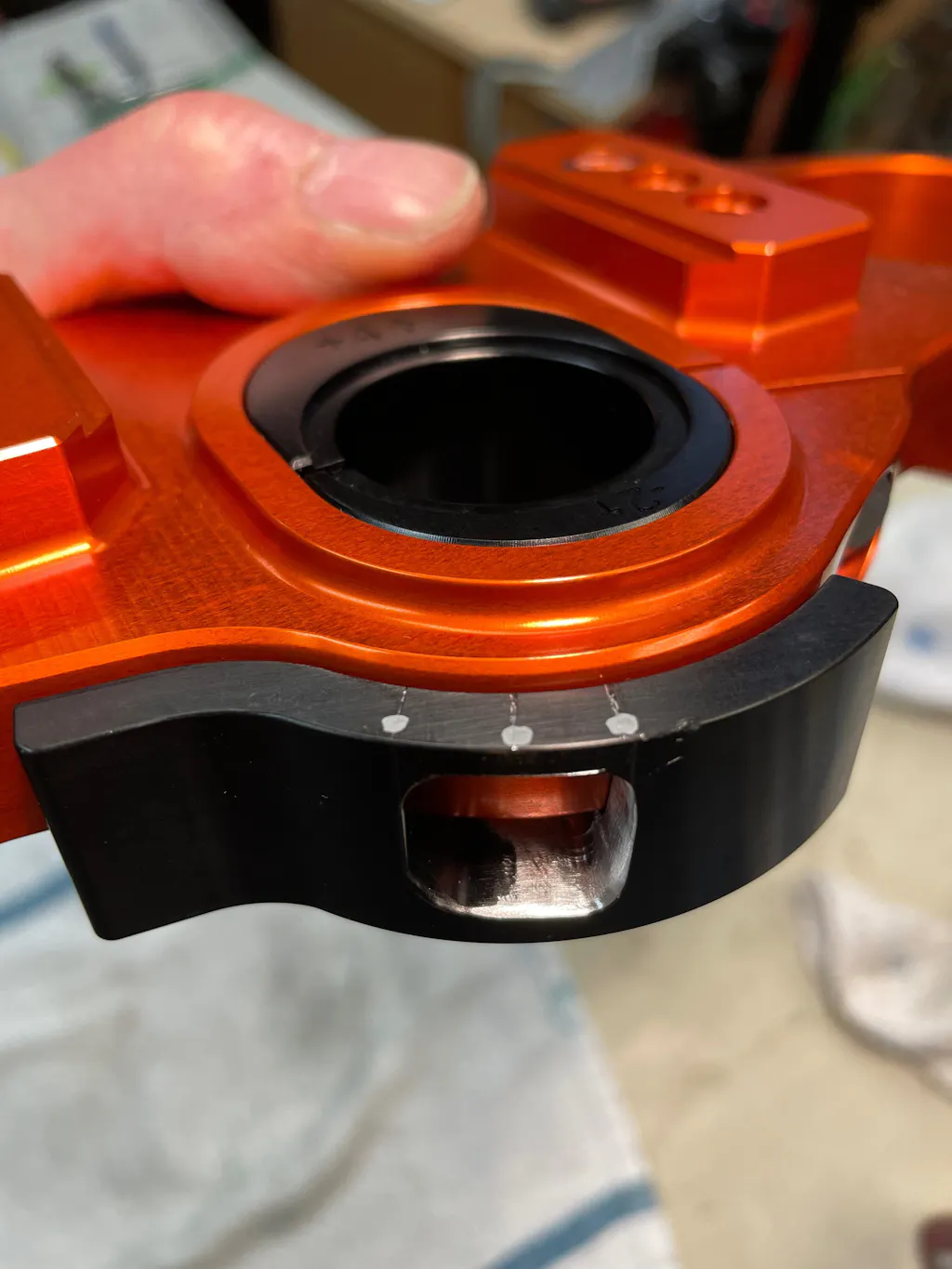
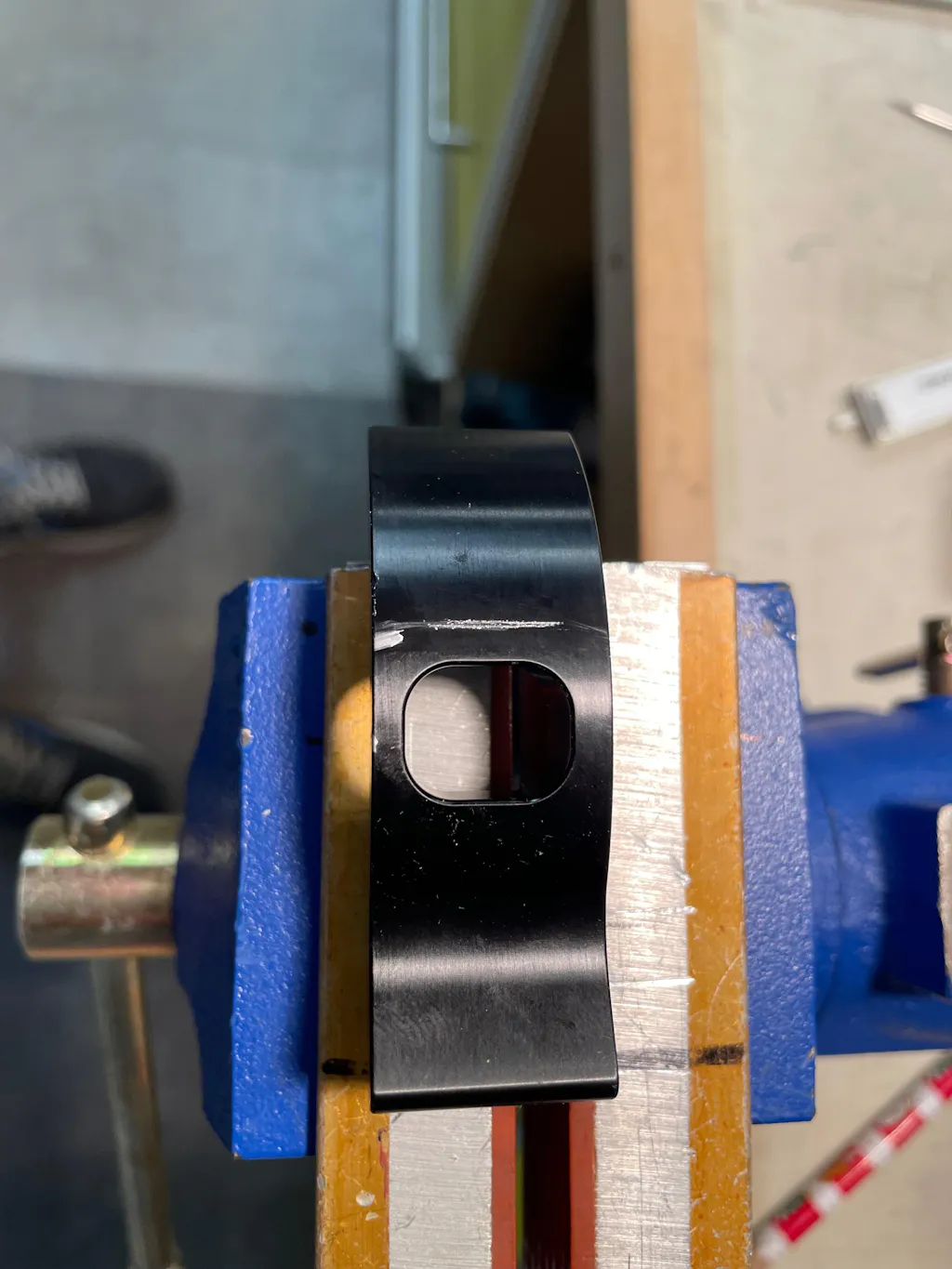
The solution is the Superclamp. This adjustable offset triple clamp is the heart of the "New World" setup.
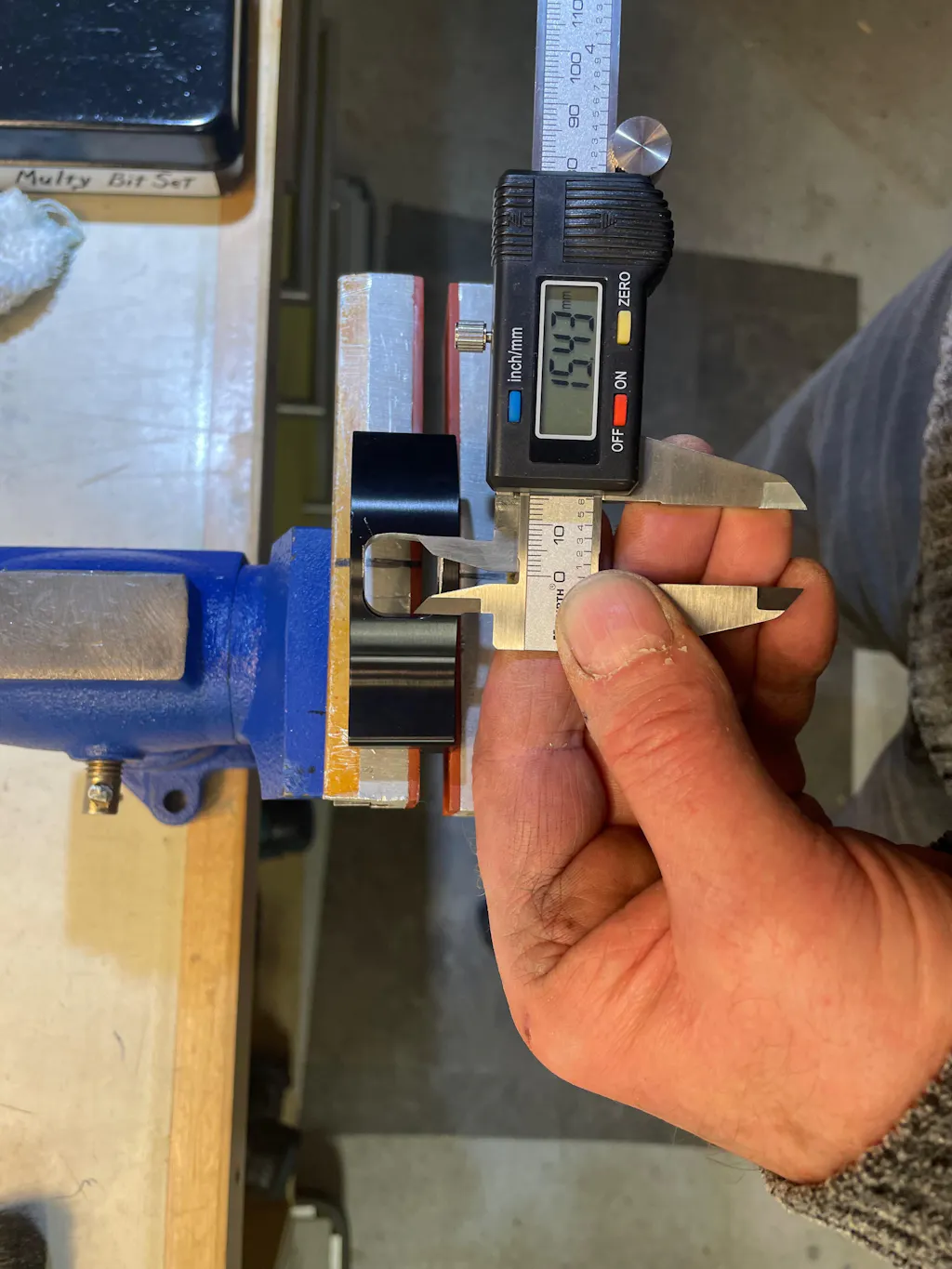
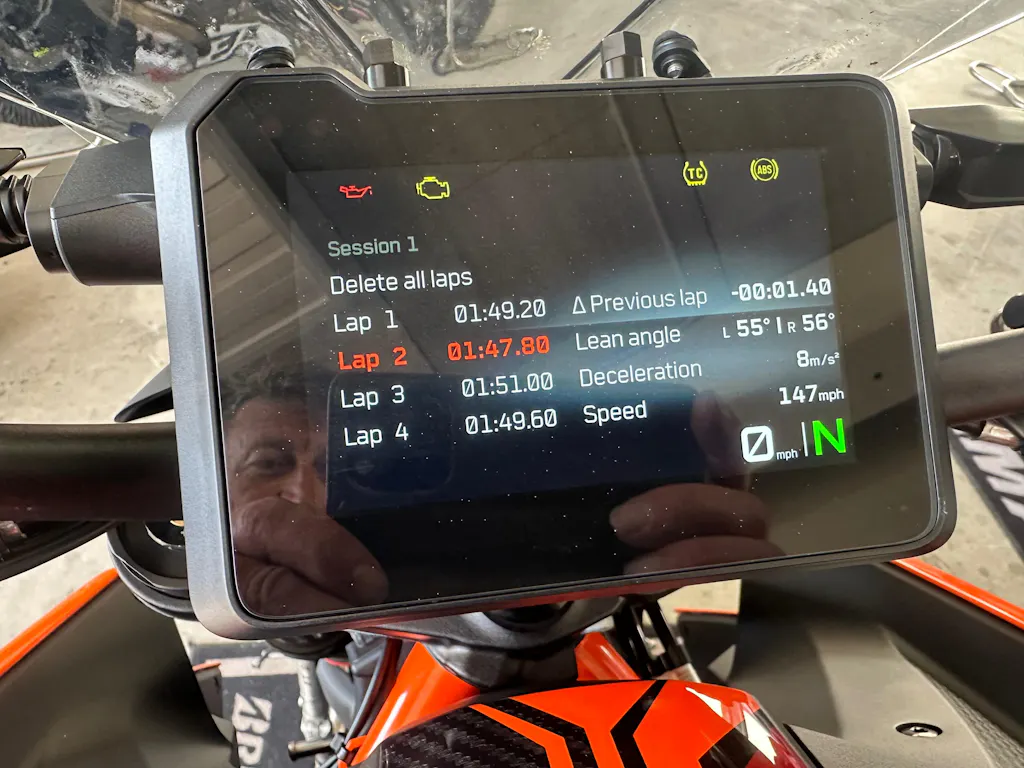
By increasing the offset (the distance from the steering stem to the fork centers), we can reduce trail directly at the front end. In my recent races, I’ve moved past my old "best" of 101mm and have been testing 99mm and even 98mm of trail. The result? A bike that is flickable, stays on its line during trail braking, and doesn't require a 38mm Sport Link to turn.
But it’s not just about the numbers; it’s about rigidity. OEM triple clamps can twist and flex when you’re plowing into a turn on the brakes. That flex "muddies" the data coming from the tire. The Superclamp is stout. It holds the forks perfectly in line, so when the tire moves, your bars move. You know exactly how much grip you have left, allowing you to jam the bike into the apex with 100% confidence.
Pushing the Limits: Ohlins FKR Cartridges
I’ve always been a fan of Ohlins suspension, but they don't make a direct-fit cartridge for the Super Duke's WP forks. Working with some talented machinists, I developed custom fork caps that allow us to run Ohlins FKR pressurized cartridges inside the stock tubes.
The benefit here is the reduction of cavitation. In a standard oil-bath fork, rapid movement can turn oil into a gas/oil mix (bubbles), which makes the damping inconsistent. The FKR system pressurizes the oil, virtually eliminating those bubbles. When I combined these cartridges with the Superclamp, the front-end feel became the best I have ever experienced on any motorcycle, period.
Ergonomics and the Forward Attack
The Superclamp also fixes a major ergonomic gripe. The stock setup has limited bar positions. My design features three mounting holes, providing six different positions for the bar risers.
I run mine in the farthest forward position. This opens up my wrists and allows me to get my body weight over the front end without feeling cramped. For taller riders especially, this freedom of movement is essential for maintaining a relaxed, effective riding position.
Summary of the "New World"
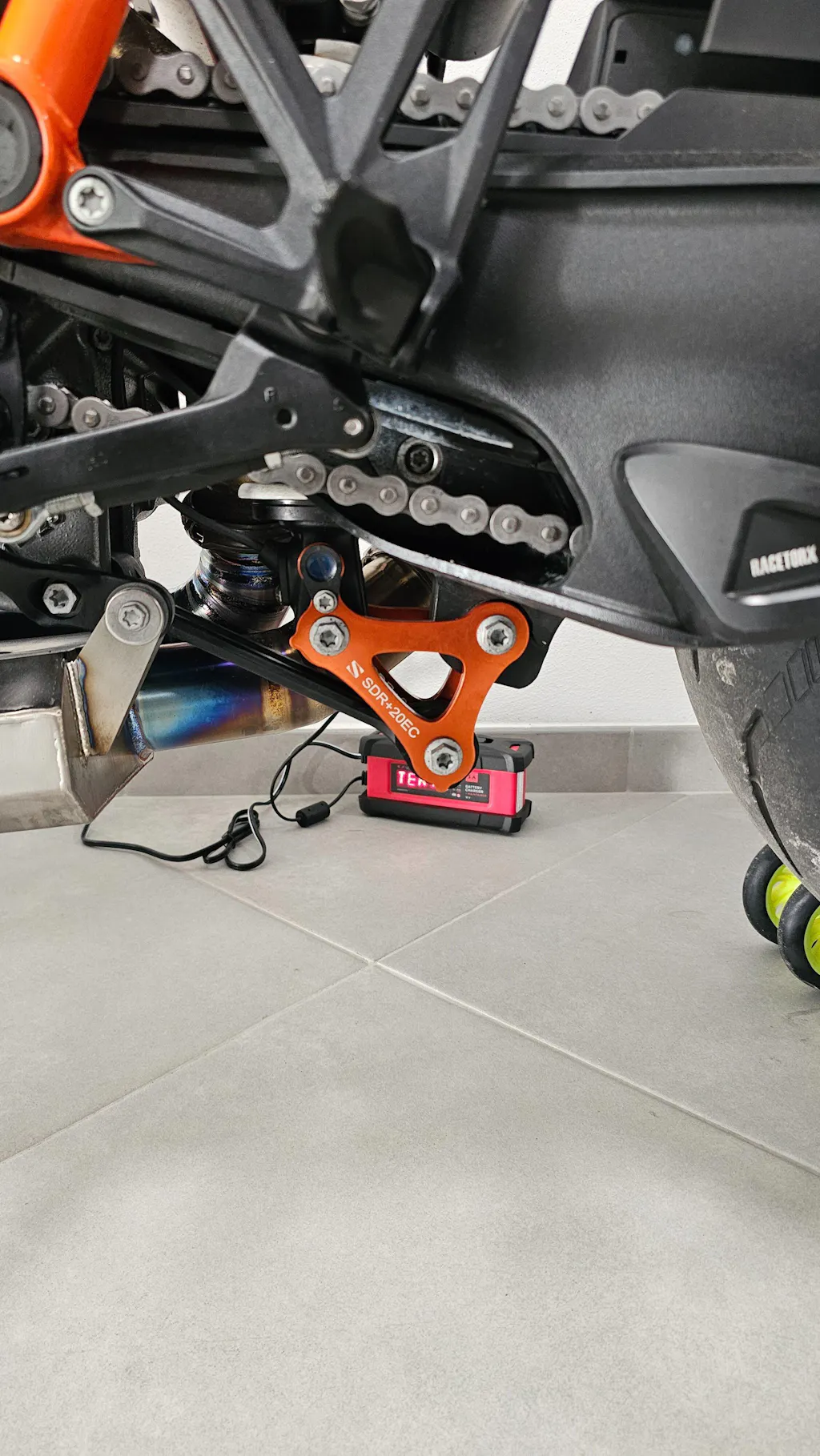
We’re moving away from the "old way" of just raising the rear. By using the Superclamp to fix our trail and the Ride Height Tool to keep our data accurate, we can keep the bike lower, keep our knees on the ground, and keep our confidence high.
This is just Part 1 of a multi-part series. We’ve got a lot more to cover regarding anti-squat and rear-end mechanics. To see the "one-foot balance" demonstration and the footage of the 99mm trail in action during a last-lap battle, watch the full masterclass here: NEW WORLD OF SUPER DUKE SETUP - PART I.