Editor’s Note: This video/post was originally recorded and released in May 2023. In 2025, we released an updated video on similar topics.
If you’ve spent any time around a racetrack or a dealership, you’ve heard the term "Black Art" applied to suspension. It’s a way of saying, "It’s too complicated for you, just trust the guy with the tools."
Well, I’m here to tell you that’s total bullshit. Suspension isn't black; it isn't even gray. It’s physics. But there is one lie—one fundamental misunderstanding—that even some professionals get wrong. It’s the idea that adding or removing preload makes your spring stiffer or softer.
I learned the hard way that it doesn't. And that mistake cost me a front-row seat to the pavement at Bridgehampton.
The Problem with "Mathematical" Spring Rates
We start with the spring. You can use a fancy equation—Force equals compression times weight—to find a spring rate that puts you in the middle of your travel. But even a "perfect" calculation can be wrong because it doesn't account for energy.
Think about "Charlie." Charlie weighs 150 lbs. If Charlie only rides his Super Duke to the restaurant at 60 mph, he needs a spring that is compliant enough to absorb small bumps at low speeds. If we give him a "mathematically correct" track spring, he’ll hate the bike.
But if Charlie goes to the track and starts hitting bumps at 150 mph, that same bike will bottom out and bounce him into the weeds. The rider is the same, the bike is the same, but the riding conditions changed. You need a spring rate that matches your weight and your environment.
Understanding the "Window of Travel"
Most shocks only have about 50mm of stroke. Because of the linkage on your KTM, that translates to about 100mm of travel at the axle—a 2:1 ratio.
Preload is the act of compressing that spring during assembly so it can support the weight of the bike and the rider without using up all that precious travel just sitting there. We want to keep the suspension in its "happy place"—the window of travel where it can absorb a massive compression (the smash) and still have room for rebound.
The Static Sag Myth
I see people online obsessing over specific static sag numbers. "You must have 10mm of static sag!"
Listen: if you’re a 95 lb rider, you might need a lot of static sag just to get the bike to move when you sit on it. If you’re a 400 lb rider, you might need so much preload to maintain your ride height that the bike doesn’t budge at all when you take it off the stand (zero static sag).
Both are "correct" for those specific riders. Don't chase a number on a chart; chase the window of travel.
The Bridgehampton Lesson: Why Preload Isn't "Softness"
This is the heart of the matter. Years ago, racing at Bridgehampton in the rain, I thought I’d be smart. I wanted the bike "softer" and more compliant for the slippery conditions. I backed off the compression, backed off the rebound, and—here was the mistake—I backed off the preload.
I thought I was making the spring softer. I wasn't.
What I actually did was move my entire "window of travel" down. By backing off the preload, the bike sat lower in the stroke. When I hit the brakes and tilted it into a turn, the fork was already near the bottom. I hit a bump, the suspension bottomed out, the tire took the hit, and I went sliding.
Preload does not change the spring rate. As long as you are within that sag window (not topped out or bottomed out), the force it takes to compress the spring another millimeter is exactly the same, regardless of how much preload you’ve cranked in. You aren't changing the stiffness; you’re just changing where the bike sits in its stroke.
Ride Height: The Mechanical Solution
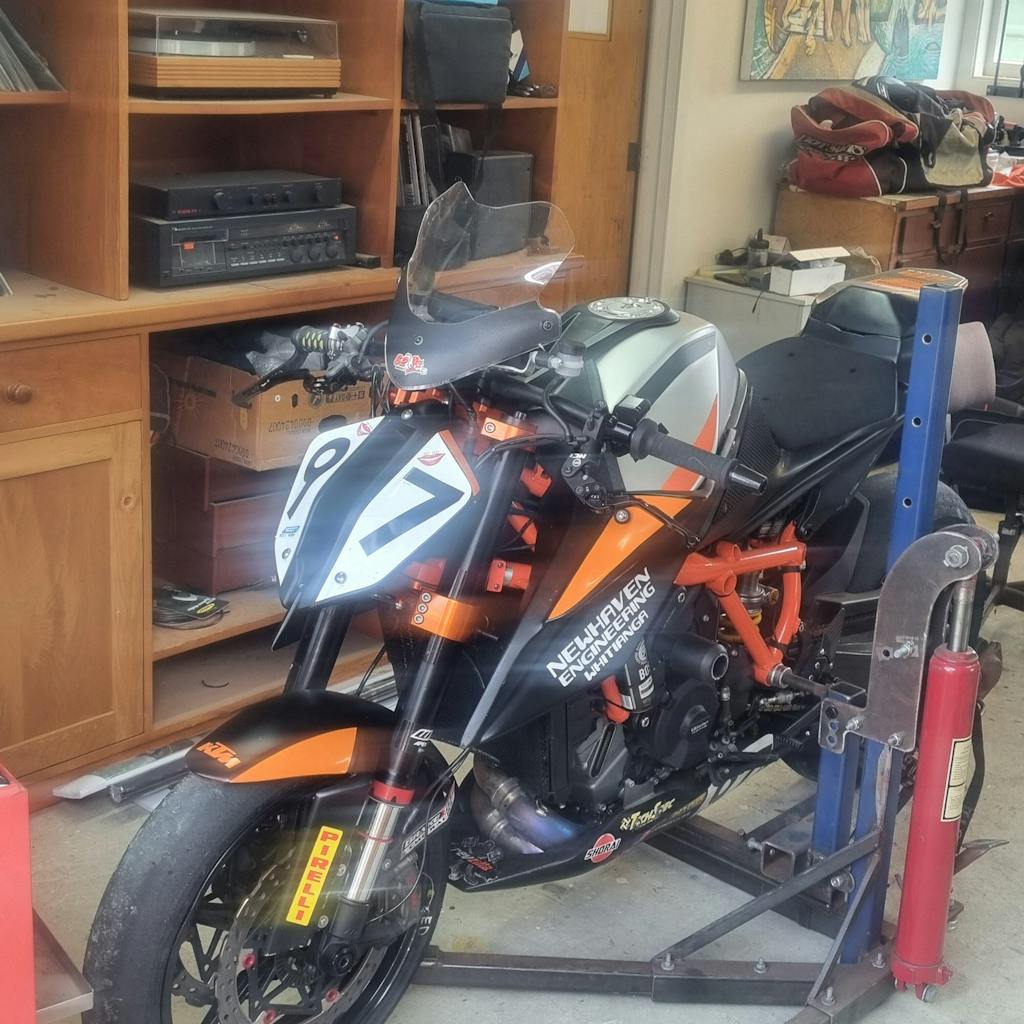
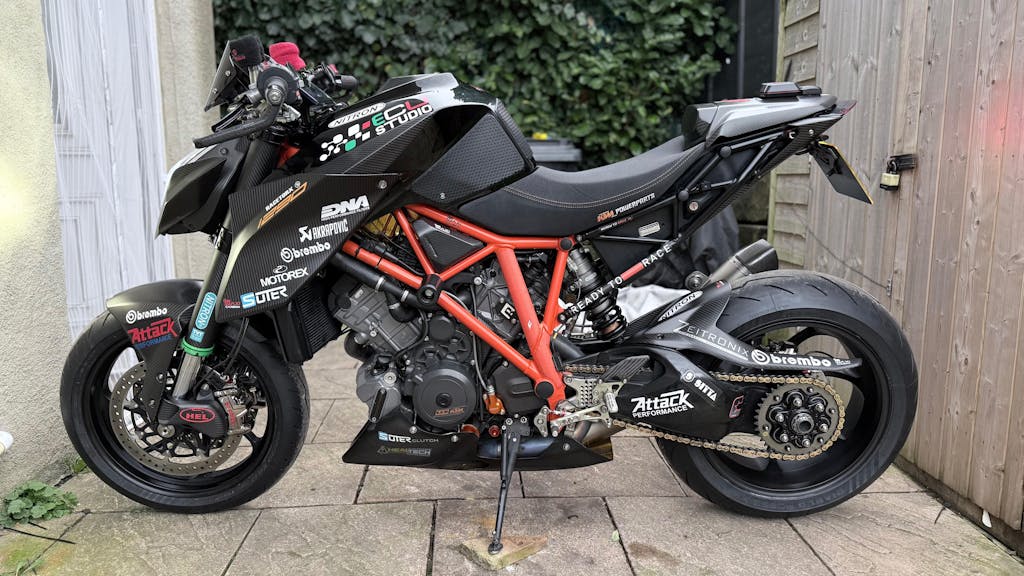
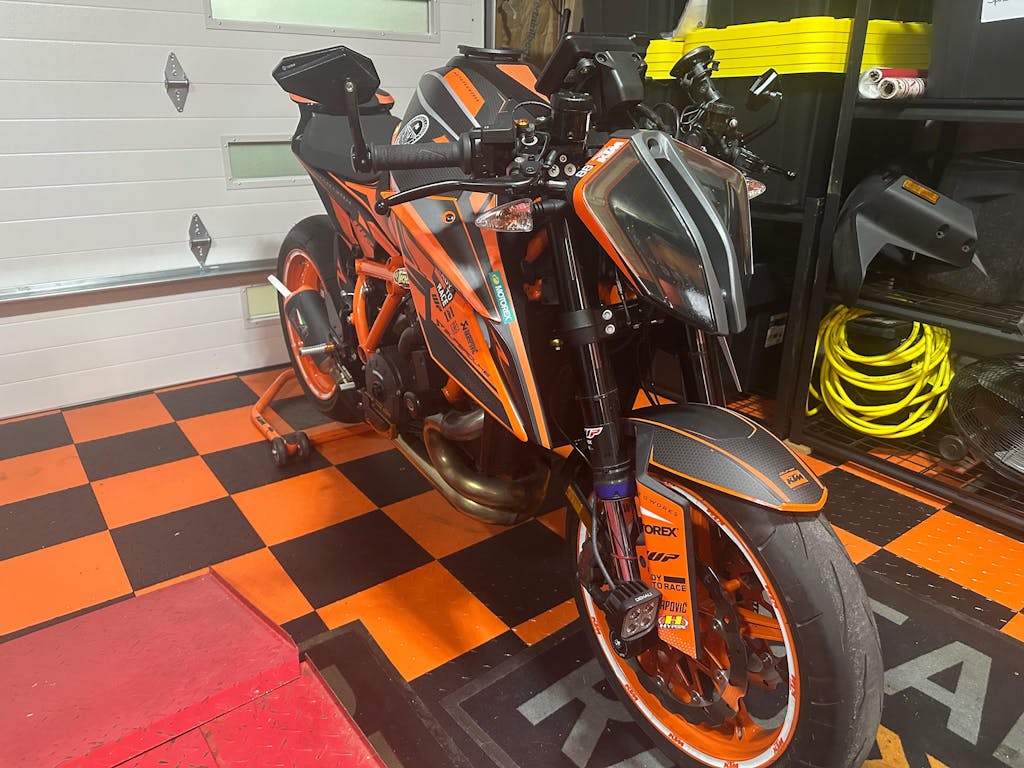
On the KTM Super Duke, we’ve found that the bike performs significantly better with a higher rear ride height. It turns quicker, holds a line better, and feels more planted.
However, many riders try to get that height by cranking in more preload. As we just learned, that moves your travel window. You might get the height you want, but now you’re topping out the shock, which is its own kind of dangerous.
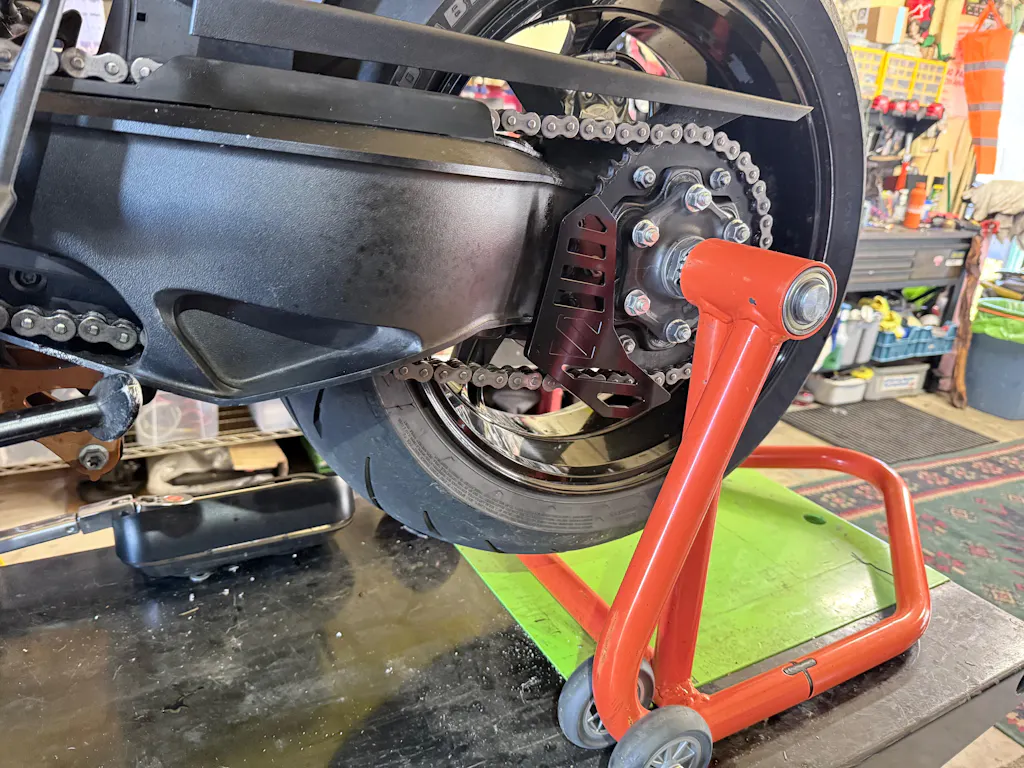
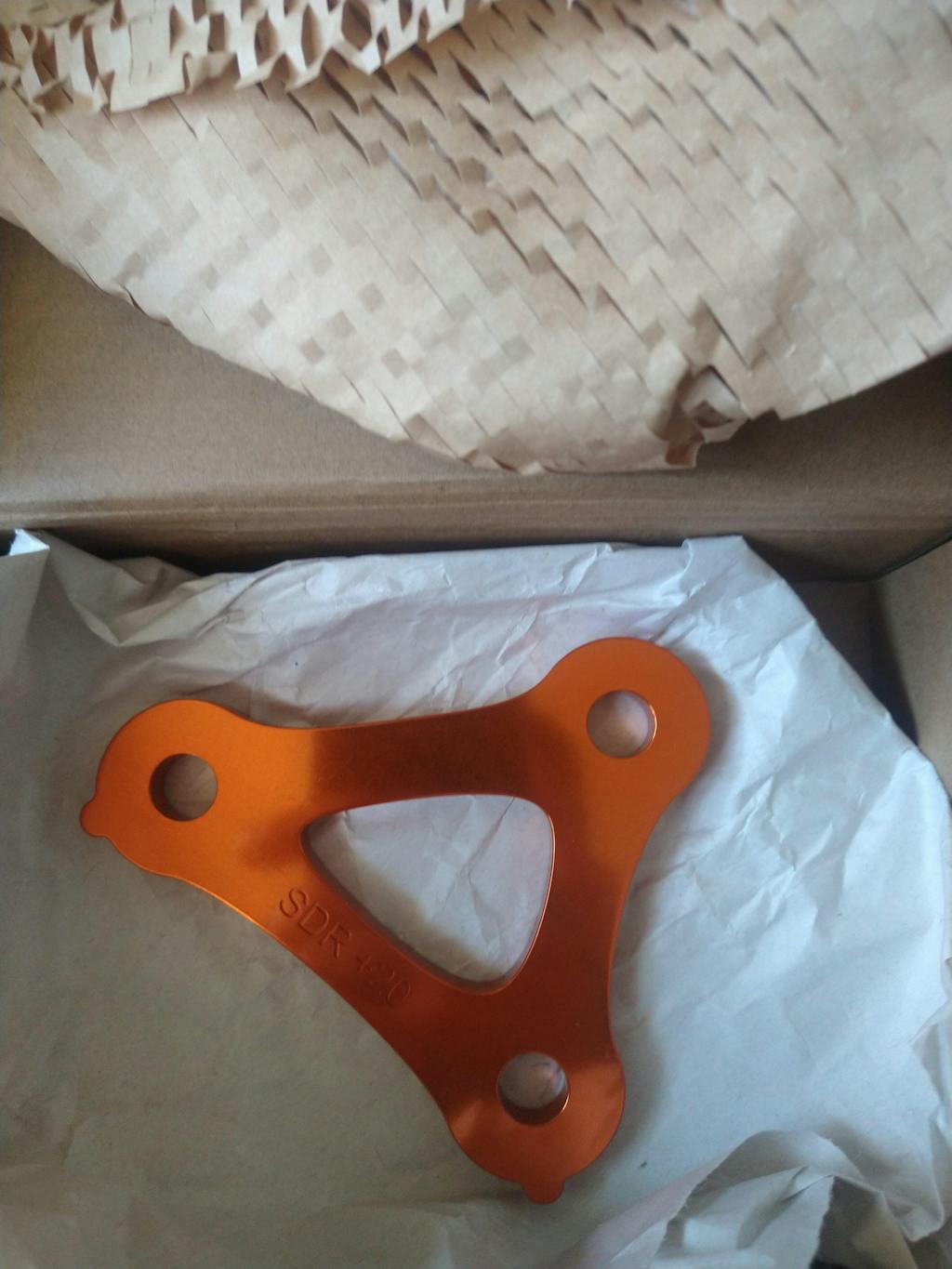
The OEM shock on the 1290 doesn't have a ride height adjuster. That’s why we developed the Super Link.
By changing the linkage mechanically, we give the bike the ride height it craves without touching the spring. We keep your travel window exactly where it belongs—in the happy place—while giving you the geometry of a pro-level race bike. Whether you're on a standard model or the Evo with electronic suspension, adjusting your height mechanically via a Sport Link or Super Link is the only way to do it right.
Knowledge is Power
Stop thinking of your suspension as a mystery. It’s a tool. Once you understand that preload is about position and not stiffness, you can start tuning your bike with confidence instead of hope.
If you want to see these principles in action and watch me walk through the "Charlie and Max" scenarios on the chalkboard, check out the full masterclass below. Or, read & watch the first part of this series, Suspension 101: Why Your KTM’s "Stock" Setup is Failing You.
Watch the Masterclass here: How To Set Preload: The #1 LIE Most Riders Believe