Better Than Changing Your Front Sprocket: The Secret to Superduke Gearing & Anti-Squat
A lot of riders try to shorten up their gearing by immediately dropping to a 16-tooth front sprocket. While this is easy and effective, it's not all positive. And there is a better way.
The 114-Link Chain Approach
Instead of going to a 16-tooth front, change your chain from the OEM 112 links to 114 links and keep the stock 17-tooth front sprocket. This one change dramatically opens up your options at the rear.
- 17/41 with 114 links: Just a touch shorter in ratio than a 16/39, with a slightly longer swingarm length.
- 17/42 with 114 links: Just a touch taller in ratio than a 16/39, with a slightly shorter swingarm length.
All of these combinations are incredibly close in ride height — altering the chassis by no more than 0.5mm. The difference you feel is in the ratio and the anti-squat, not the geometry.
Why the 16/39/112 Setup Boxes You In
The popular 16/39/112 setup has a real problem: if you ever want to gear the bike a little taller for a faster track, you have exactly one rear sprocket option left — a 38. That’s it. Run the 17/41 or 17/42 with a 114-link chain and you have multiple sprocket options in either direction without ever having to break and replace your chain. Flexibility is everything when you’re dialing in for different circuits.
Chain Guard Rub Issue
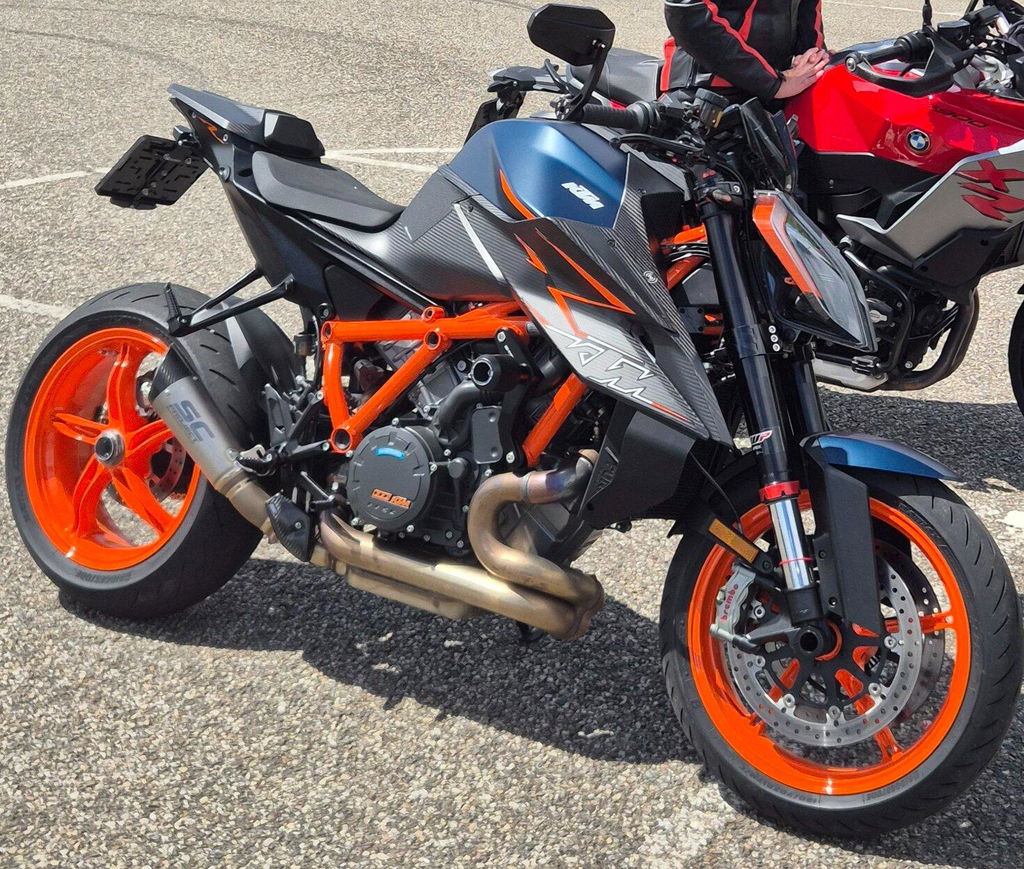
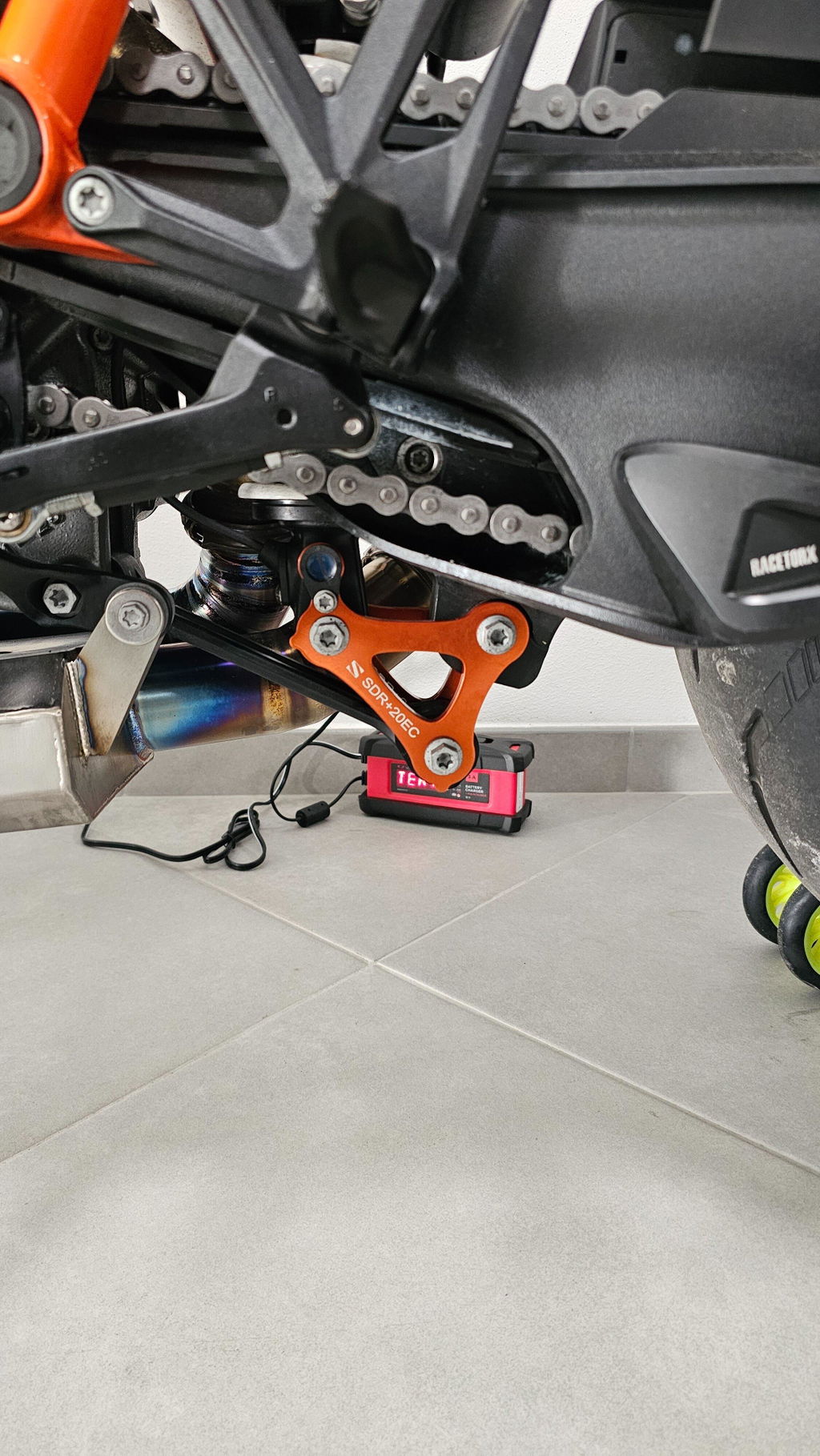
Like I said, there is a better way than simply going to a 16 front - but this reason is related to wear instead of performance. By going smaller up front, rather than larger out back, you are running the chain closer to the swingarm. The chain will drag on the rubber chain guard more. And if you raise your ride height, via a longer shock or a Sportlink, now this rubbing could get worse. So if you go up in size in the rear, instead, you avoid all this rubbing AND you create more anti-squat.
The Anti-Squat Bonus
Running larger rear sprockets achieves something critical for the Superduke chassis: more anti-squat. When you rip the throttle open on corner exit, the rear end stays planted instead of collapsing into the pavement. That preserved chassis height maintains your trail, drives more energy directly into the rear tire for traction, and keeps the front wheel firmly planted for high-speed stability.