Decoding Front-End Speed Wobbles: Trail, Tire Flex, and Gyroscopic Forces Explained
Compartir
Q: High-Speed Front End Wobble on the Track
"Hey Eric, I'm chasing a front-end wobble issue. When I'm holding speeds around 200 km/h, the front end starts to oscillate. I've been messing with my trail and spring rates, and I'm wondering if I just need to throw a heavy steering damper at it to get the bike to track straight. What is causing this, and how do I fix it?" - Rob
The Shop Talk Answer
OK Rob, put your thinking cap on. This one could get silly.
There are a few things to consider here. First, what is causing this wobble to begin? Second, what is causing this wobble to repeat?
Those are two key questions which are not actually related to each other. I think it will help if we think of this one problem as at the very least, two separate problems. The start, and the continuation.
The Genesis: Where the Wobble Begins
To start with, think of a tire rolling forward on the ground. Imagine a centimeter up the front of the tire, in front of the contact patch, on the tread that is about to become the contact patch. As that tire rolls forward, that next centimeter reaches forward—toward the pavement ahead—grabs that pavement and pulls it toward the center of your contact patch.
Can you visualize that? If so, now you can see where this situation begins. If that new area of your tire reaches to the side, even slightly to the right (for example), and pulls that pavement that is to the right of your path of travel into the center of your contact patch—that slight pull to the side is where your wobble begins.
To make that simpler, imagine a pin-straight line under the center of both your tires, stretching straight ahead on the pavement before you to oblivion. That line is where your motorcycle is happiest to be, and to remain. Your frame is happy, your forks are straight, your triple clamps aren't flexing, your tires aren't being pulled laterally, etc. Every aspect of you and your bike are calm and straight in line.
Now the instant you turn that bar, which reaches your front tire to the side of that center line (to initiate a turn or avoid a bump or whatever), you create flex. Flex in the tire, flex in the triple clamps, flex in the frame, etc. You're not going to feel this flex, especially not with just a slight step to the side of that center line, but it's there. Force is there. Flex is there.
Hopefully, you are following this so far, because I'm sure it's not going where you think. That misalignment with the center line is the genesis of your wobble. But it's not the cause of your wobble. What happens next is.
The Reaction: The Trail Paradox
Every action causes a reaction, right? So what we need to focus on with your wobble mystery is related to the reaction.
This is where it gets interesting. A bike with more trail will react to that "misalignment" with more force. The more trail you have, the more the bike wants to go straight. You already know this.
But what you might not be considering is the trade-off between a setup with more trail vs. a setup with less trail. More trail will fight to keep that misalignment from happening. Less trail won't fight as much. So you might say a bike with more trail won't experience wobbles, right?
Could be right. Could also be wrong. And the reaction is why.
A bike with more trail will not only fight to stay straight, which could avoid this misalignment, but it could also react more violently to this misalignment—forcing the "correction" of the wheel to travel back toward centered, and past centered. So in this case a bike, or a setup, with more trail can either help avoid a wobble or make a wobble worse!
And a setup with less trail can fight less to keep that front wheel aligned with center, which you might think would cause more wobbles. But at the same time, a setup with less trail will create less correcting force—which will keep the wheel from over-correcting and causing a wobble.
I know. I know. Super fucked. This is not an answer. Yet. That's next.
The Delay: Flex and Force
Really, Robert, a steering damper can help stabilize your front wheel, but it's a band-aid not a cure. Dampers don't fix the cause of the problem; they dampen the result of the problem. So what we need to do is find the cause of this misalignment. Something is initiating this misalignment. The genesis of all this.
Remember we talked about reaction? Well, imagine this: if your wheel jerks back, even slightly, due to becoming out of line, that lateral force can cause your tire to flex. It's rubber after all. And if the pressure is slightly low, that flex occurs more.
And what does this flex cause? Delay.
This means when your trail snaps your wheel back to straight (and remember 100mm of trail snaps your wheel back to straight just like 108mm of trail snaps your wheel back to straight—the only difference is how much force is behind the snap), the tire begins to flex. Let's say the front wheel jerks to the left, to get back inline. Well, if the tire flex causes "delay", that means the wheel already moved back to center but the tire is still off to the right.
Now if the wheel snaps back with more force than is needed to get it back to center—and travels slightly too far, going past center—once the tire finally follows the wheel, ends its flex and lands too far to the left of center, now that trail starts the jerk in the opposite direction. The tire flex happens again, the travel past center happens again, the delay happens again, and now we enter a repeat of all these processes over and over and over.
So there are three steps here:
- The Genesis - the front wheel getting out of line.
- The Reaction - trail jerking the wheel back to or beyond straight.
- The Delay - caused by tire flex, triple clamp flex, frame flex.
The Missing Link: Gyroscopic Force
Now, throw one more crazy physics curveball into the mix: gyroscopic force. Imagine taking a bicycle wheel off a bike, holding it by the axle in your hands, and spinning it up super fast. If you try to just tilt it left or right on one axis, it fights you hard. It wants to stay exactly where it is.
But, if you let your hands move in a fluid, figure-eight motion—pushing the right side forward while tilting the left side down—the wheel doesn't fight you at all. In fact, it willingly falls right into a violent, two-axis wobble.
When your front wheel is planted firmly on the ground, the weight of the bike forces the tire against the pavement, and the pavement acts as an anchor that stops that figure-eight wobble from happening.
Squat, Acceleration, and the Fix
This brings me to my last point, which is what triggers the whole mess.
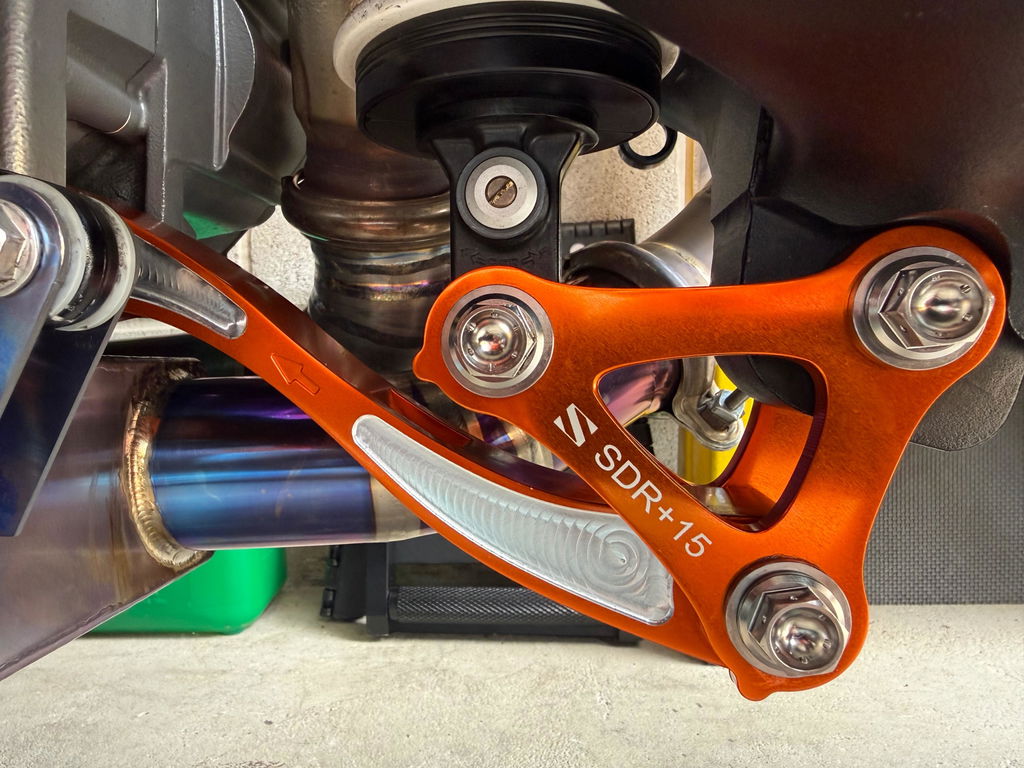
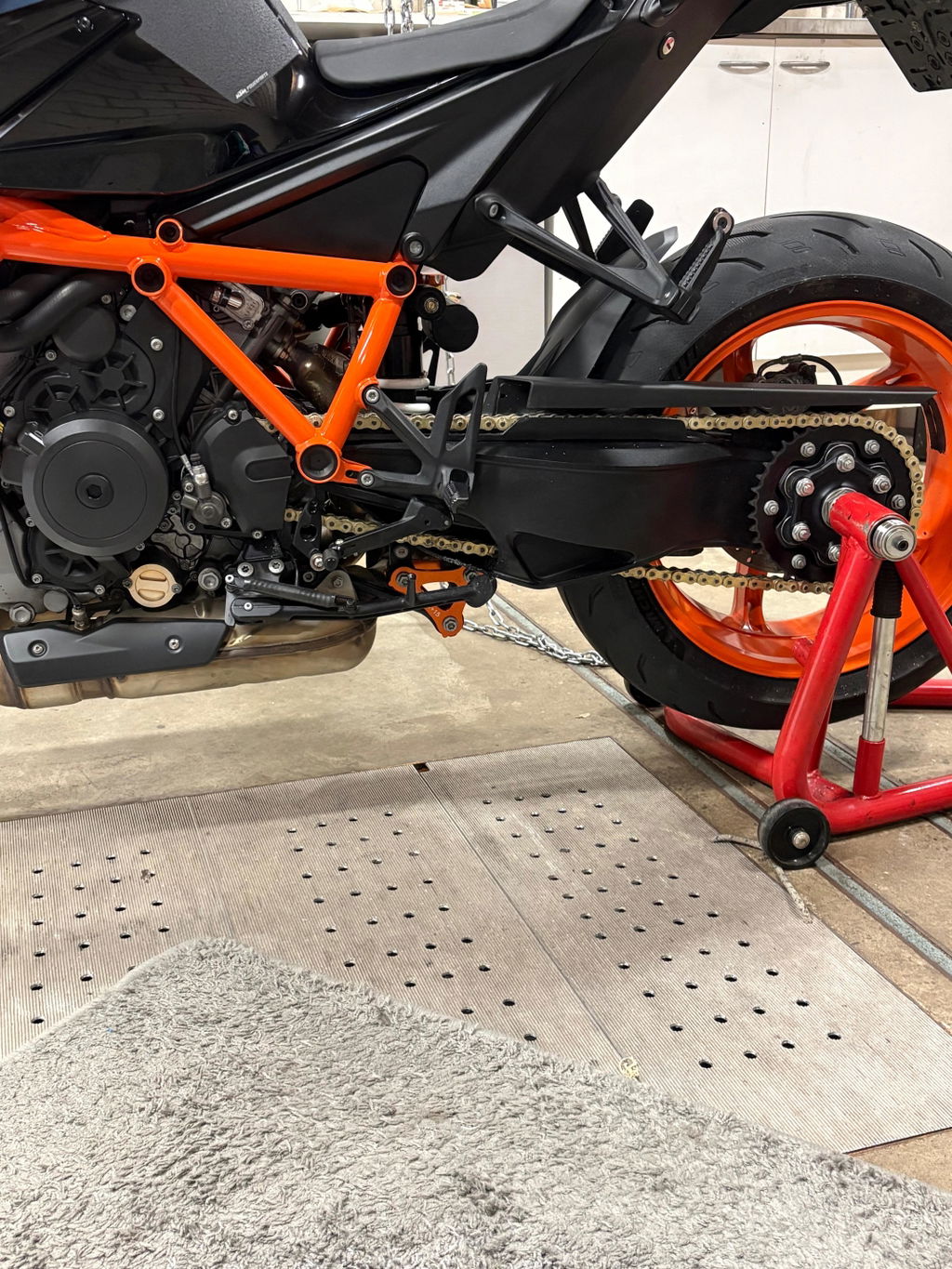
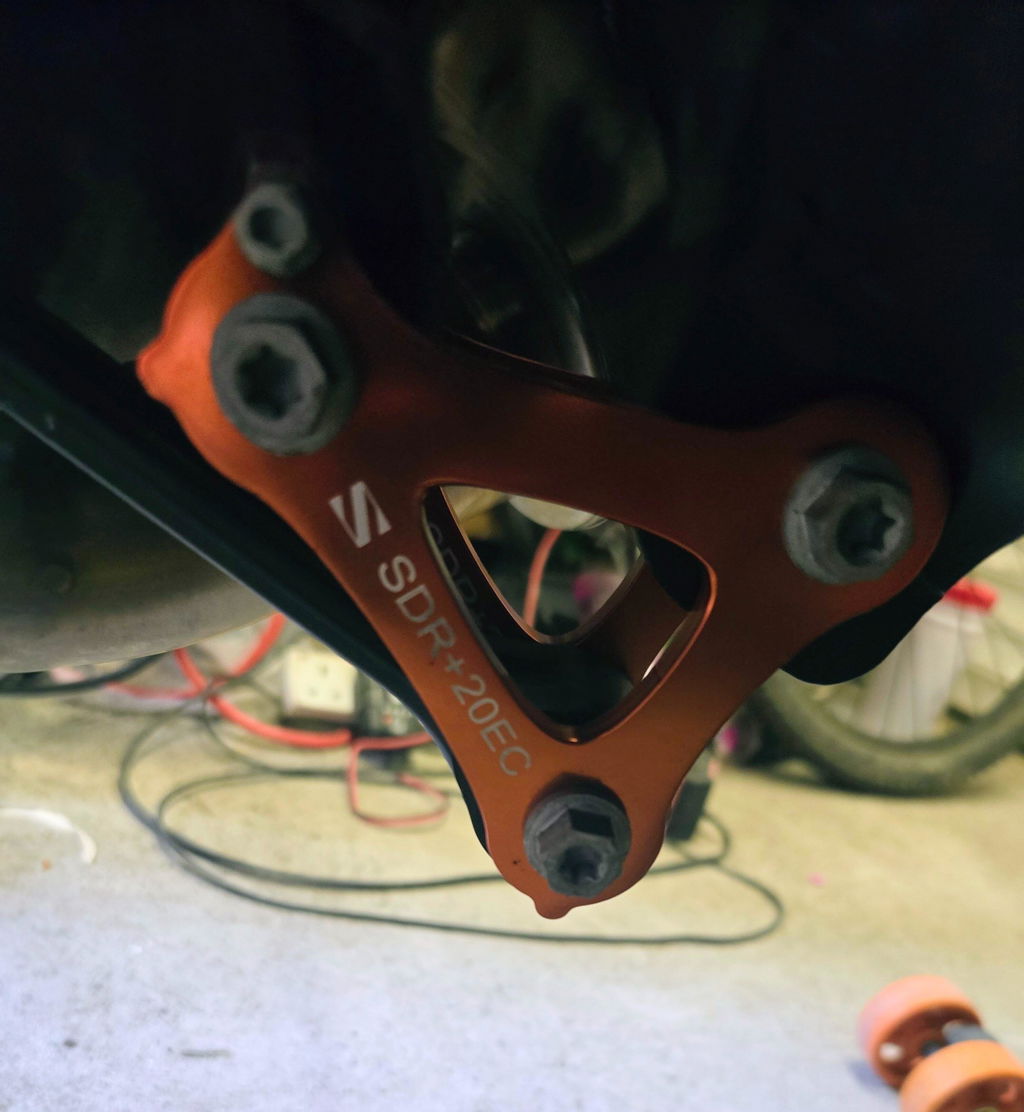
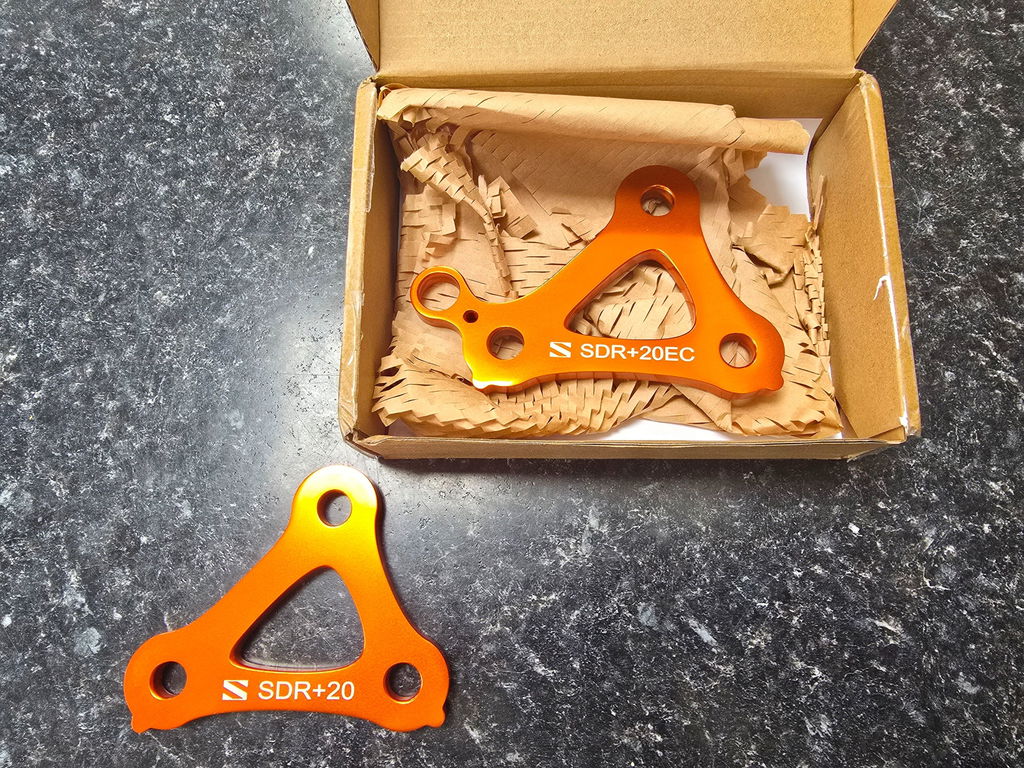
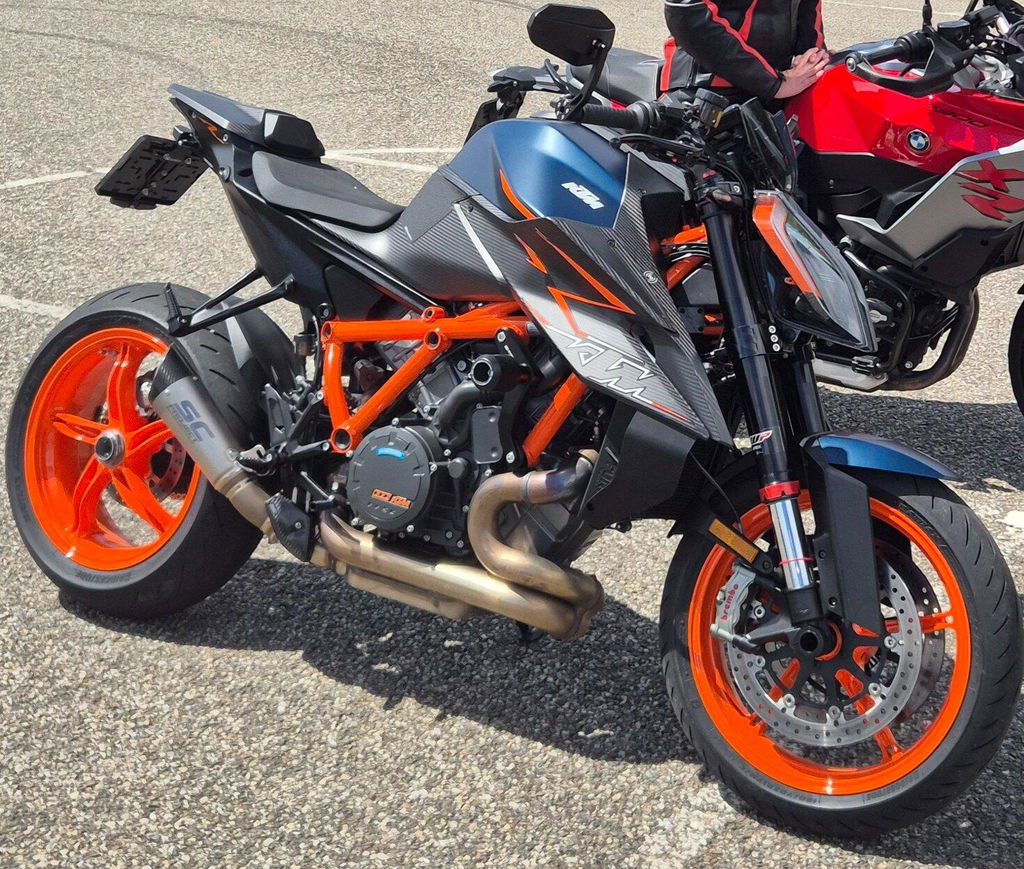
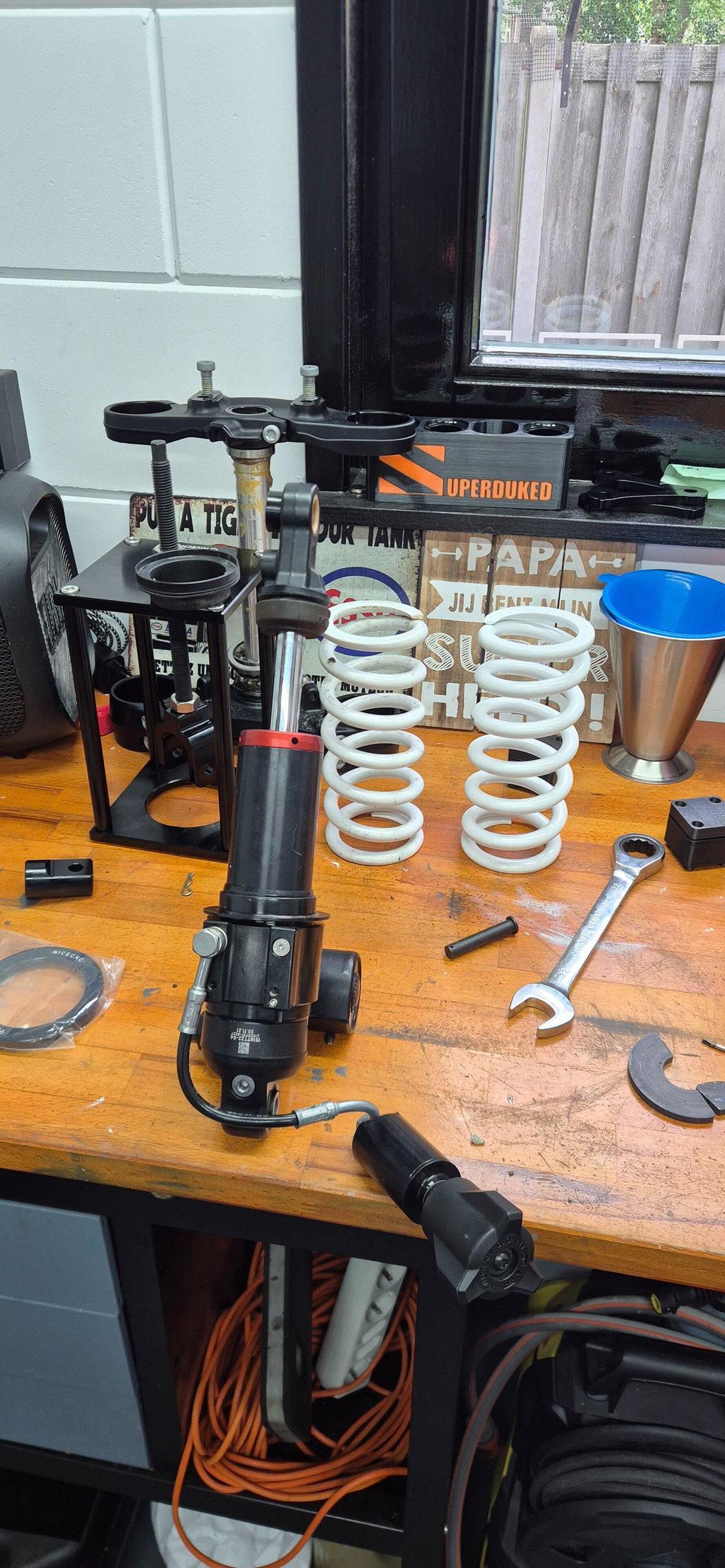
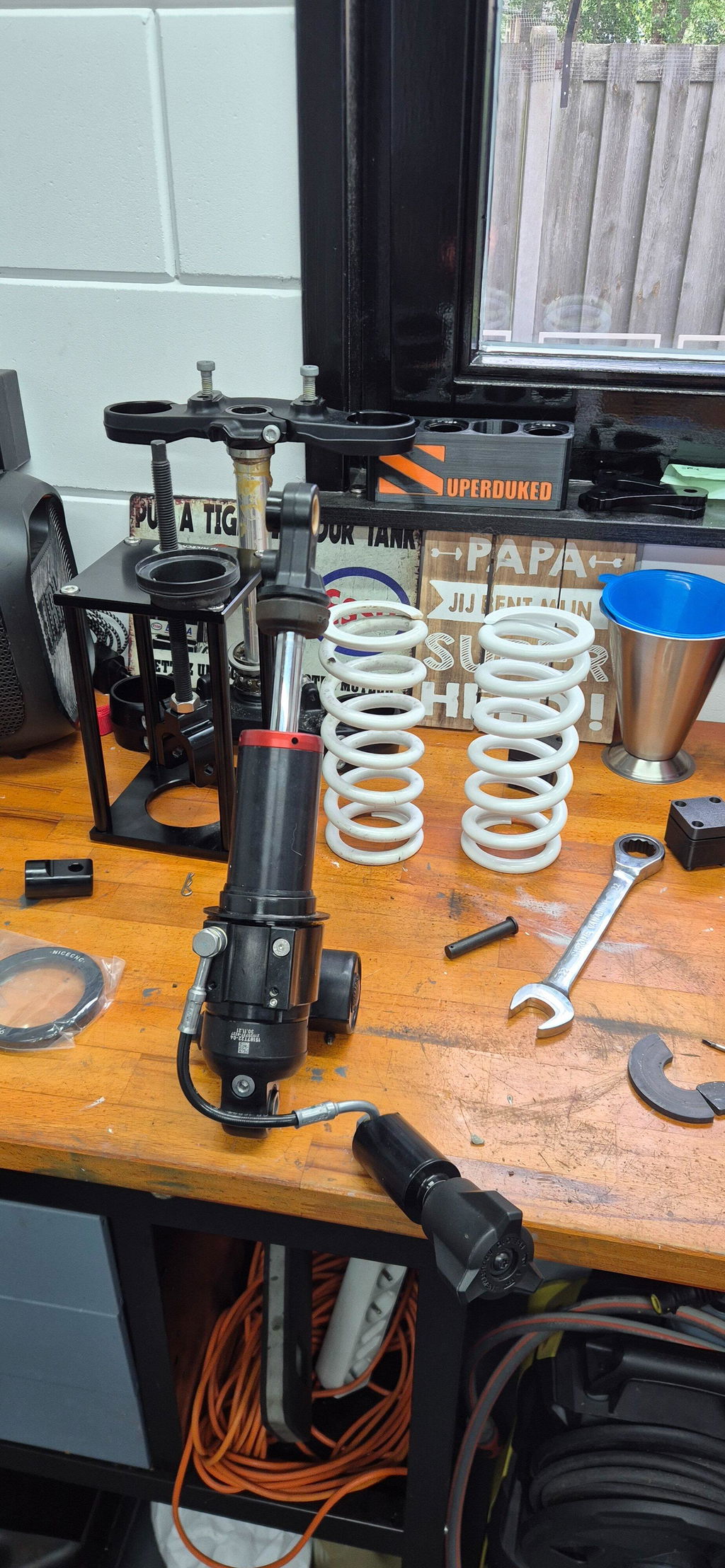
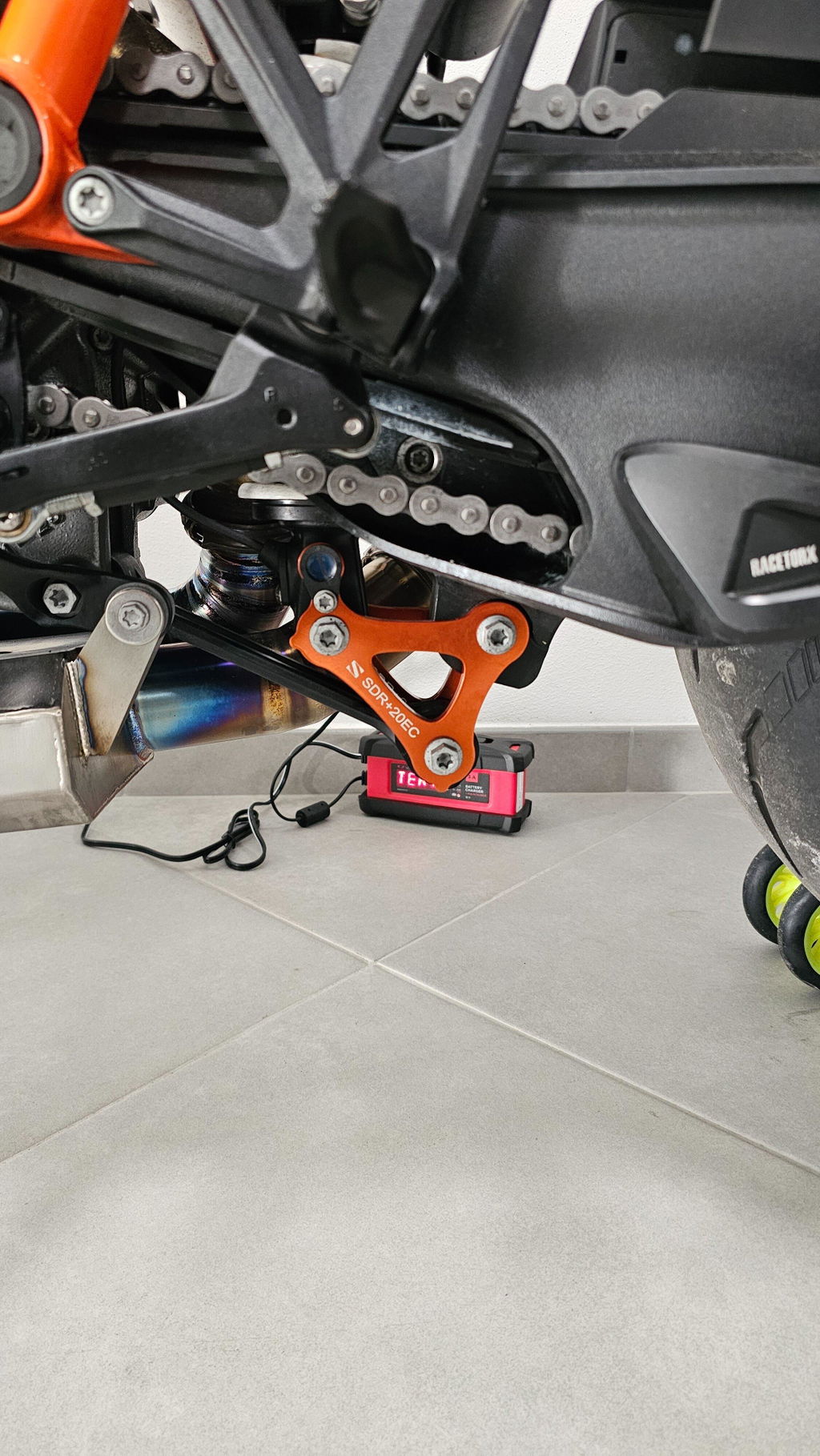
Holding speed at 200K requires acceleration. Acceleration on a Superduke causes squat. Less with a +15 rear, which helps, but more with a 90 spring, which is possibly hurting you. I race with a 110 rear spring, and I weigh 210. I think you may be under-sprung. Being under-sprung can cause weight bias to move rearward more, which causes the front to be light, which makes it more susceptible to being pushed out of line with center.
More importantly, the second that front tire gets light and loses firm contact with the tarmac, it loses its anchor. Suddenly, all those delayed trail reactions and flexing forces we just talked about feed straight into that spinning front wheel. And because the ground isn't pinning it down anymore, the wheel happily enters that gyroscopic figure-eight wobble. The front end shakes its head, and you're just along for the ride.
Before buying a damper, check this free/cheap list to attack the genesis of your speed wobbles first:
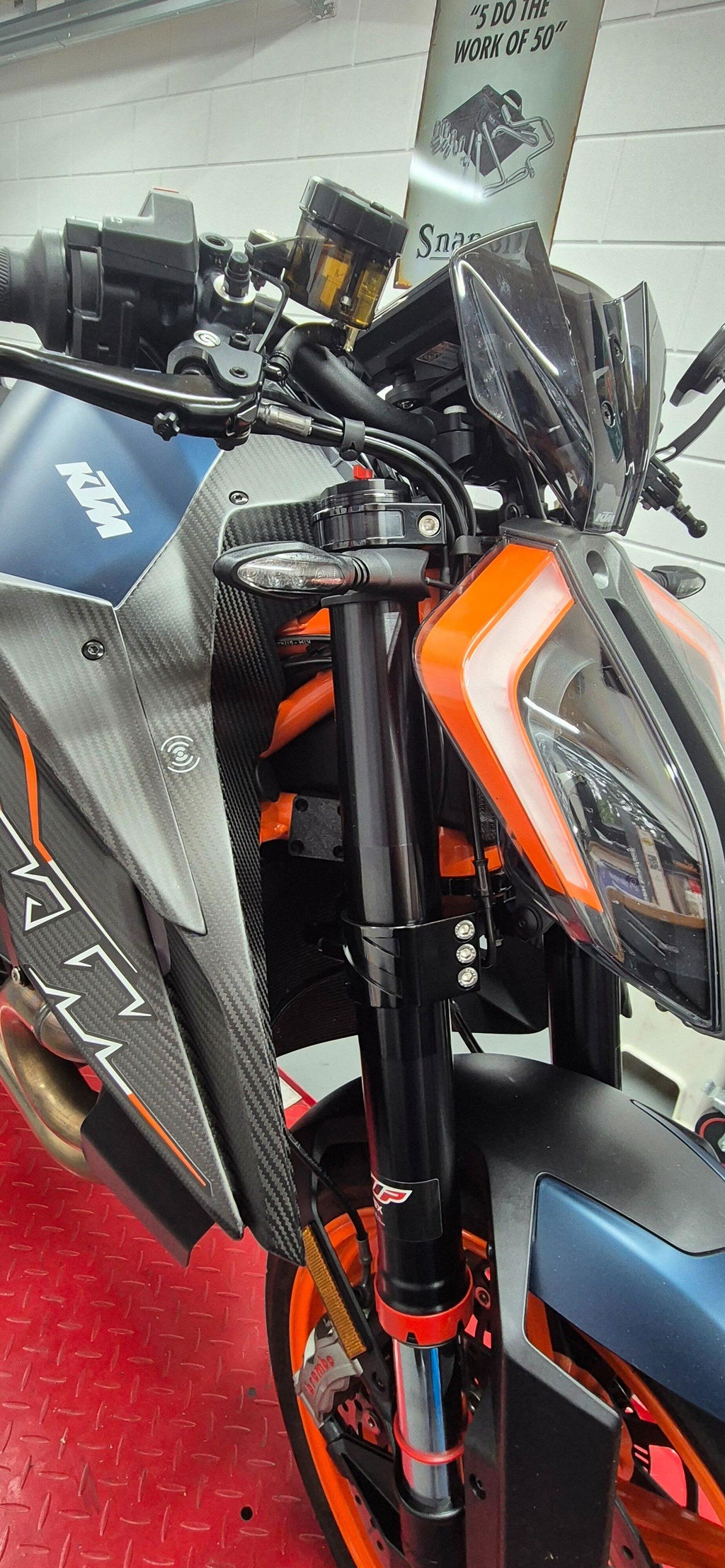
- Steering Head Bearings: If your steering head is loose, worn, or not properly torqued, this can cause the first step in speed wobbles. In fact, it's the most common cause. Costs nothing to adjust.
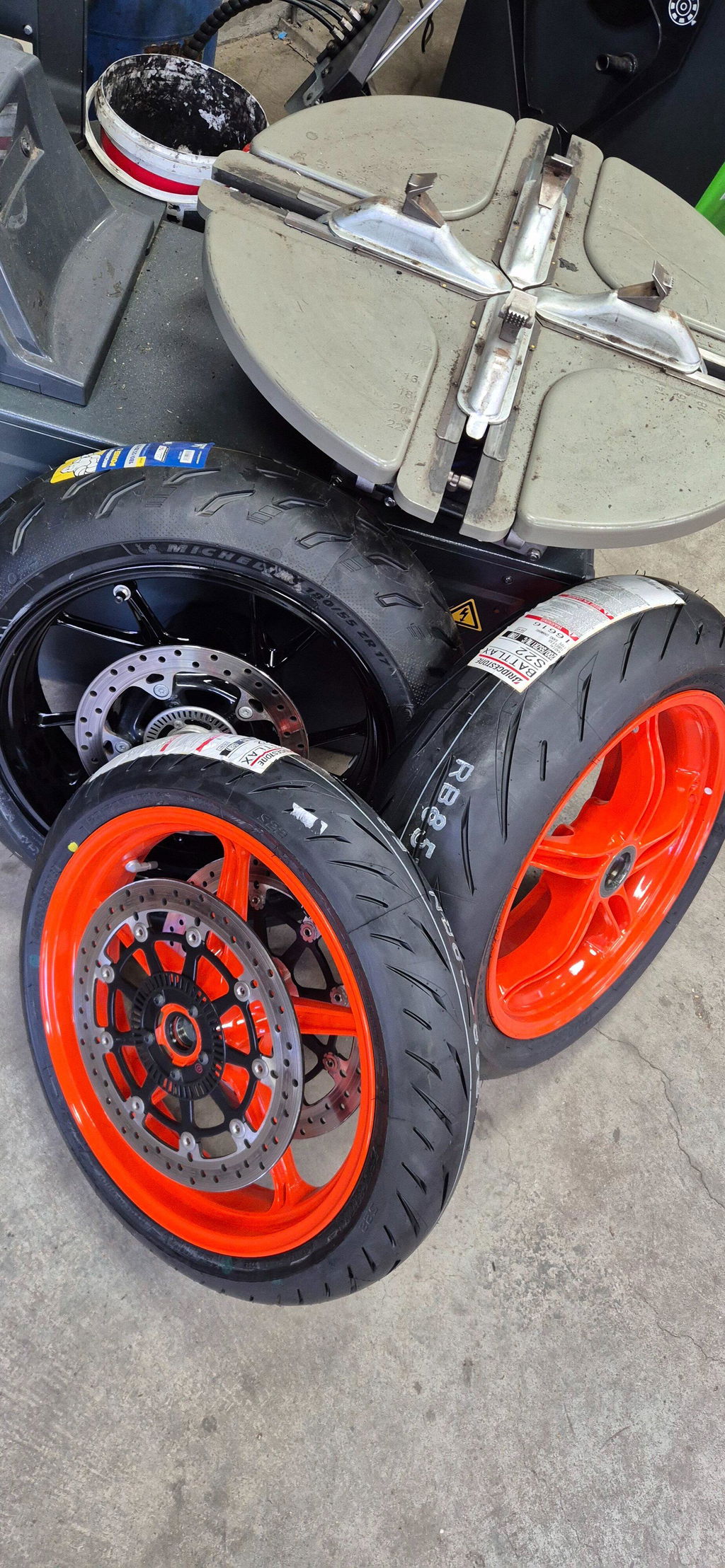
- Tire Pressures & Tread Wear: Too low pressure equals too much flex and delay.
- Spring Rates: Ensure your rear spring is stiff enough to prevent excessive squat under hard acceleration.