The 1390 Superduke Trail Mystery: Why KTM's "101mm Trail" Claim Doesn't Match Reality (And Why Your Front End Feels Heavy)
Compartir
If you've been riding the Gen 4 Superduke 1390, you might be doubting your abilities. You might have low confidence into and through turns. You might feel the front is vague and even worrying. I get emails constantly from riders saying these same things: the 1390 just doesn't inspire confidence when pushing the pace.
If you look at KTM's spec sheet, those complaints shouldn't exist. KTM lists the 1390 as having 101mm of trail—a geometry number that should make the bike feel sharp, agile, and planted. But KTM's spec sheet isn't telling you the whole story.
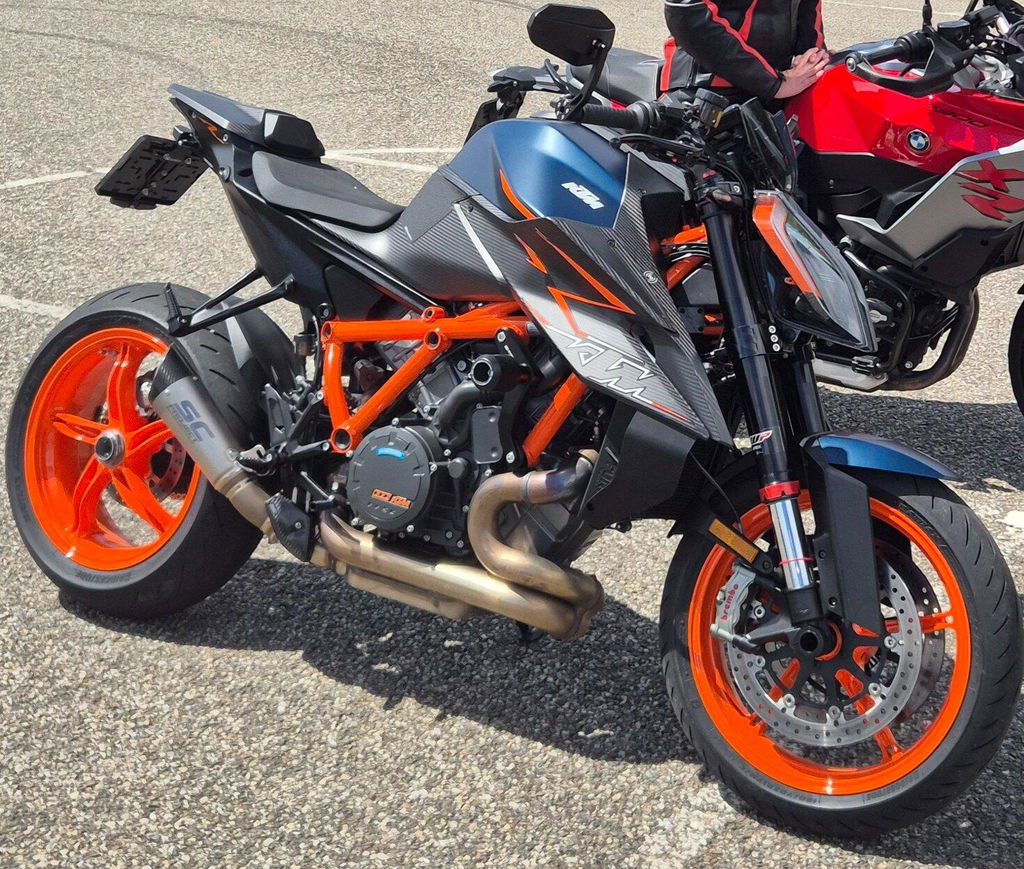
I've ridden my Gen4 1390 Superduke at pace around Laguna Seca, around Buttonwillow Raceway, and around Thunderhill Raceway. I even ran my data acquisition, and compared my Gen3 laps to my Gen4 laps. Nothing made sense - I was consistently 8 to 15mph slower on my Gen4 than my Gen3 which has 99mm of trail. 101 vs 99 is not that different - by my laptimes were miles apart. And so was my confidence, and so was my enjoyment of the rides. And then came my inbox...
I get emails every day from Superduke riders all over the world. Almost all of my Gen4 emails say the same thing - the 1390 Superduke steers slow, gives vague feel, and low confidence. But how can this be true if it's got 101mm of trail?
To get to the bottom of this, I took my Gen 4 to Gerry Piazza to get it digitally measured. Like all professional chassis tuners, Gerry measures trail with the bike suspended in the air - wheels off the ground. This establishes a fixed, repeatable baseline.
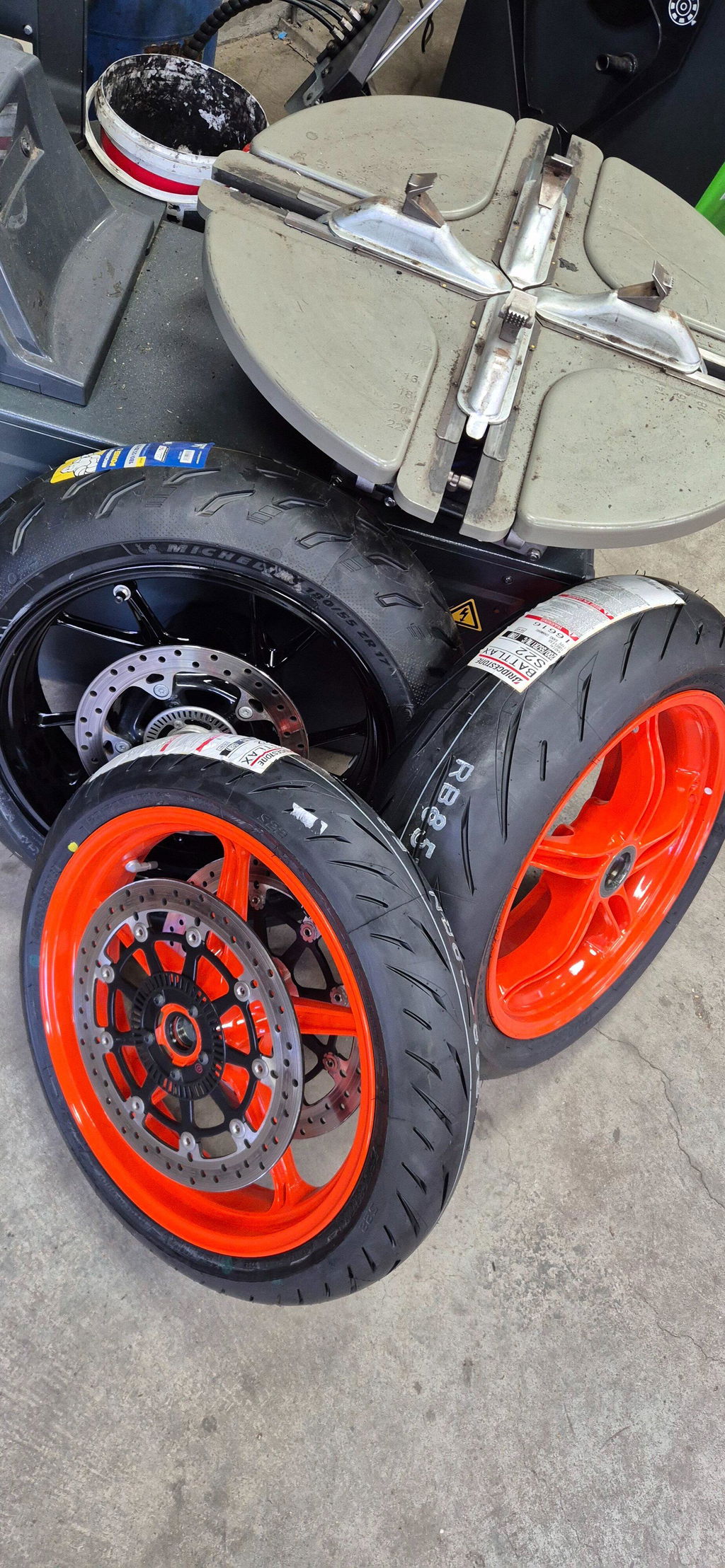
The number Gerry got wasn't 101mm. It was 103, which when you add the diameter difference in my Michelin slick to the OEM tire, the actual 1390 Superduke trail number is closer to 104mm.
That 3mm difference is massive in terms of chassis dynamics, and it points directly to why the 1390 feels so sluggish. So, why is KTM's published number so different from a digital, real-world measurement? It all comes down to how WP measures their forks.
The Dynamic Trail Problem
When motorcycle techs and manufacturers measure trail, they all do it the same way - with the chassis suspended in the air, wheels off the ground, suspension topped out against the shock and fork stops. The reason bikes are measured this way is simple and sensible - it establishes a baseline. A repeatable place where all bikes can be measured from.
I have a problem with this. First of all, who cares what your trail is when you're not sitting on the bike? Because while your bike may have an "ideal" trail number, if you're 300lbs as soon as you sit on the bike you have completely different numbers. And if you're 100lbs, you have the same problem only different direction. The real number you want to focus on is your "Laden Trail", or your "Loaded Trail". But even this number is not the number that KTM is listing as "101mm". The number they are referencing is the 1390's "Unladen Trail", or "Static Trail".
Static Trail is measured with the bike on the ground, suspended on its springs, with no rider on it. Static Trail is just like Static Sag. The bike on it's own, sitting on its wheels. Again, yet another number that is of little importance compared to the only numbers that really matter - the one with you sitting on your bike with your springs and your weight just the way you ride it.
So what is wrong with 104mm of trail? Nothing. You won't have problems, you won't crash, you could ride your Superduke forever with 104mm of trail. It just won't ever feel like it could. It won't ever give you the confidence that you would LOVE. You'll be slower into and through turns, the bike will feel heavy as you flick it from side to side, and you might even end up doubting your abilities as a rider - like I did the first time I rode a Superduke with trail numbers like the 1390 has.
The Mechanical Fix
You can't fix this with clickers. The solution is correcting the baseline geometry. The angle of your steering head, called the "Rake" will have an impact on flickability. Changing the rake also changes your trail. And since your rake is related to the steering head, which is welded to your frame, an easy way to change your rake is to raise or lower the back or front of your frame. But there are benefits and drawbacks to doing either of these.
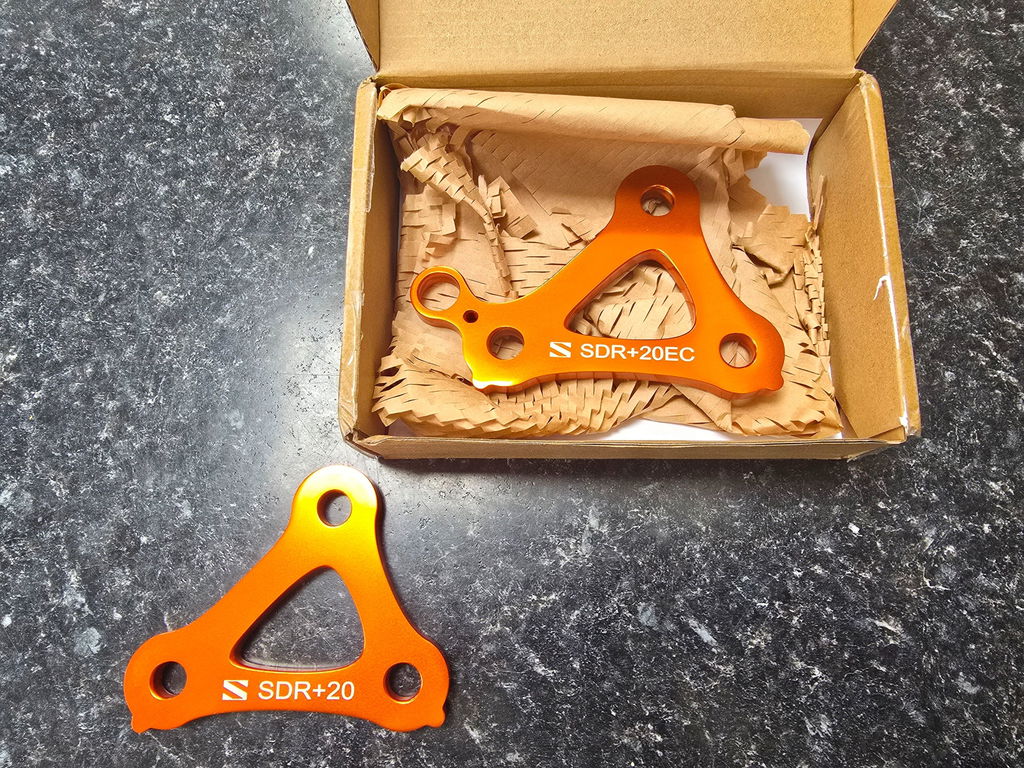
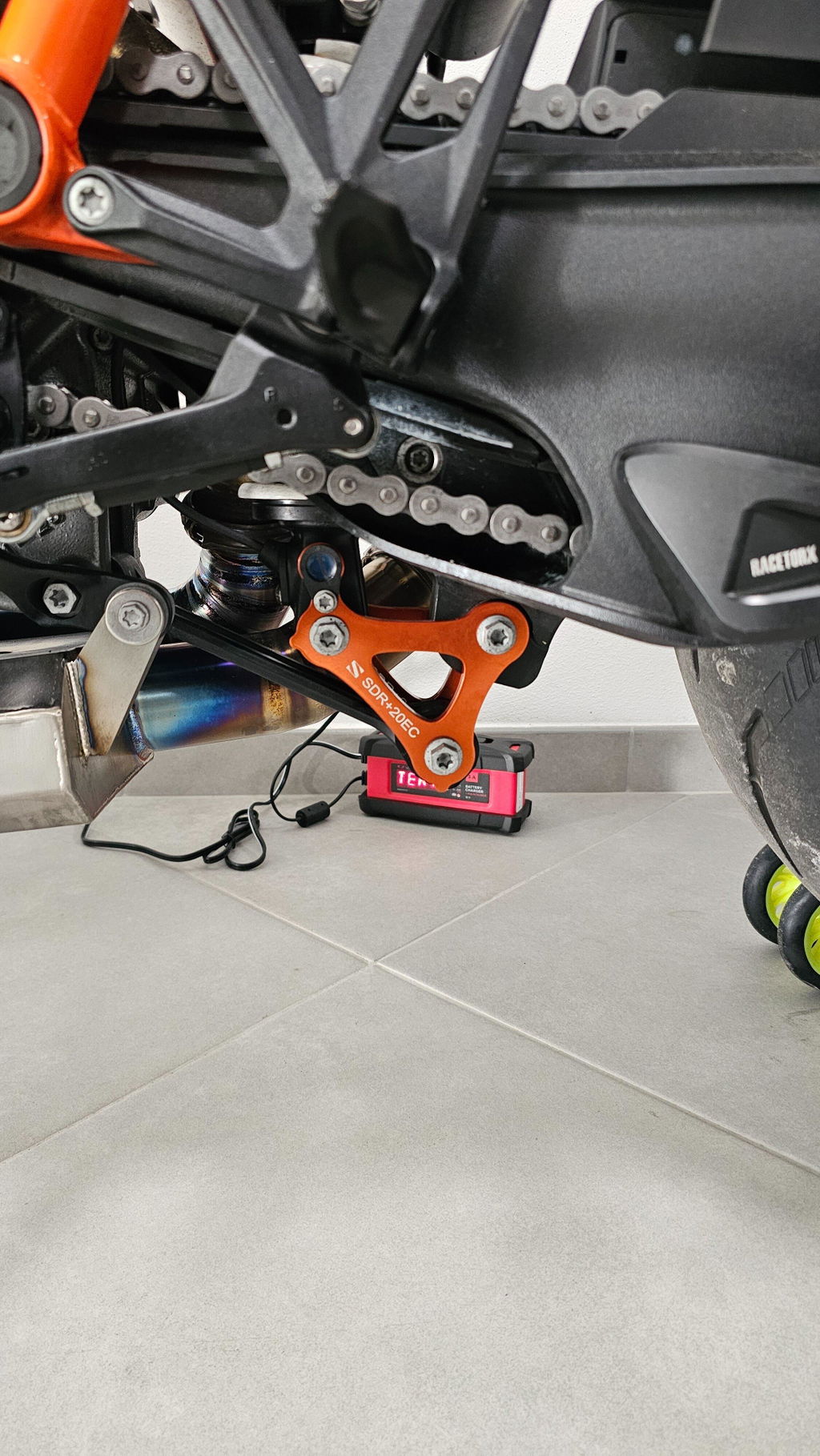
You can raise the rear of your frame by using a length adjustable shock, rotating your axle in the eccentric hub, or buying a Sportlink. The longer shock trick is great, but you have to buy a $1,500 shock. Rotating the axle in the eccentric is great, if you also want to change your gearing or chain length. But remember, raising the rear of your motorcycle by rotating your axle does not help your swingarm angle..
Why would you want to change your swingarm angle? Raising the rear with a shock length or link, raises the pivot point of your swingarm, which helps you get better drives without wheelieing. This is excellent. But it also has a downside..
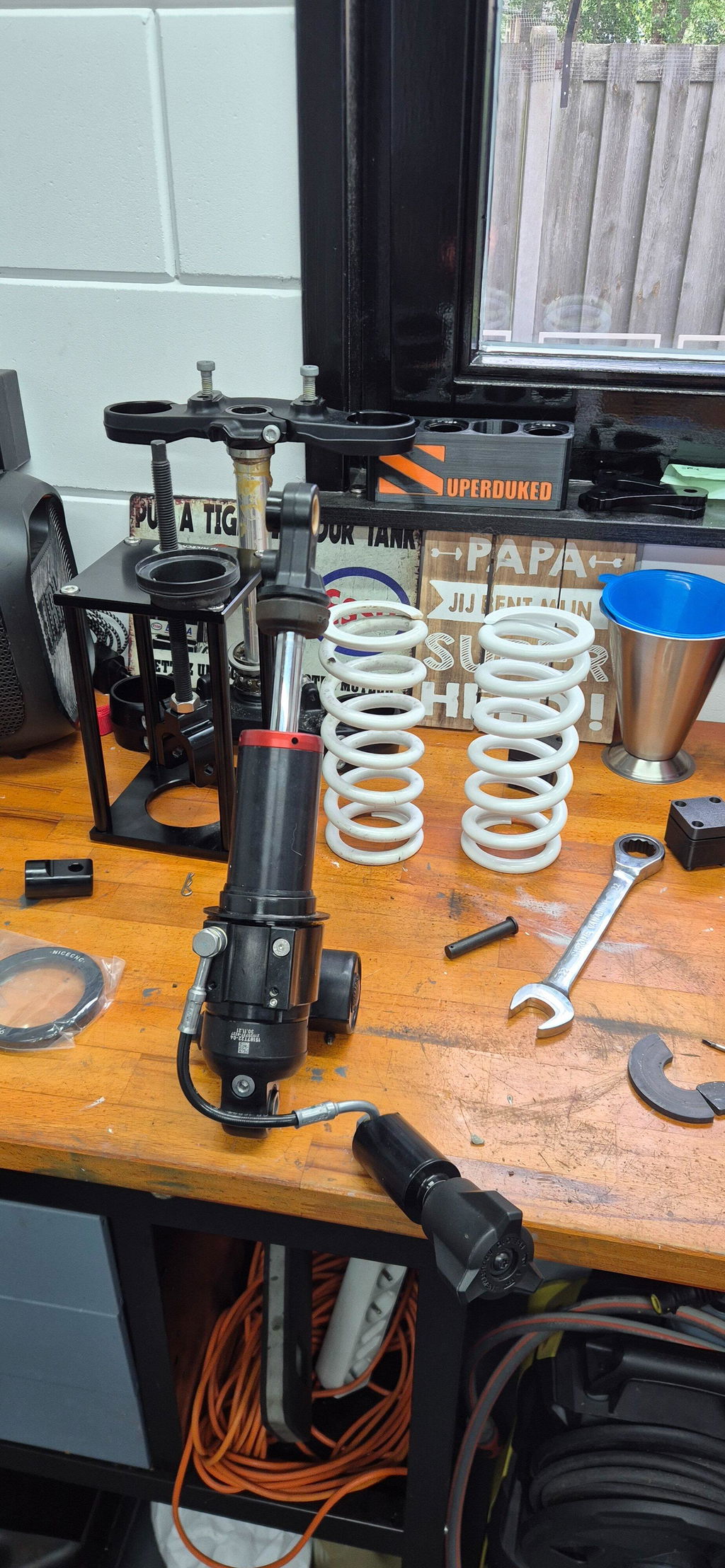
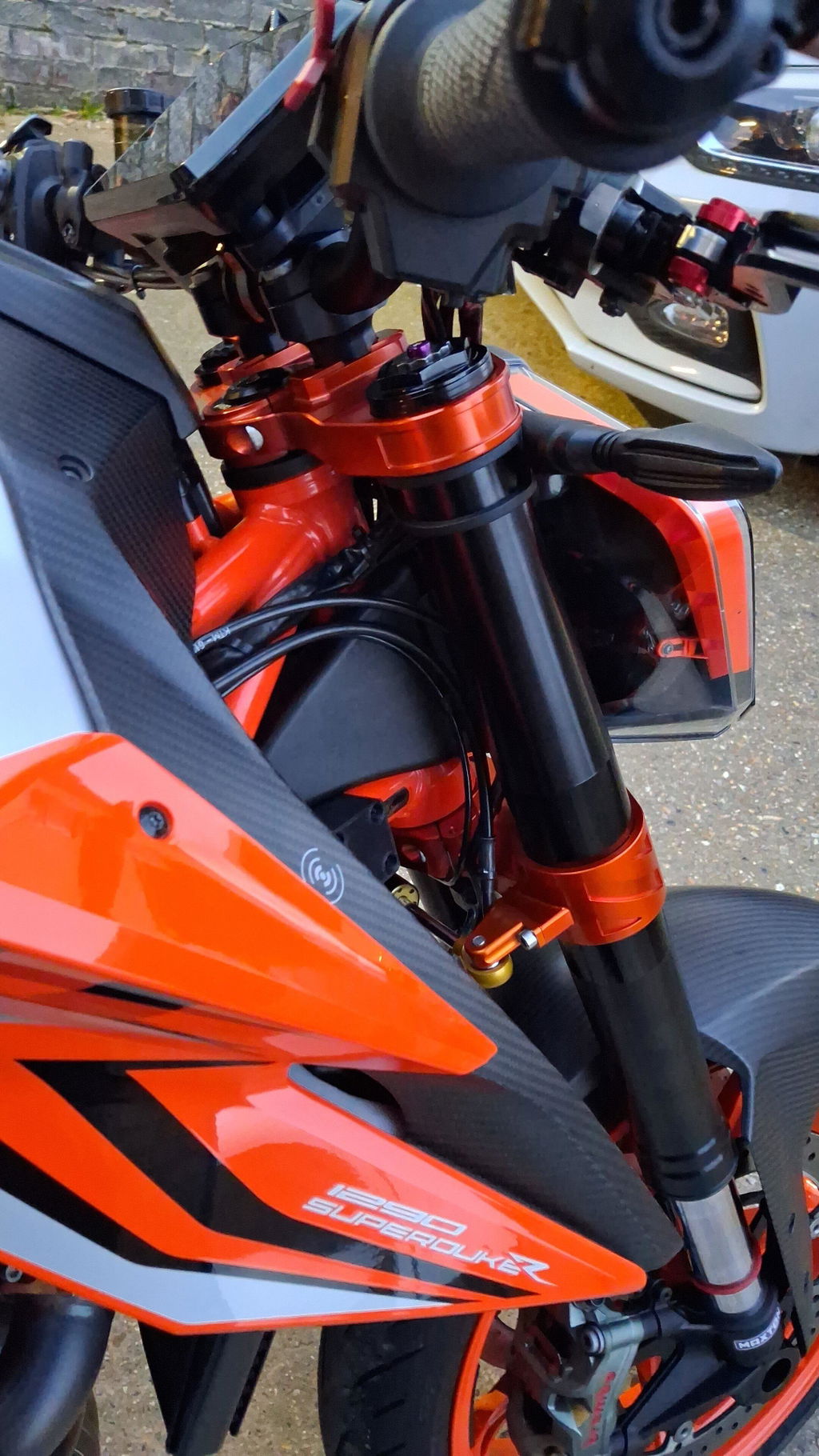
What is the downside to raising the rear of your motorcycle, in order to affect trail change at the front of your motorcycle? You have to sit on a higher seat, with your feet farther from the ground in order to do it. Maybe this is not a problem for you. Maybe it is. Or maybe you want more of a trail change than raising the rear can achieve? This is where the Superclamp comes in.
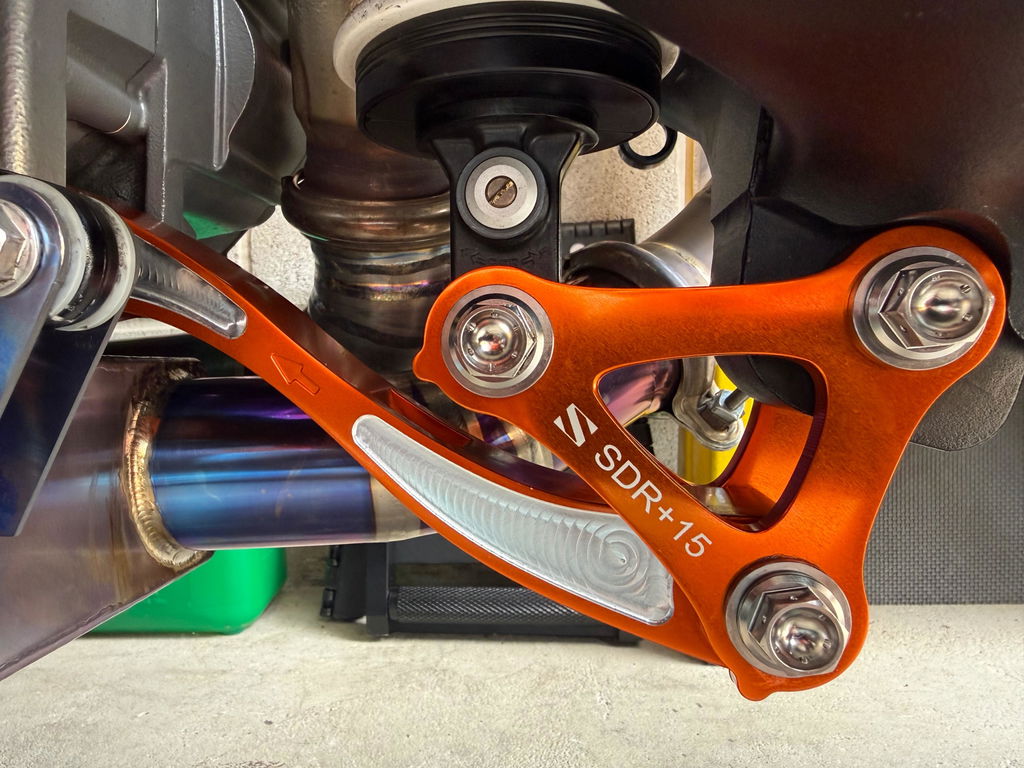
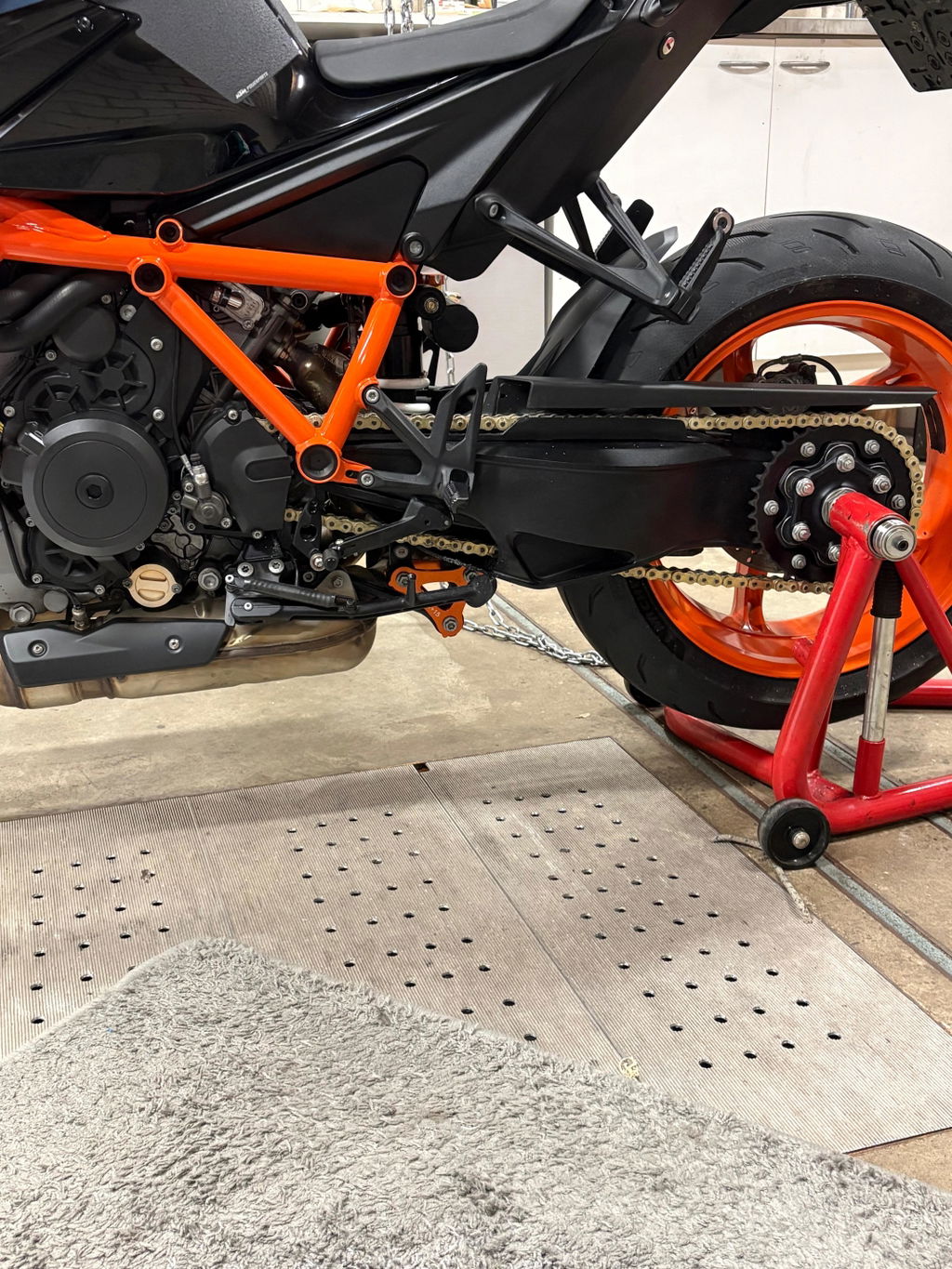
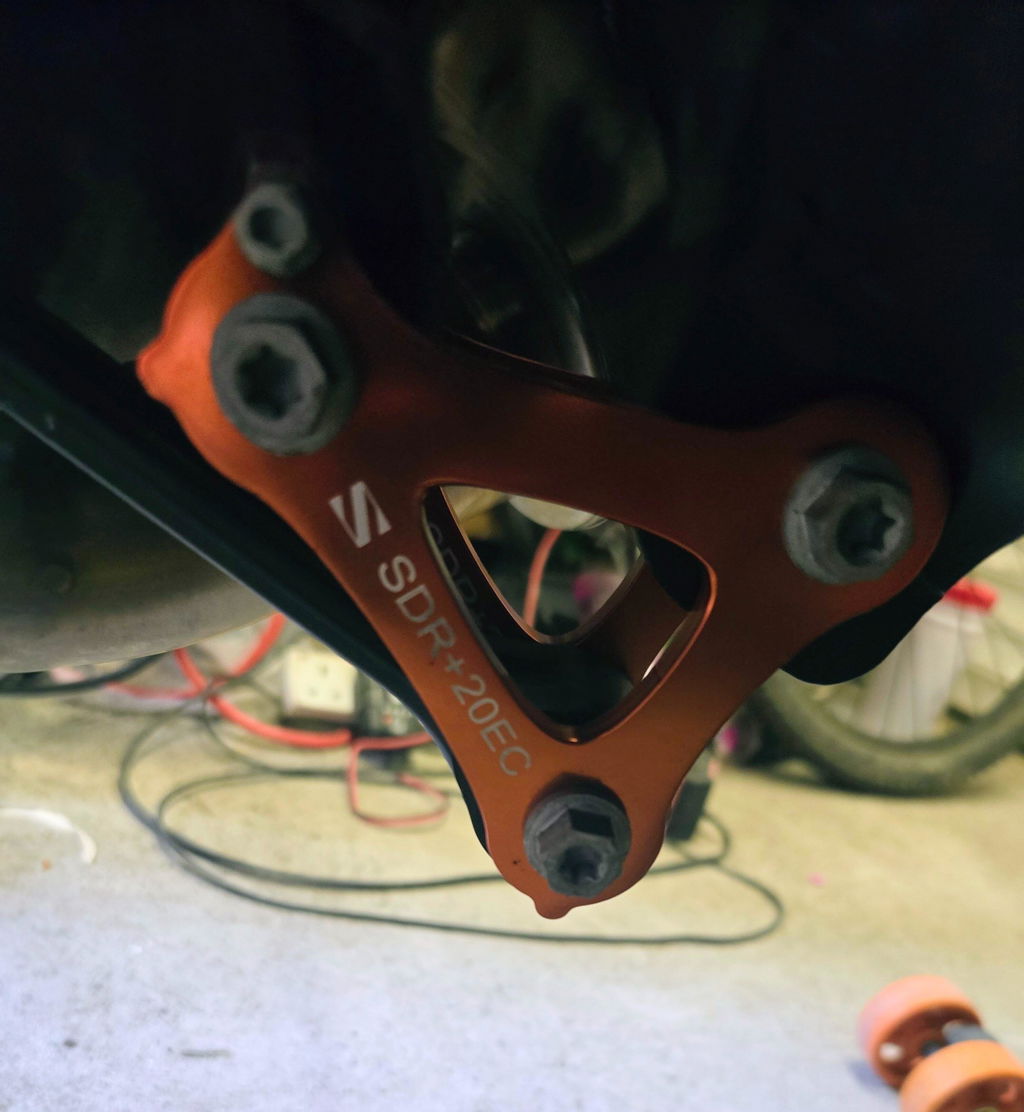
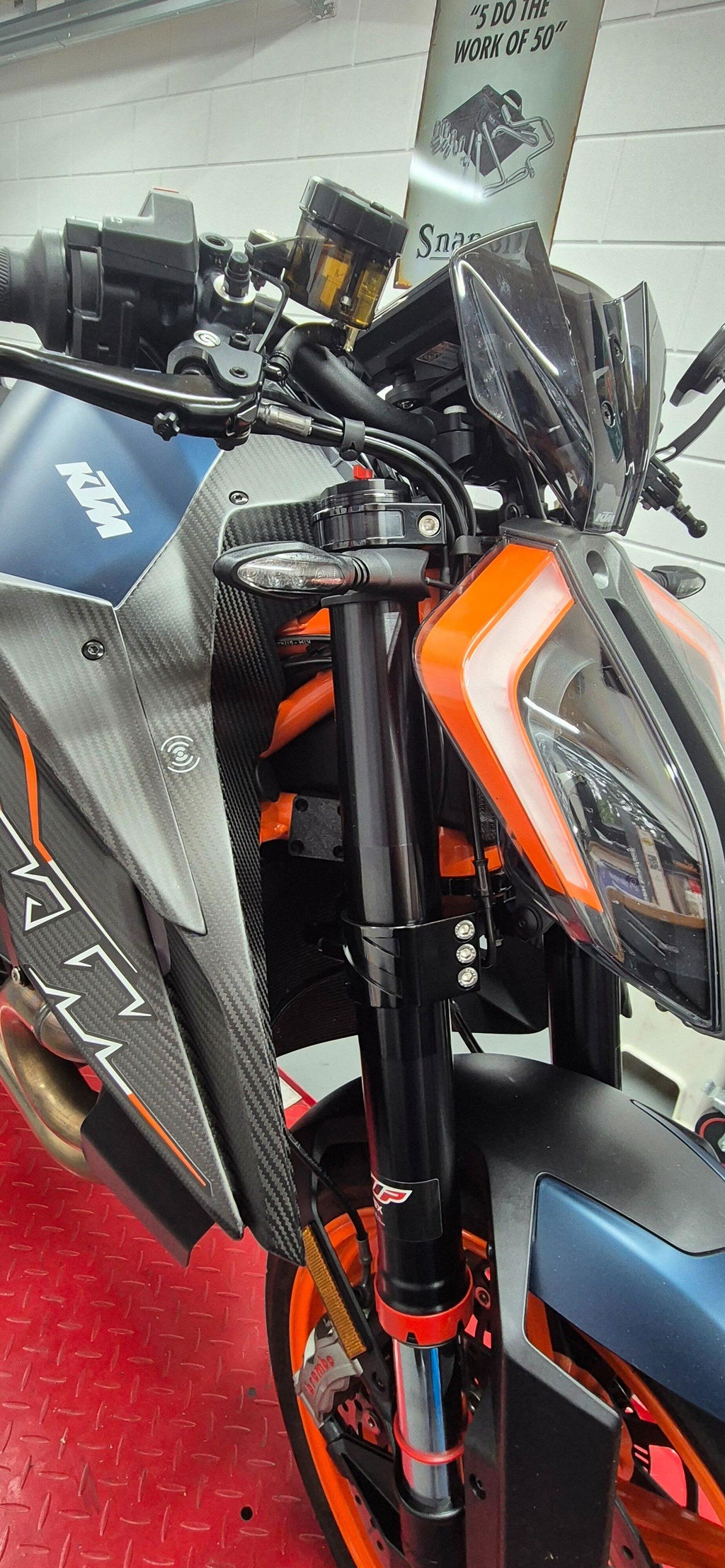
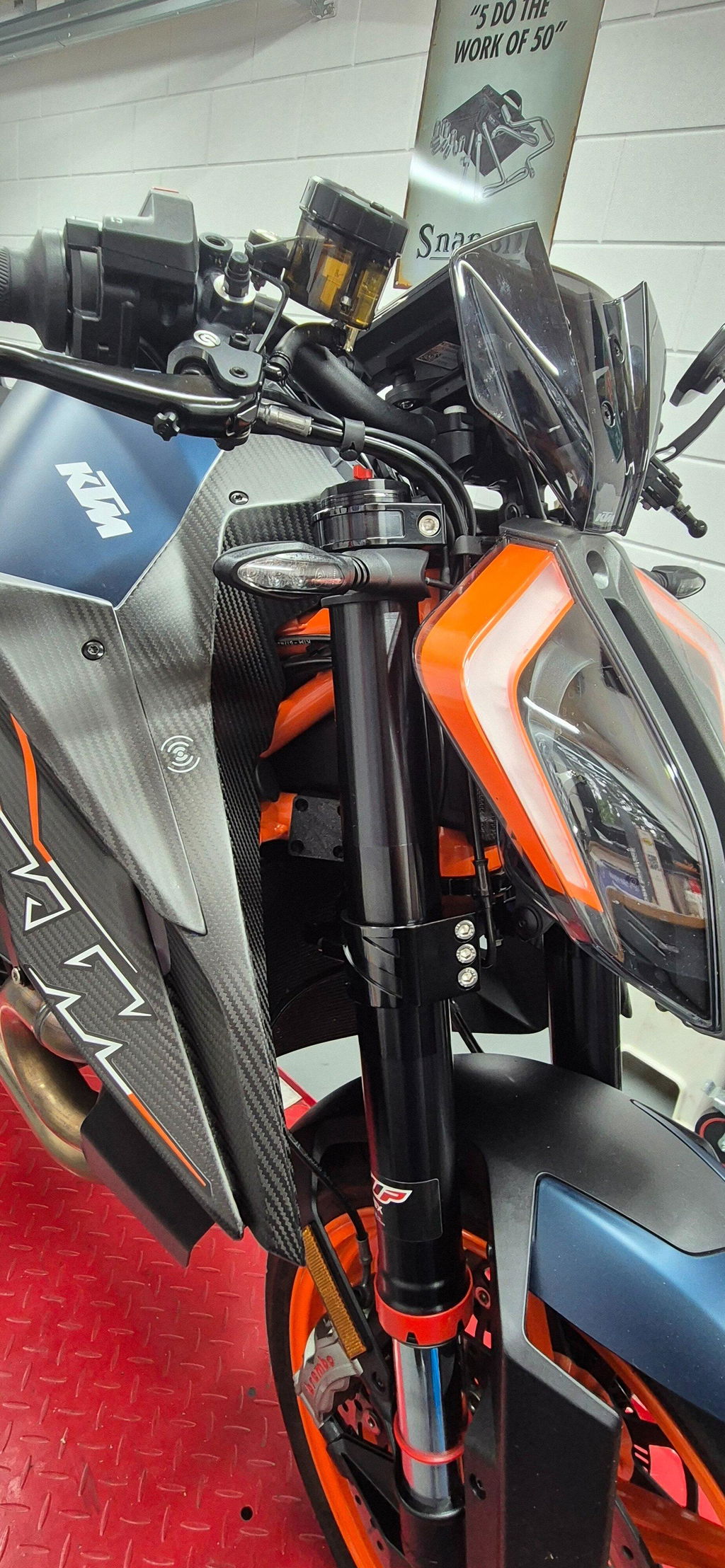
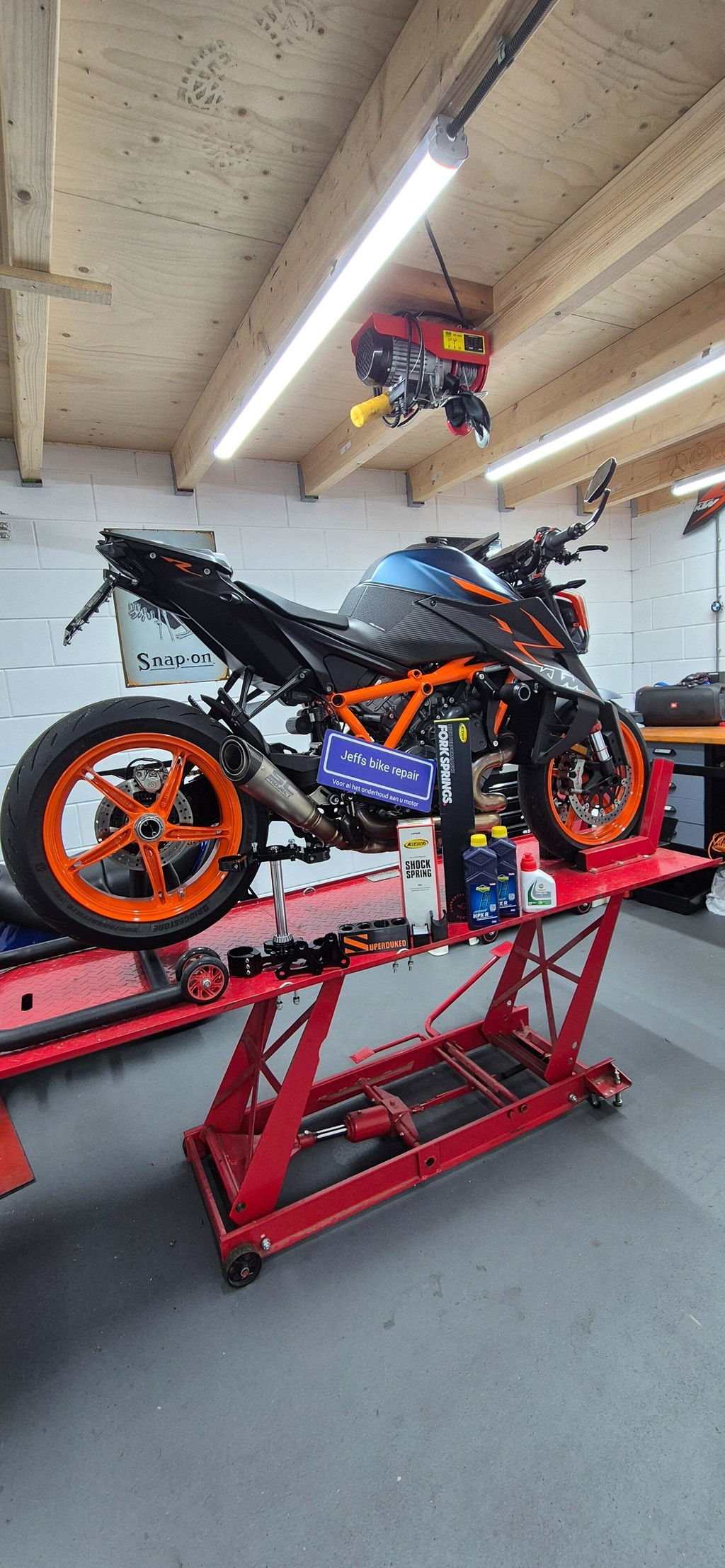
By swapping the factory setup for the Superclamp, you can dial the fully-extended baseline trail down to any number you want (99mm is where I run mine). When you pull the baseline trail down, you eliminate that sluggish geometric feel and condition. The steering stays crisp, the feedback returns, and the bike finally handles the way every Superduke should.