Getting Your Feet Flat (The Seat Height Math), on KTMs Gen3 and Gen4 Superduke
Whenever we talk about chassis setup, I often dive straight into the deep end of the tech pool—swingarm angles, anti-squat, rake, and trail.
Those numbers matter, absolutely. But for a lot of riders, the most important metric isn't how the bike drives out of a corner on the track. It's about comfort. It's about pulling up to a stoplight and being able to put your boots flat on the pavement. Sounds trivial, but it's not. Confidence = Comfort. Comfort = Joy.

So let's break down exactly how our Superduked linkages change your seat height from a pure comfort perspective first, and then look at the math of what happens when you adjust the front and rear of this bike.
The 65% Rule of Seat Height
Think of your Super Duke as a plank resting on two pivot points (your front and rear axles).
Your seat isn't right in the middle of that plank, and it isn't sitting directly over the rear tire. On a Gen 3 and Gen 4 Superduke, the lowest part of the rider's seat pocket sits roughly 65% of the way back from the front axle.
This gives us a golden rule to work with: Your seat moves 65% of whatever you do to the rear of the bike, and 35% of whatever you do to the front.
The Supershort: Getting Closer to the Ground
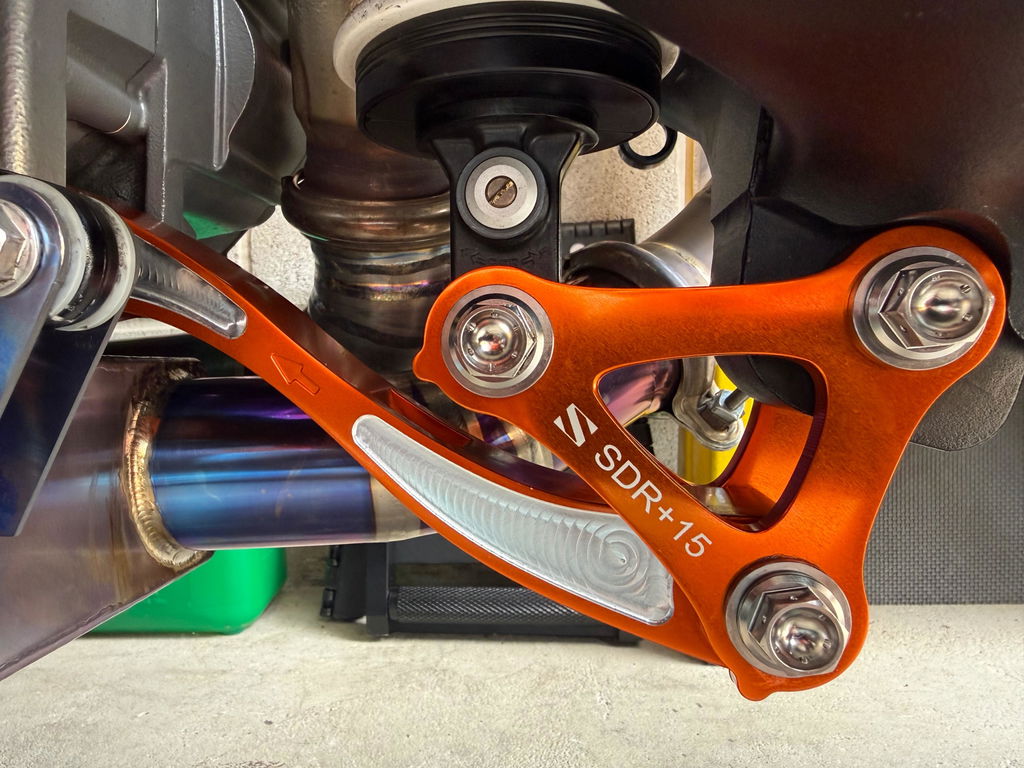
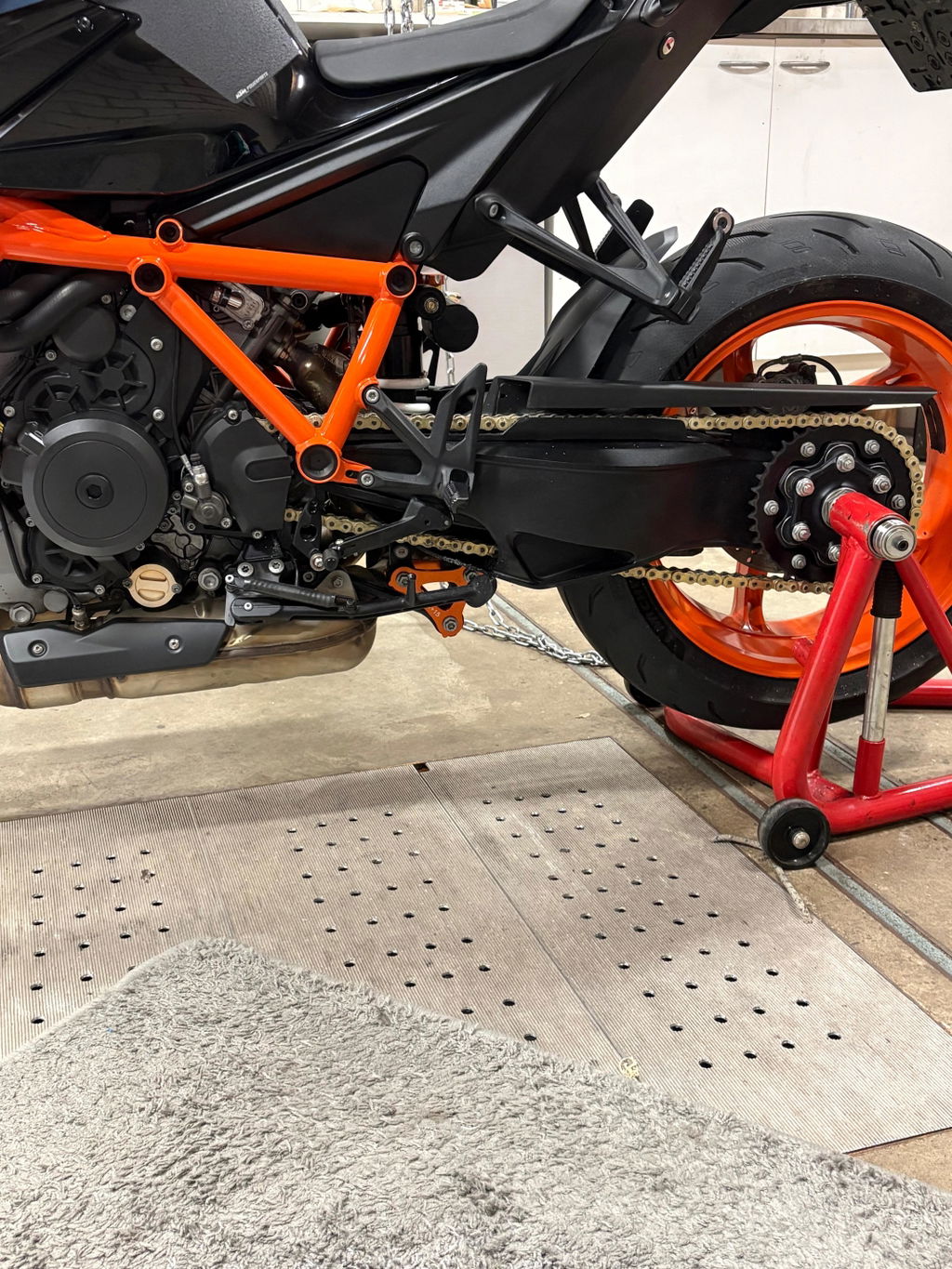
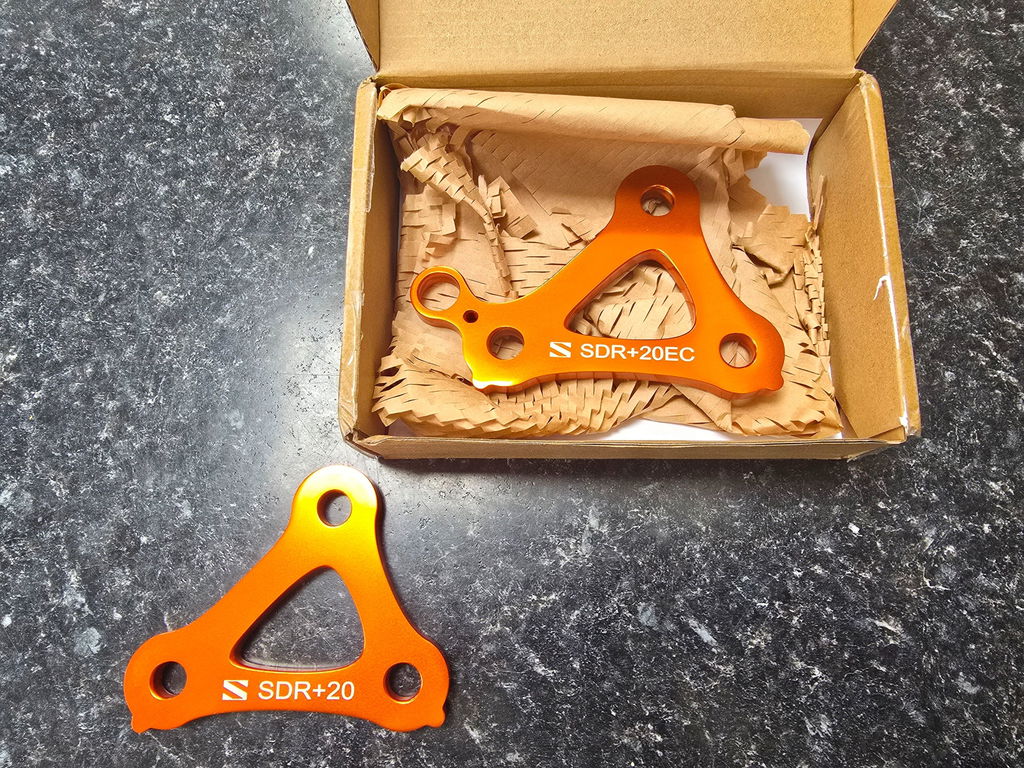
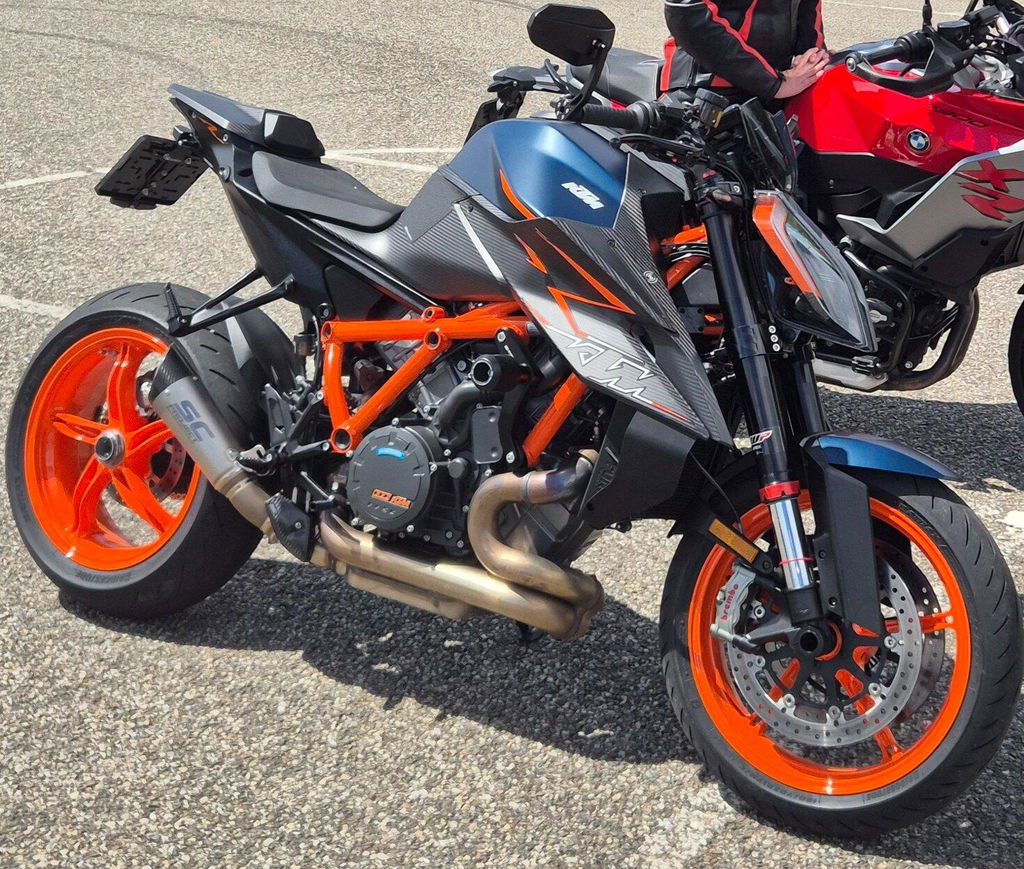
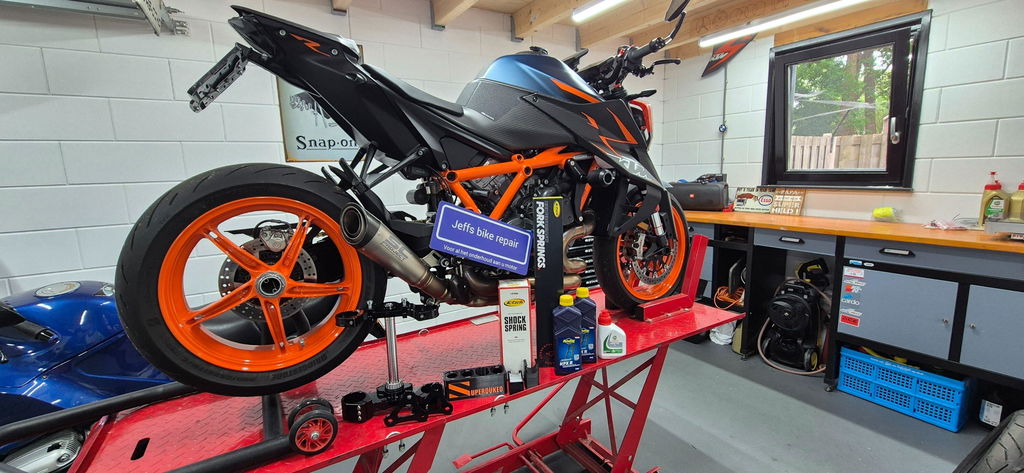
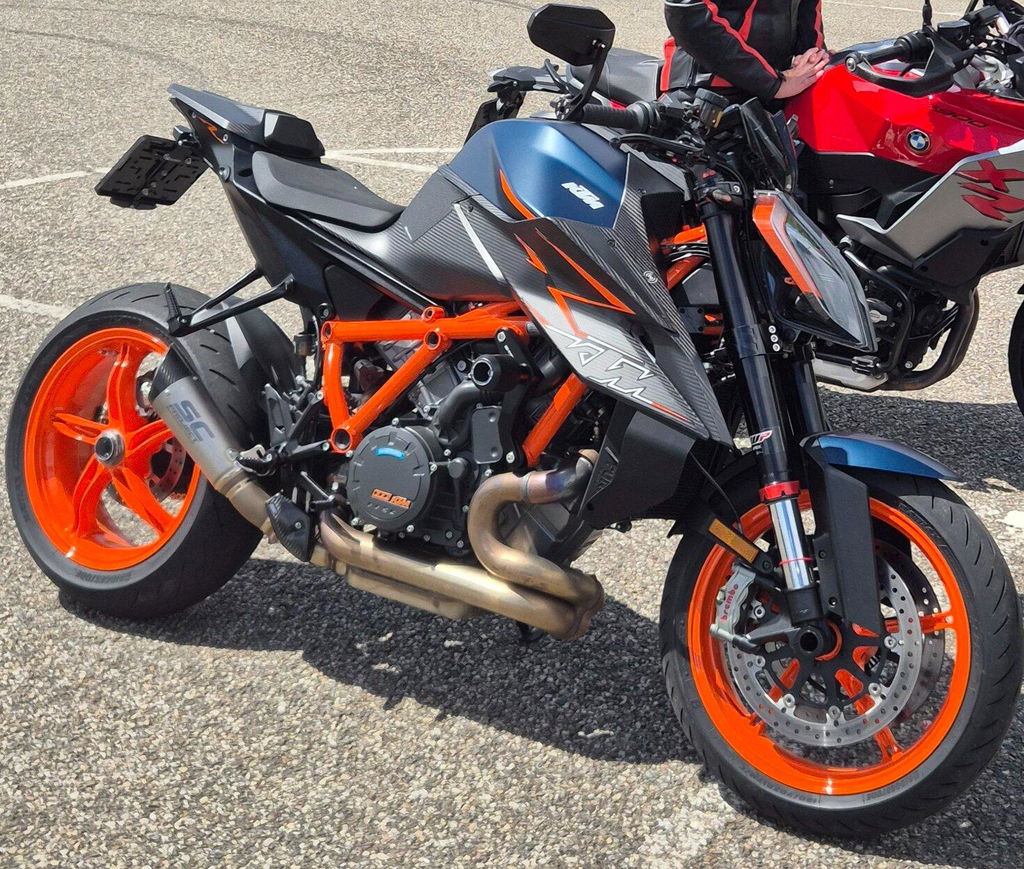
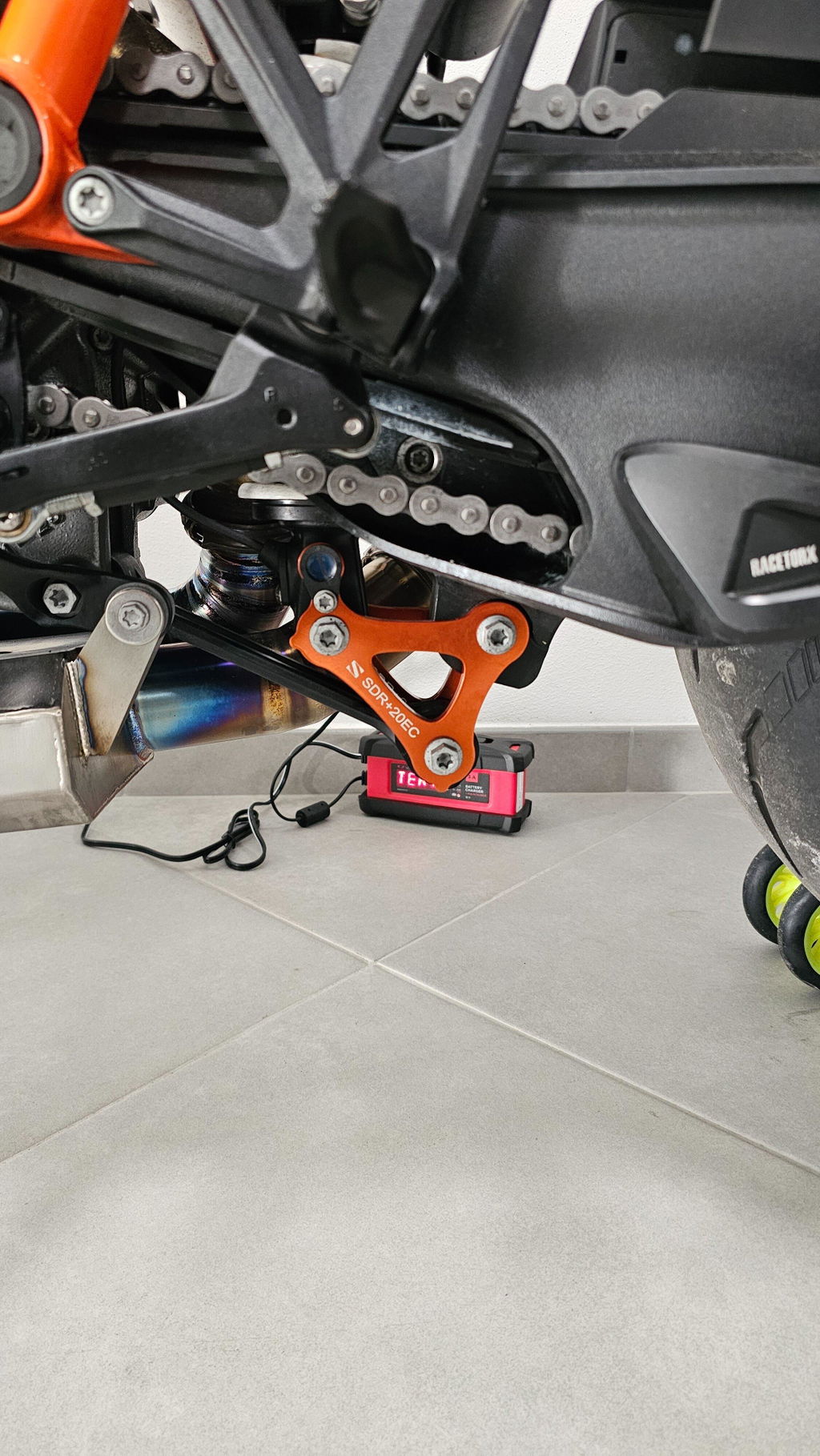
Superdukes are tall motorcycles. In fact a lot of KTMs are tall. If you're tired of being on your tiptoes, I make the Supershort control arm for the Gens 3 and 4. It drops the rear axle height by a full 20mm. But what does that do to the actual seat height?
Using our 65% rule (20mm x 0.65), bolting on the Supershort drops your seat height by exactly 13mm (about half an inch). That 13mm can be the difference between a sketchy, off-balance stop on uneven pavement and planting your feet with confidence.
(The Tech Bonus: Yes, dropping the rear 20mm also lowers your center of gravity. Yes it flattens the swingarm angle, and alters the anti-squat, but with a lower center of gravity you don't need as much anti-squat force to keep your higher center of gravity from shifting rearward and down, because you don't have as high a center of gravity anymore. As a result, your bike may even feel more planted and stable.)
The +20 Sportlink: What this does to seat height
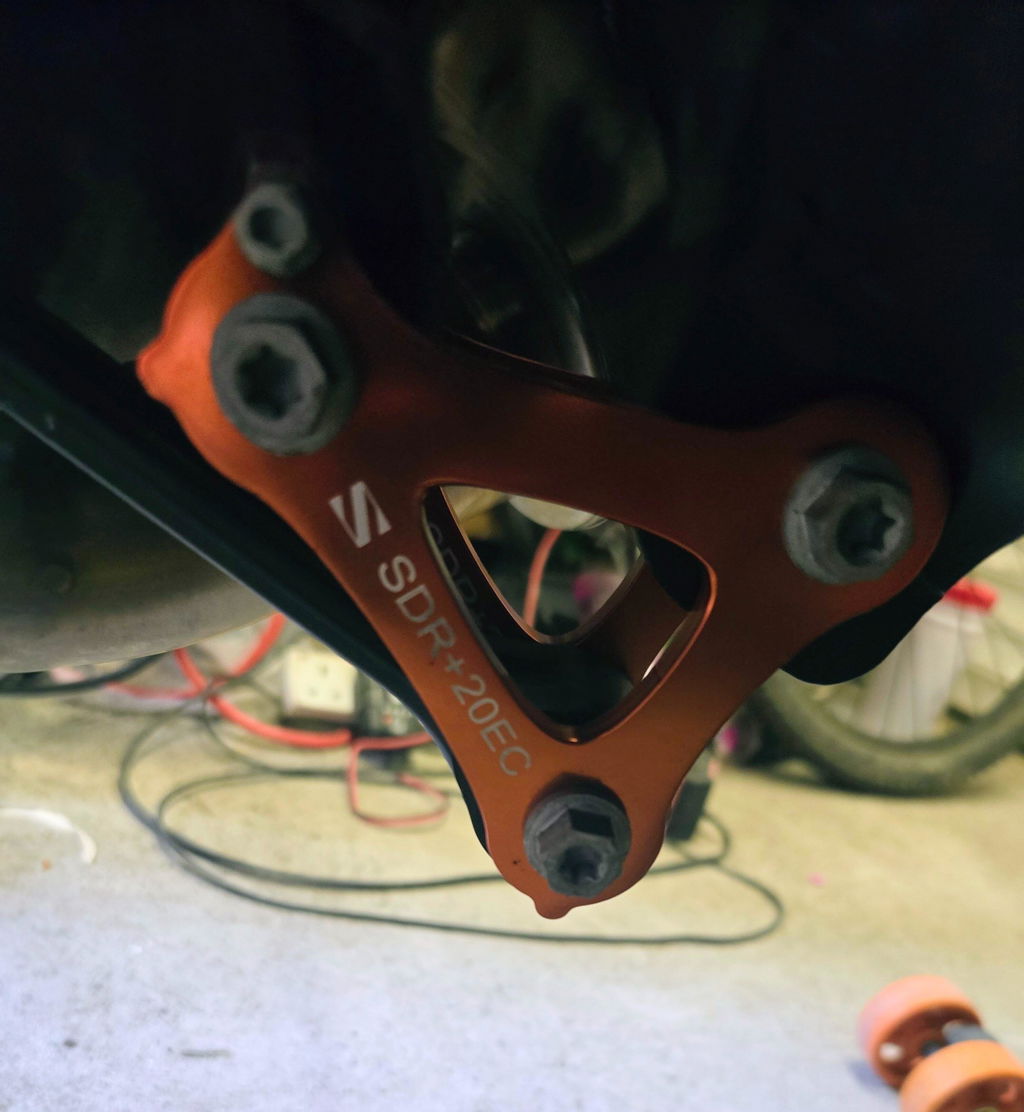
The +20 Sportlink raises the rear axle height by 20mm.
Applying the exact same 65% math, the +20 Sportlink raises your seat by 13mm. That half-inch of extra height completely changes how the Superduke turns, changes direction, rolls through turns, and accelerates out of turns. The change in handling (turning) comes from the lower rear of your chassis. That different angle increasing your trail. The more trail you have, the slower your bike steers. The less trail you have, the quicker your bike steers.
Links, shock lengths, forks heights - all can alter the angle of your chassis. But they can only alter it so much. And also, adjusting one end of your motorcycle in order to affect the other end of your motorcycle, can create unwanted compromises too. Which brings us to fork height..
The Front Fork Trick (And Bonus Seat Drop)
Let's go back to the Supershort for a second. When you drop the rear of the bike 20mm, it tilts the chassis backward, kicking the front forks out. This adds "trail," which slows down the steering.
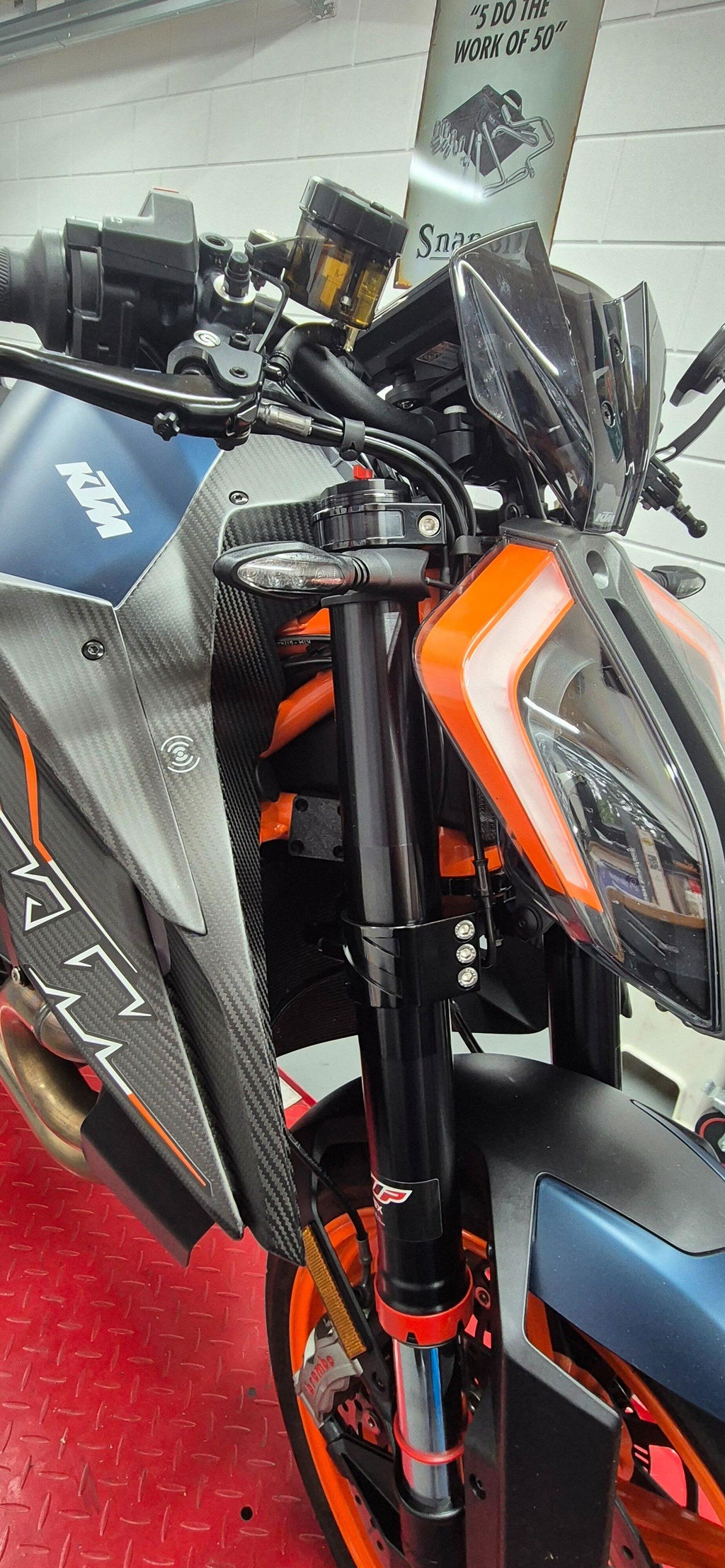
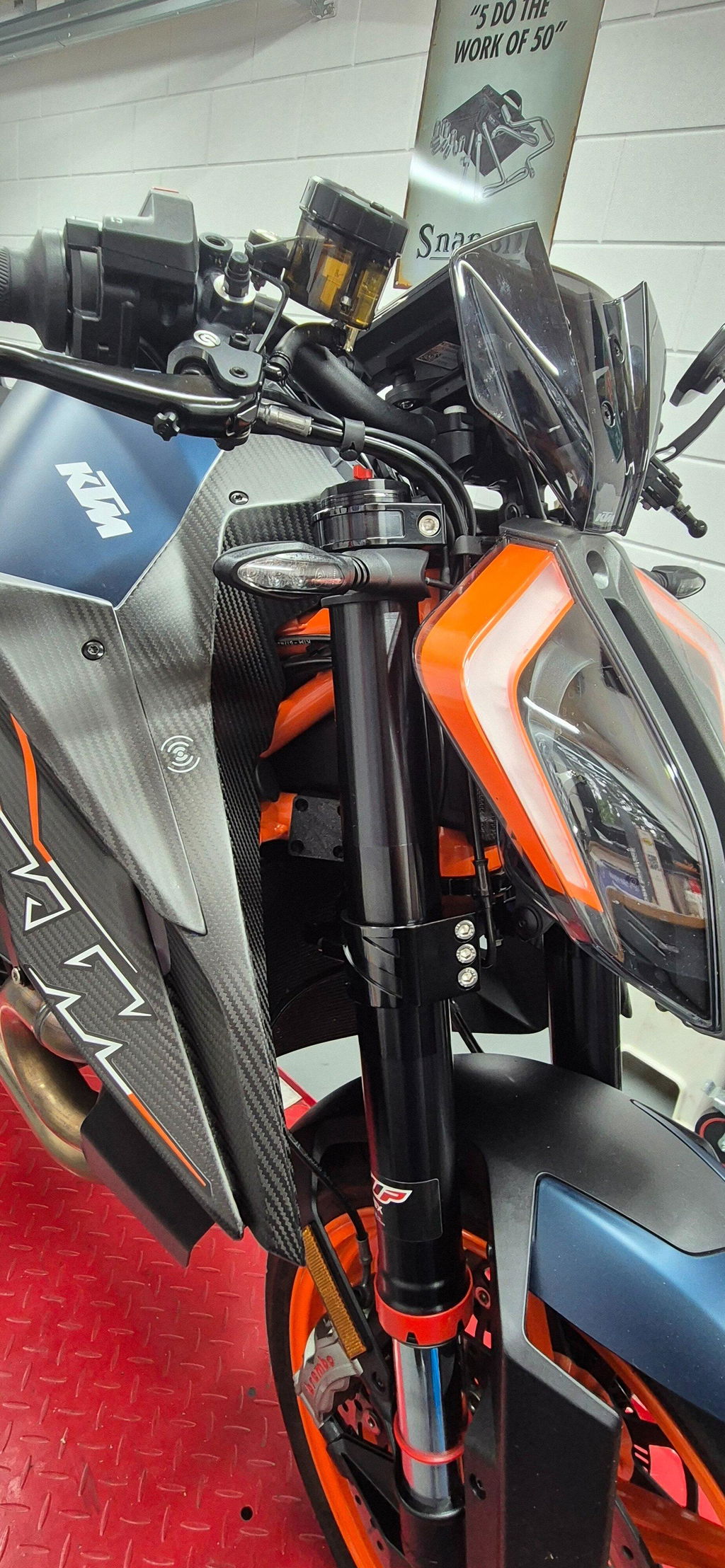
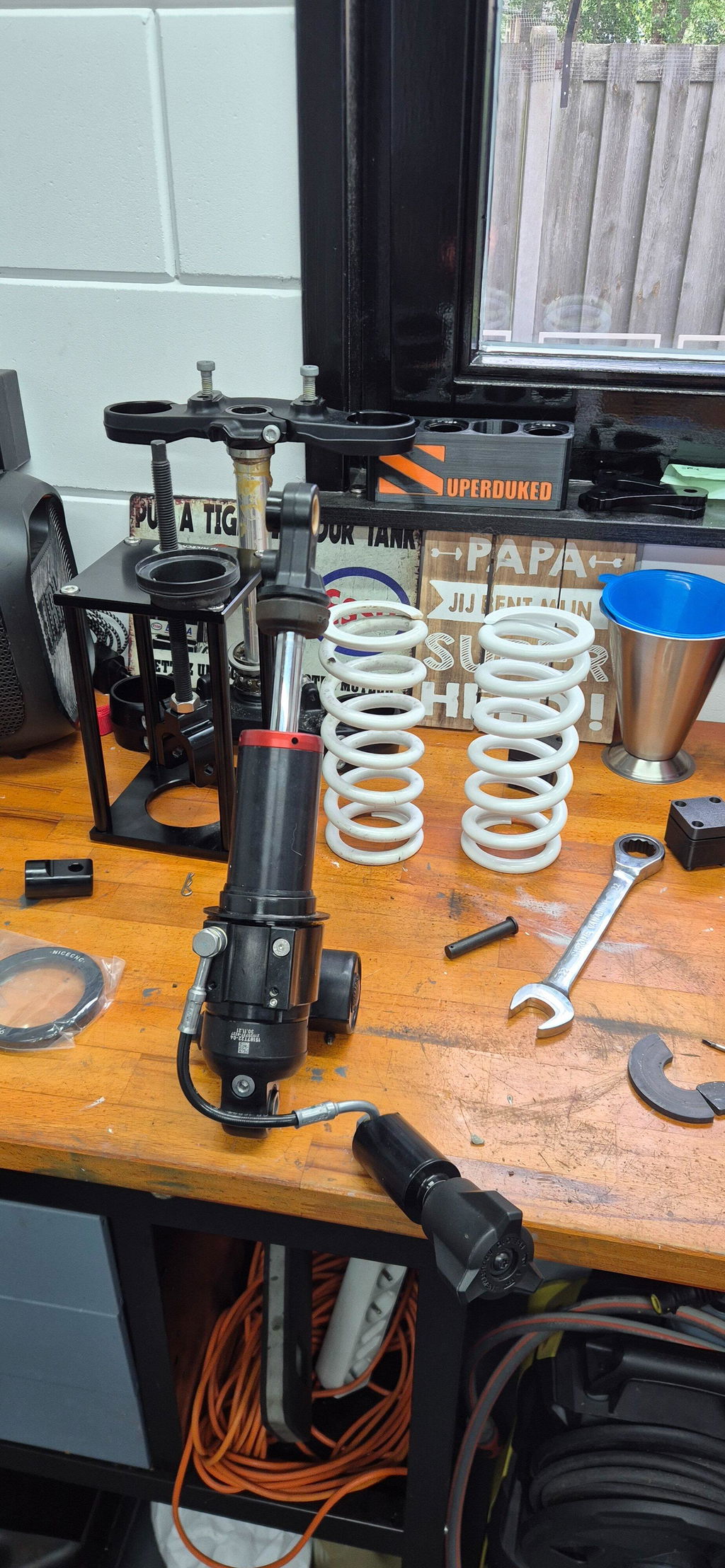
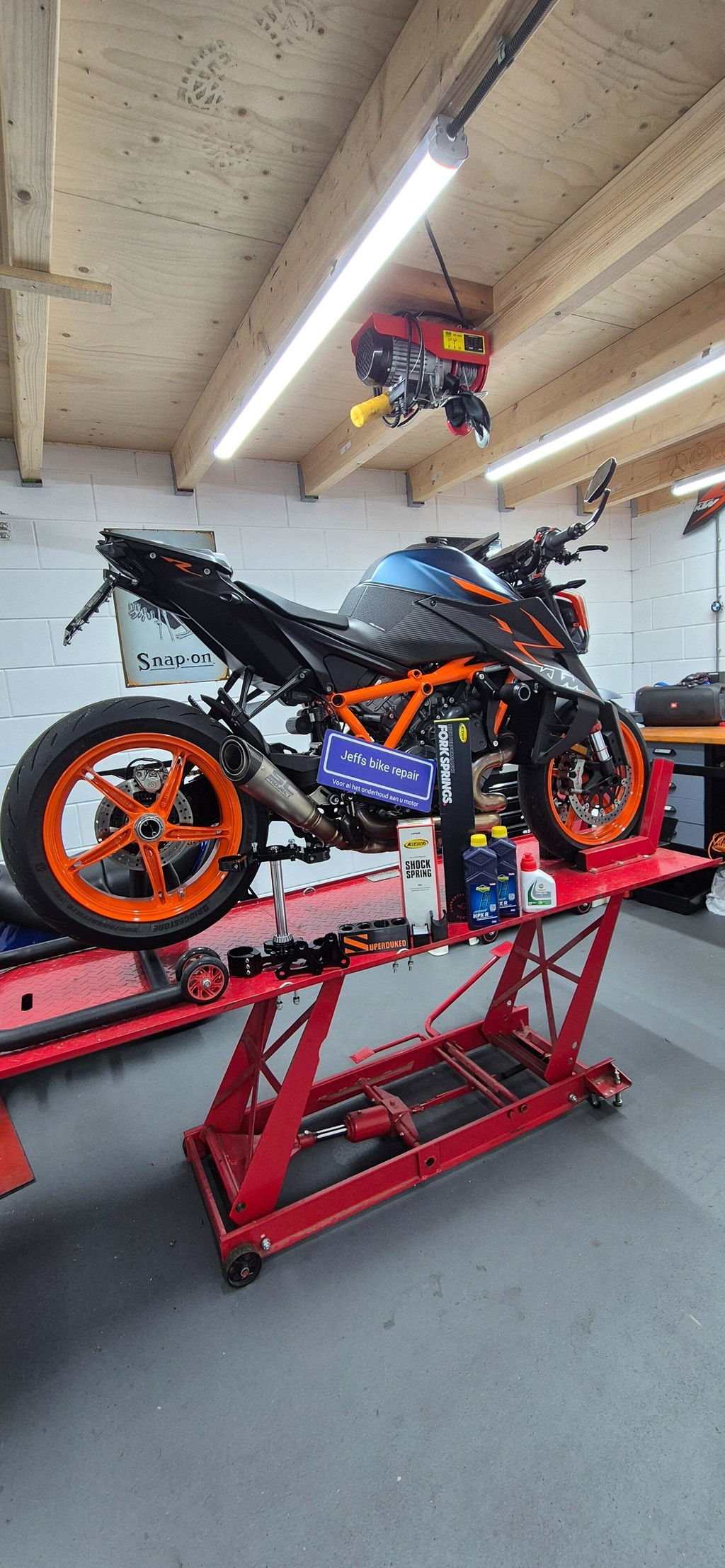
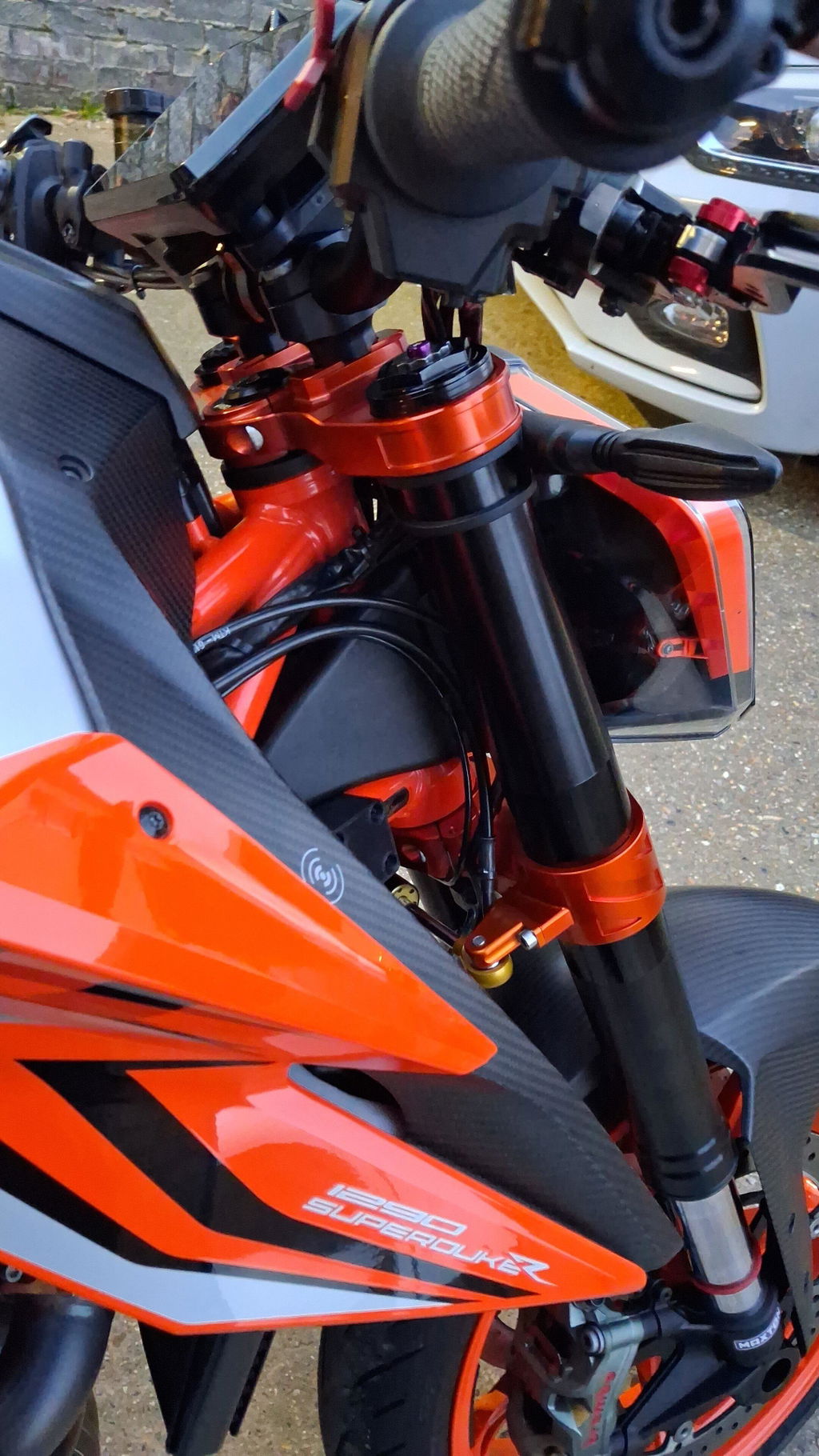
To get your sharper, factory steering back, you can also lower the front of the bike by sliding the fork tubes 10mm up through the triple clamps.
But here is where the math gets fun for the vertically challenged. Remember the 65/35 rule? Because the seat is 35% of the way from the rear axle, dropping the front forks 10mm lowers your seat by another 35% of that drop (10mm x 0.35 = 3.5mm).
So, if you install the Supershort (-13mm at the seat) and drop your front forks 10mm to balance the handling (-3.5mm at the seat), you have successfully lowered your overall seat height by a massive 16.5mm (roughly 2/3 of an inch). This is great for helping your toes reach the pavement. And it's also great for getting your chassis numbers back in the neighborhood of what they were before you installed the Supershort. But note I say, "neighborhood". The reason for this you still have more trail than you did when your bike was built - and your Superduke was already built with more trail than you want or need.
Enter, the Superclamp..

The Superclamp is the only way, which lucky for you is also the best way, to get your chassis geometry (and therefore steering - the feel, the reaction, the confidence, and the performance) not only back to where they were when you first rode your Superduke, but even beyond that. To a new place where your bike will perform even better than it used to (even with your new Supershort in place). By changing your steering offset, which you can do by selecting any of the 7 offset inserts that we offer, you can literally choose how your bike steers - which is the single most impactful change you can make to your motorcycle no matter what make or model it is. Trail is everything to motorcycles.
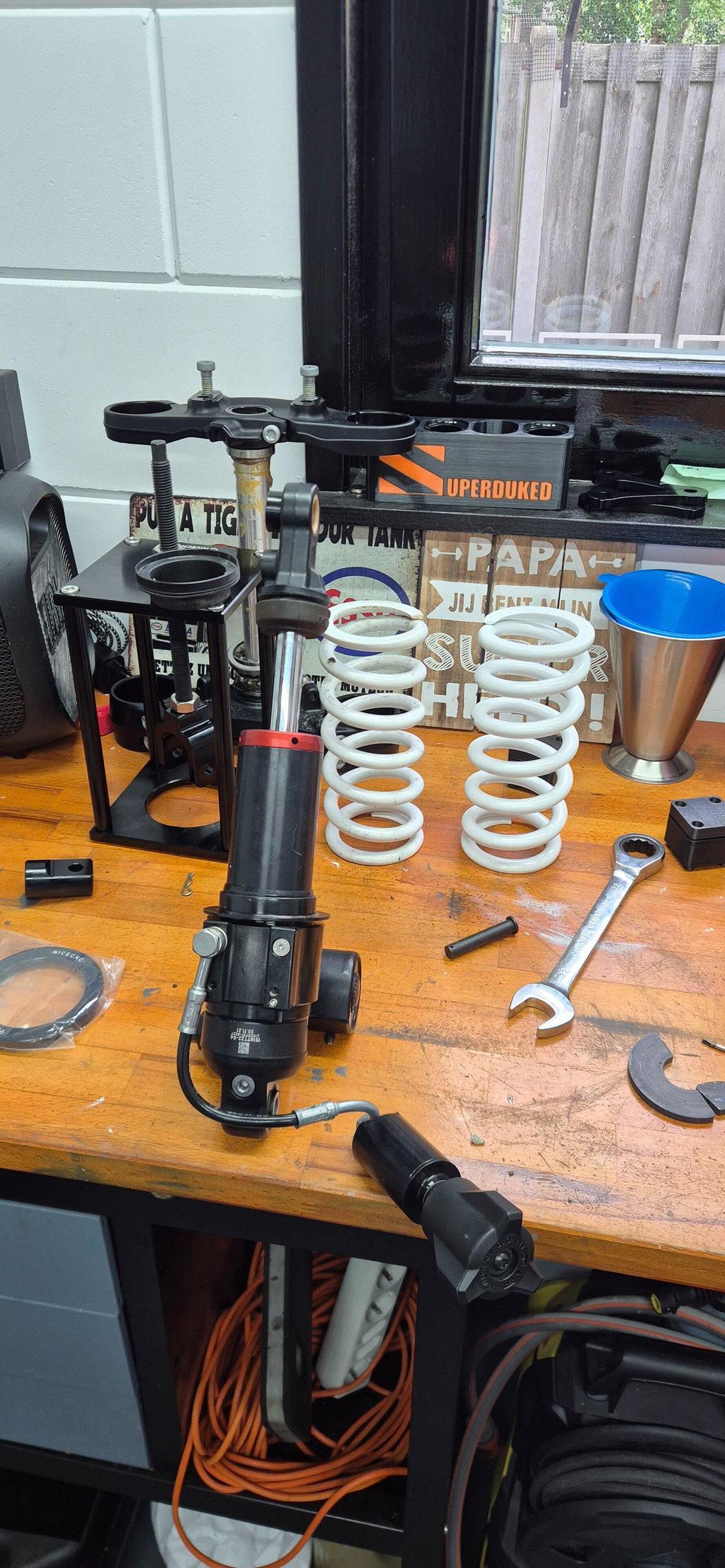
Another benefit you get with Superclamps VS OEM triple clamps, and especially the Power Parts triple clamp, is Superclamps flex less. Superclamps are machined (not cast like the OEM clamps) from better, stronger, more expensive 7075T6 aluminum. This means your forks don't twist under hard braking, or countersteering. What does less flex give you? It means your front wheel stays aimed exactly where your bars direct it to, unlike the others that allow flex and twist - both of which result in less exacting feedback, more of what I call "confusion", and less confidence.
Superclamps also have more bar mount locations, three total compared to two on the OEM and PP clamps, allowing shorter riders an easier reach to the bars.
What About Front Clearance?
I hear it all the time: "If I drop the forks 10mm, won't the front tire smash into the radiator or the fender hit the triple clamp?"
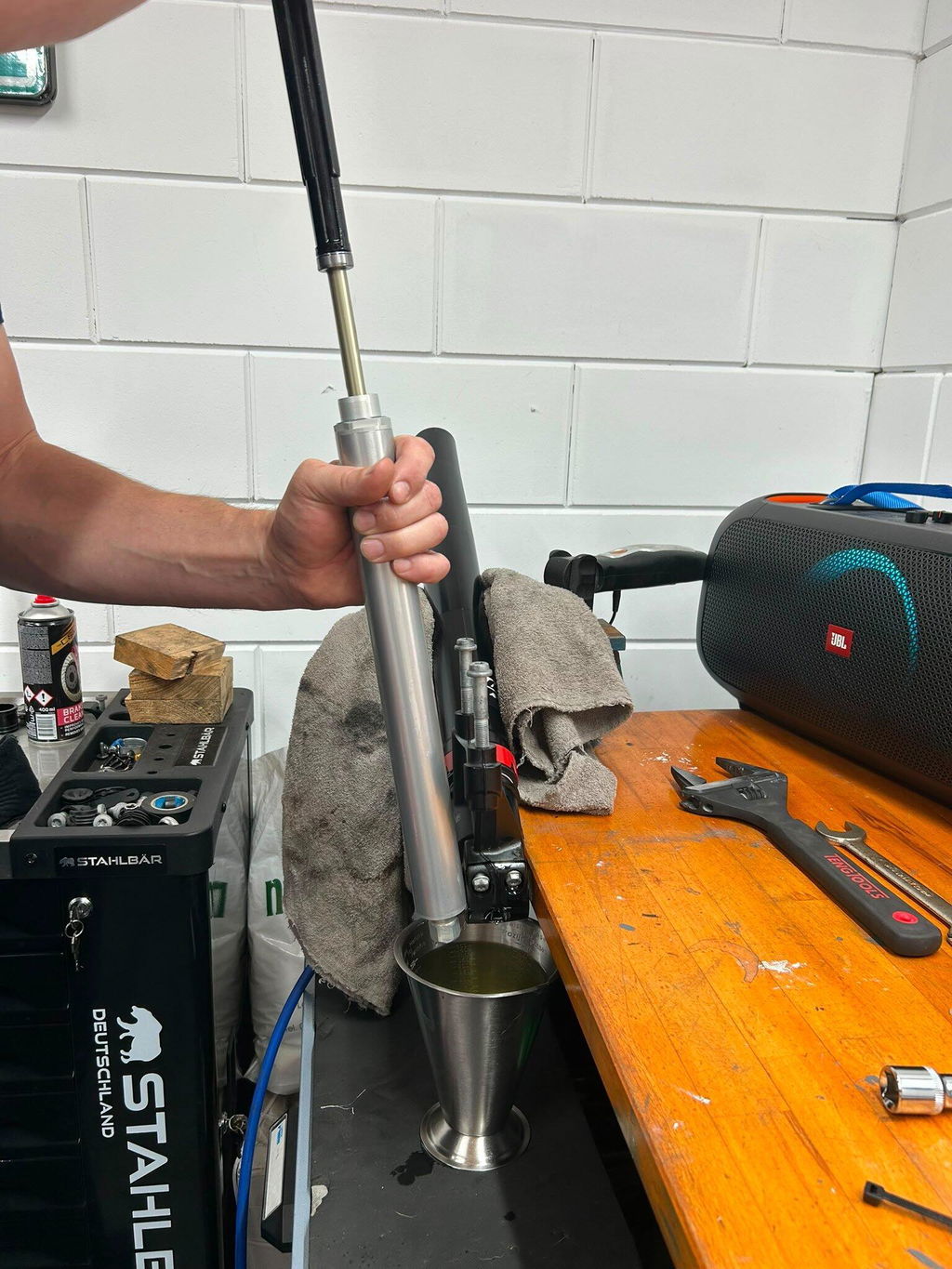
No, it won't. I race my Superduke at the OEM static height, but my custom-built fork cartridges have 20mm more compression stroke than the stock WP setup. Under heavy track braking, the nose of my bike is diving 20mm deeper than a stock Superduke is physically capable of.
Even fully bottomed out at race speeds, there are zero clearance issues. Nothing hits, nothing rubs. Anyone who remembers racing classic Ducatis (like the 916, 955, 996, and 998) knows that dropping the nose usually meant feeding the front tire right into the radiator core. The Superduke is built differently. It has plenty of real estate to handle a lower front end without the drama.
Setup your chassis for comfort first, balance the geometry, and enjoy the ride.
GoGo