The Golden Rule of Chassis Measurement: Getting Your Geometry Right
Partager
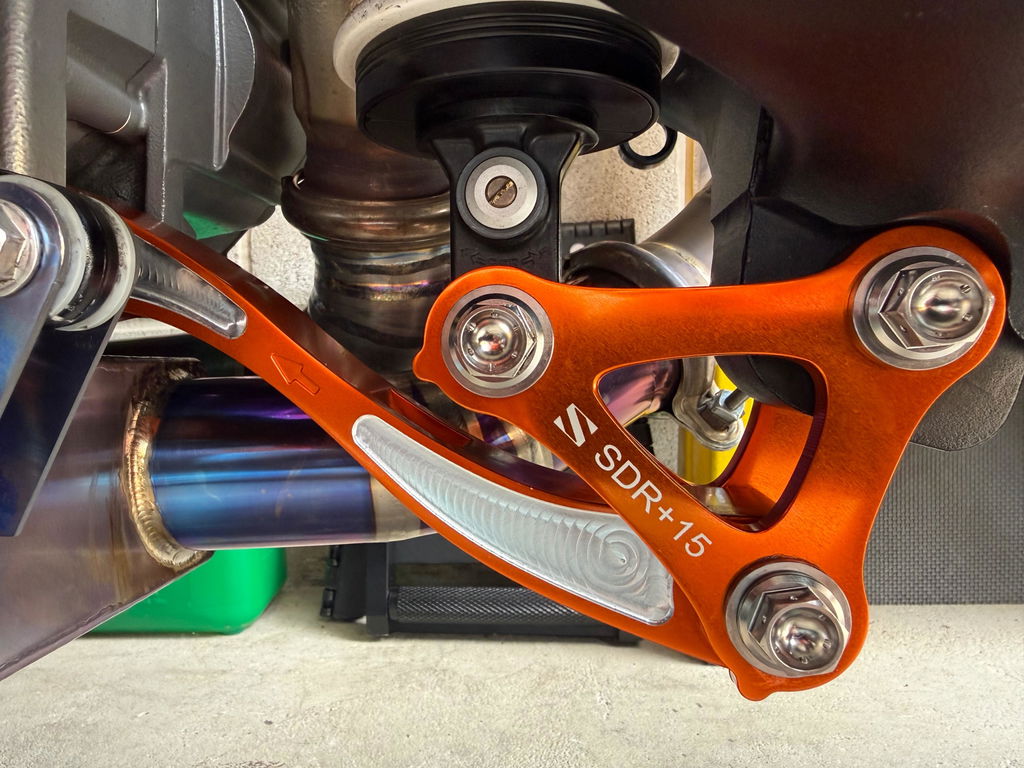
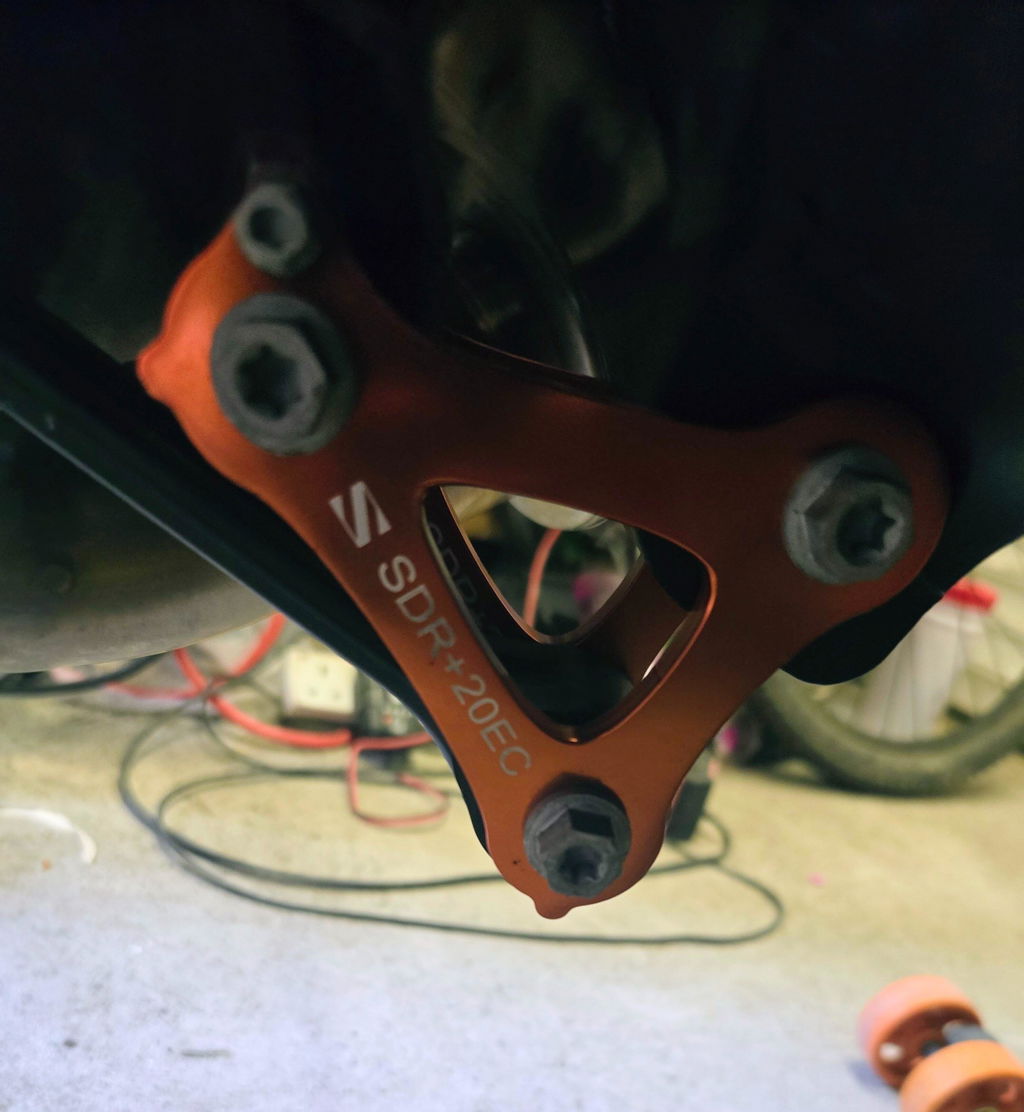
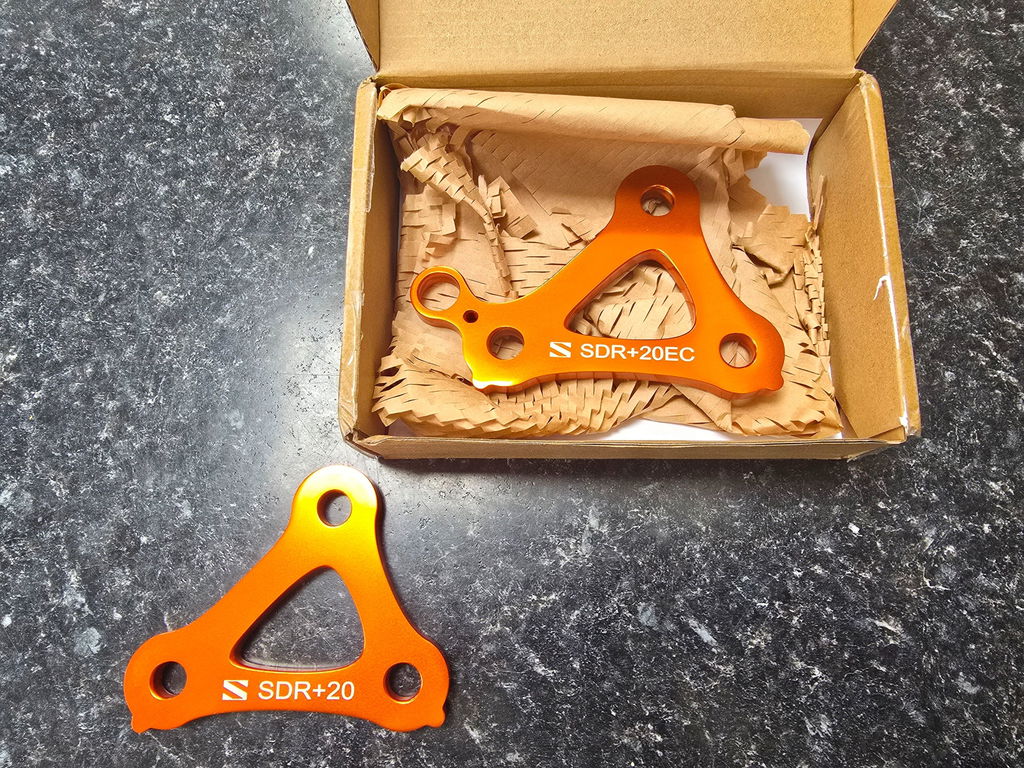
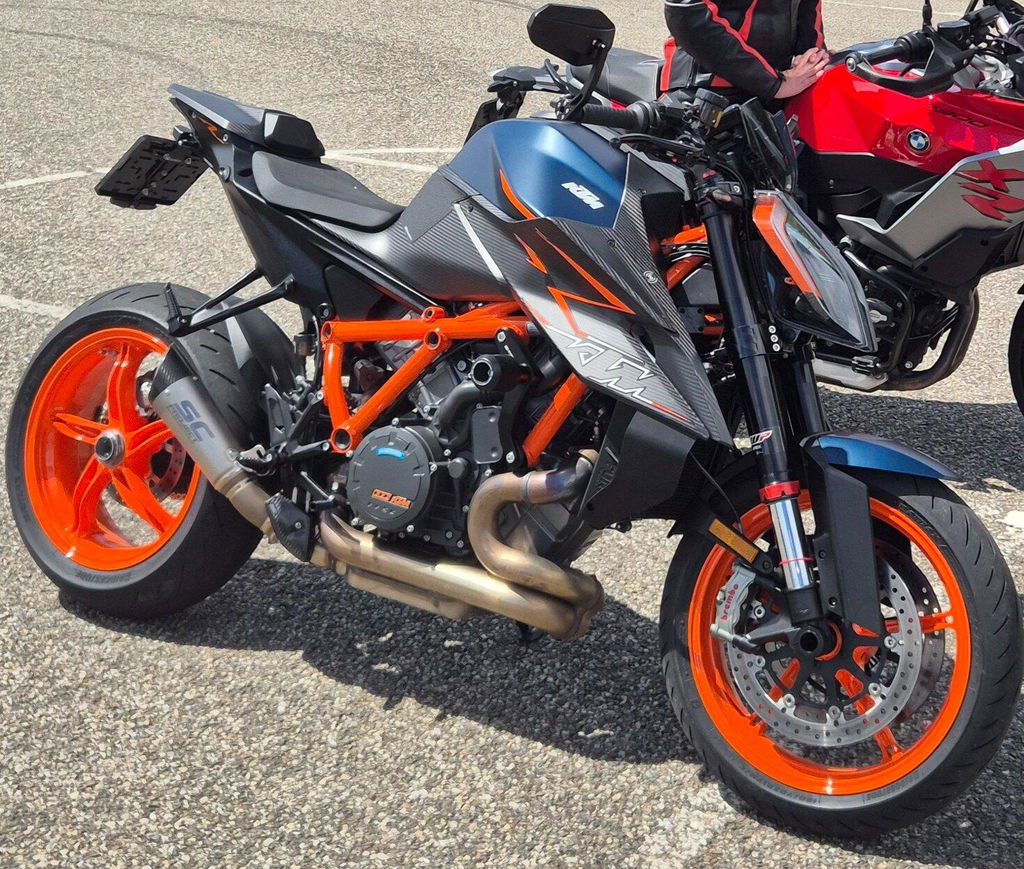
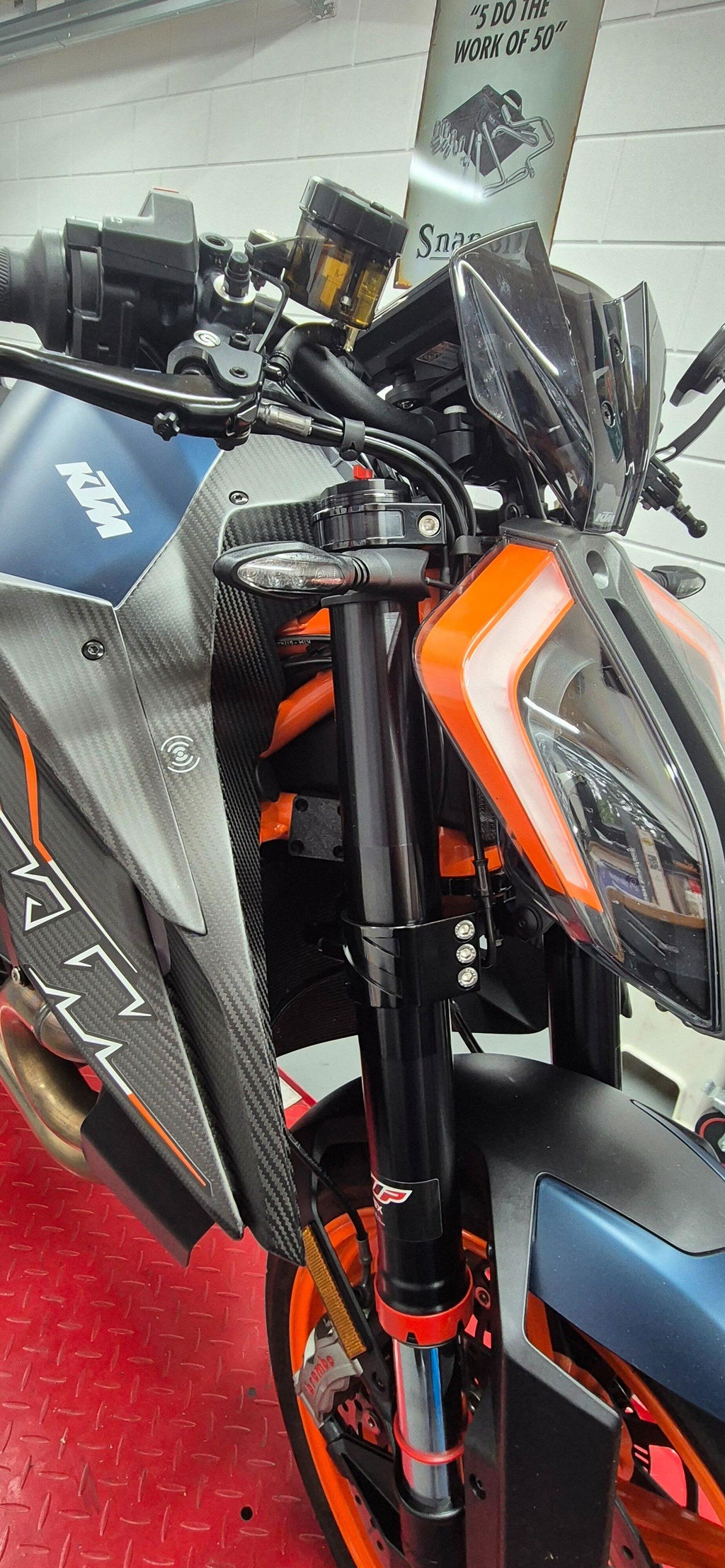
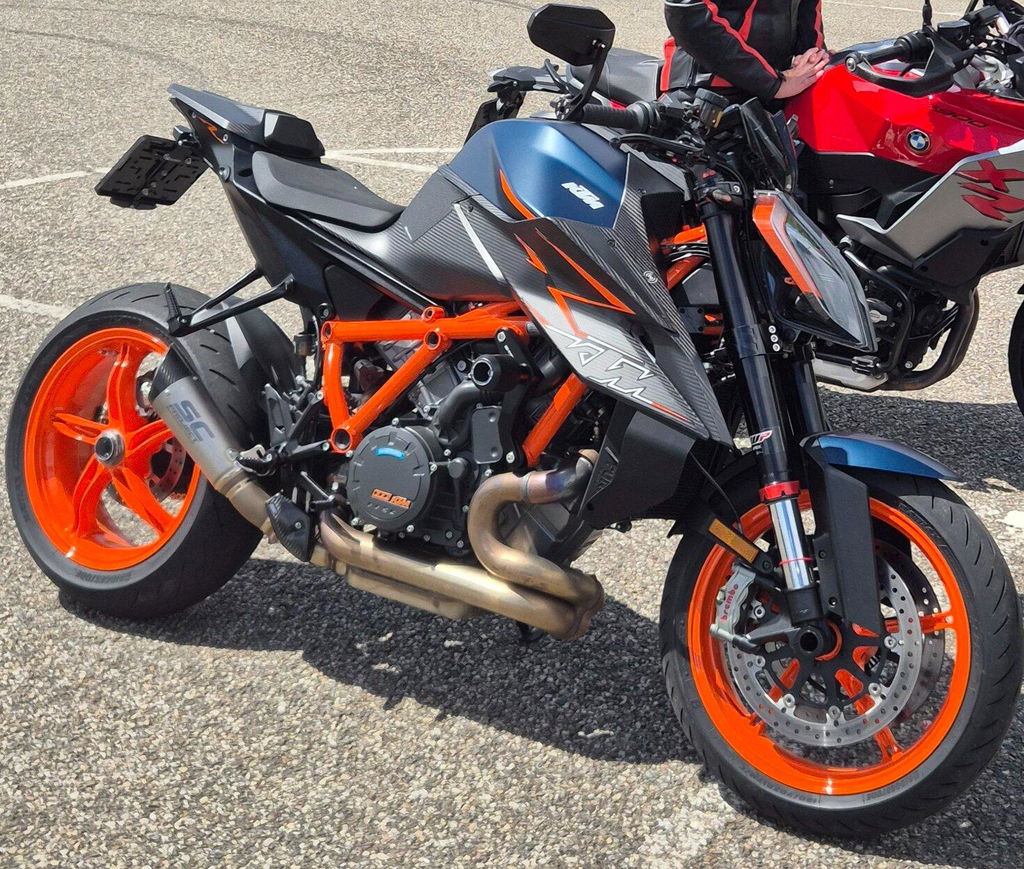
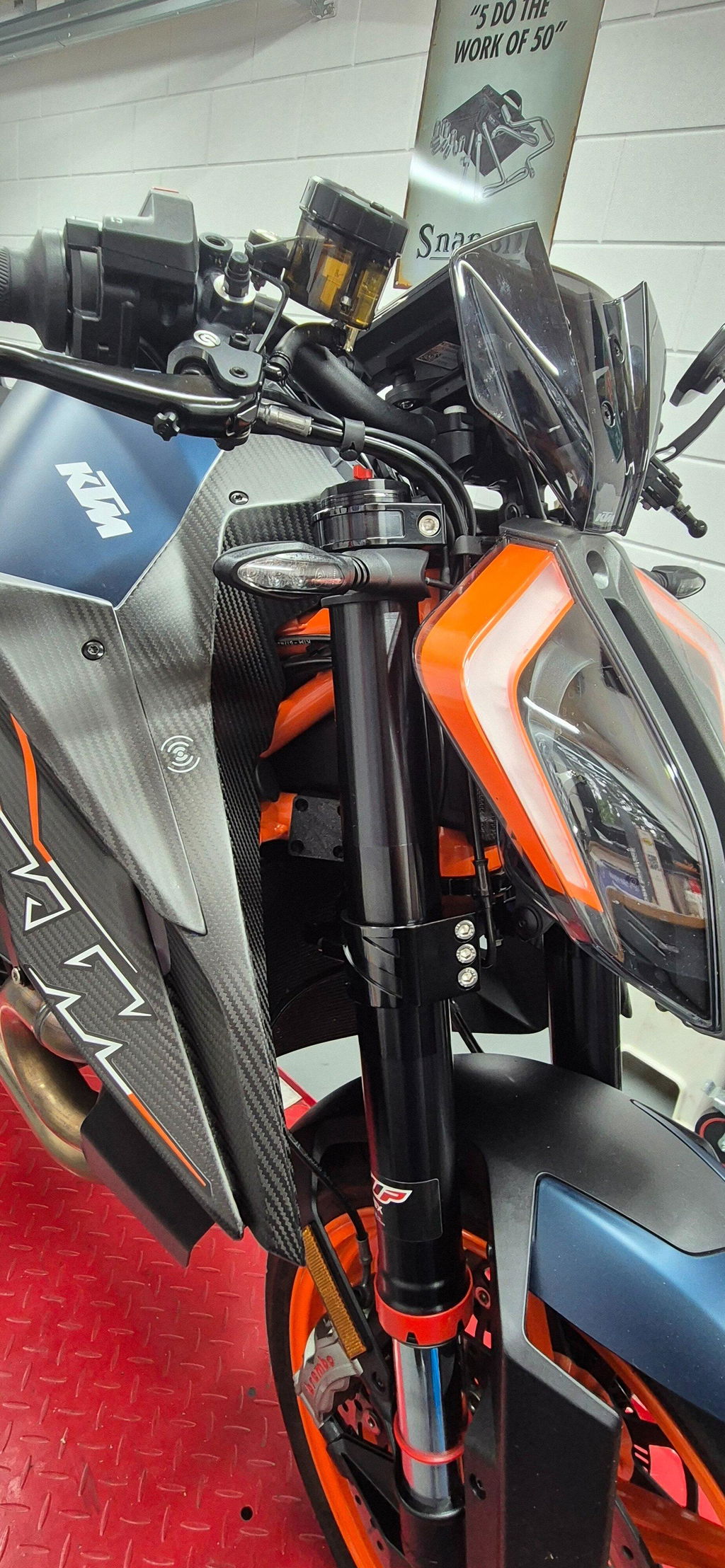
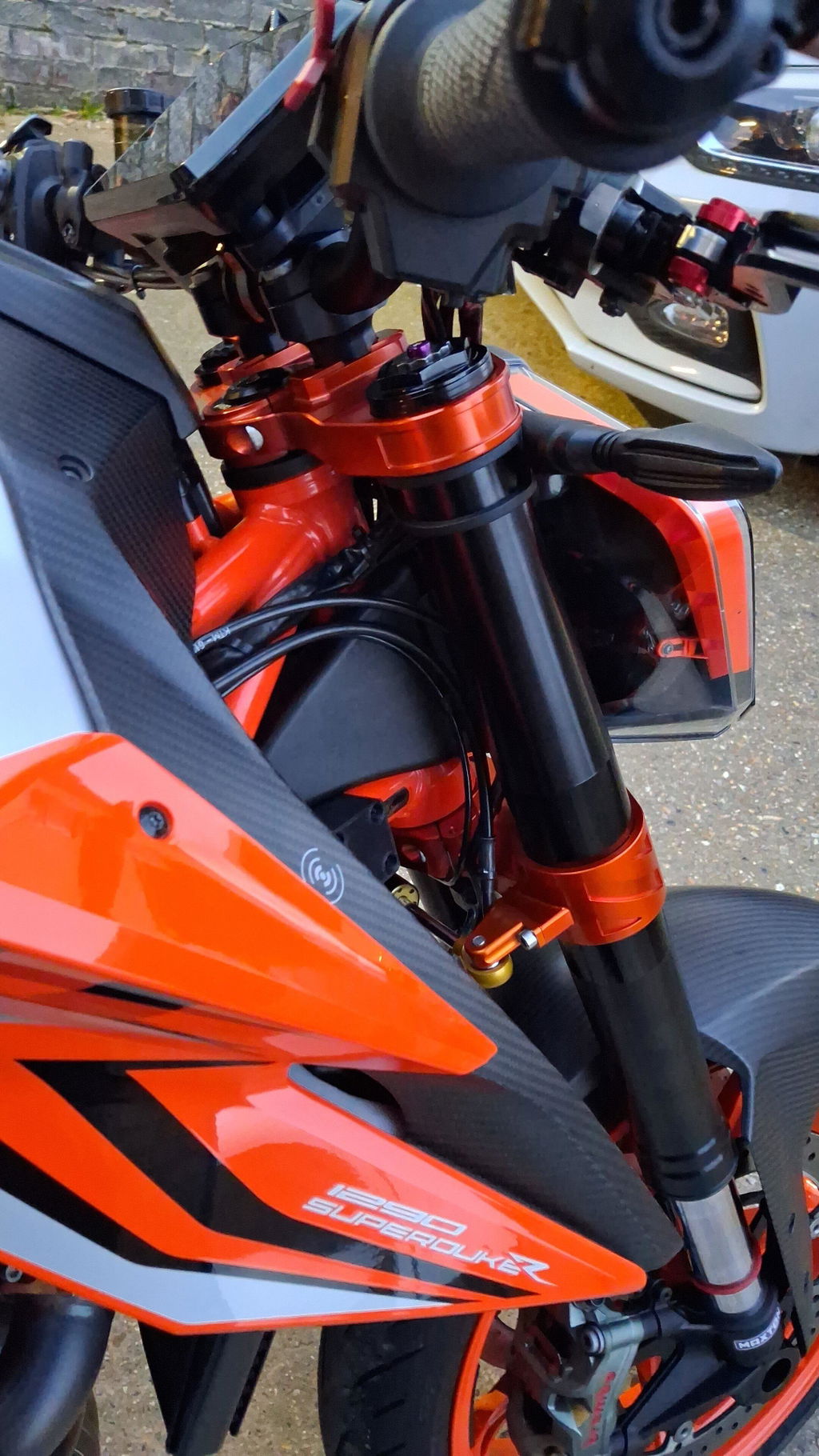
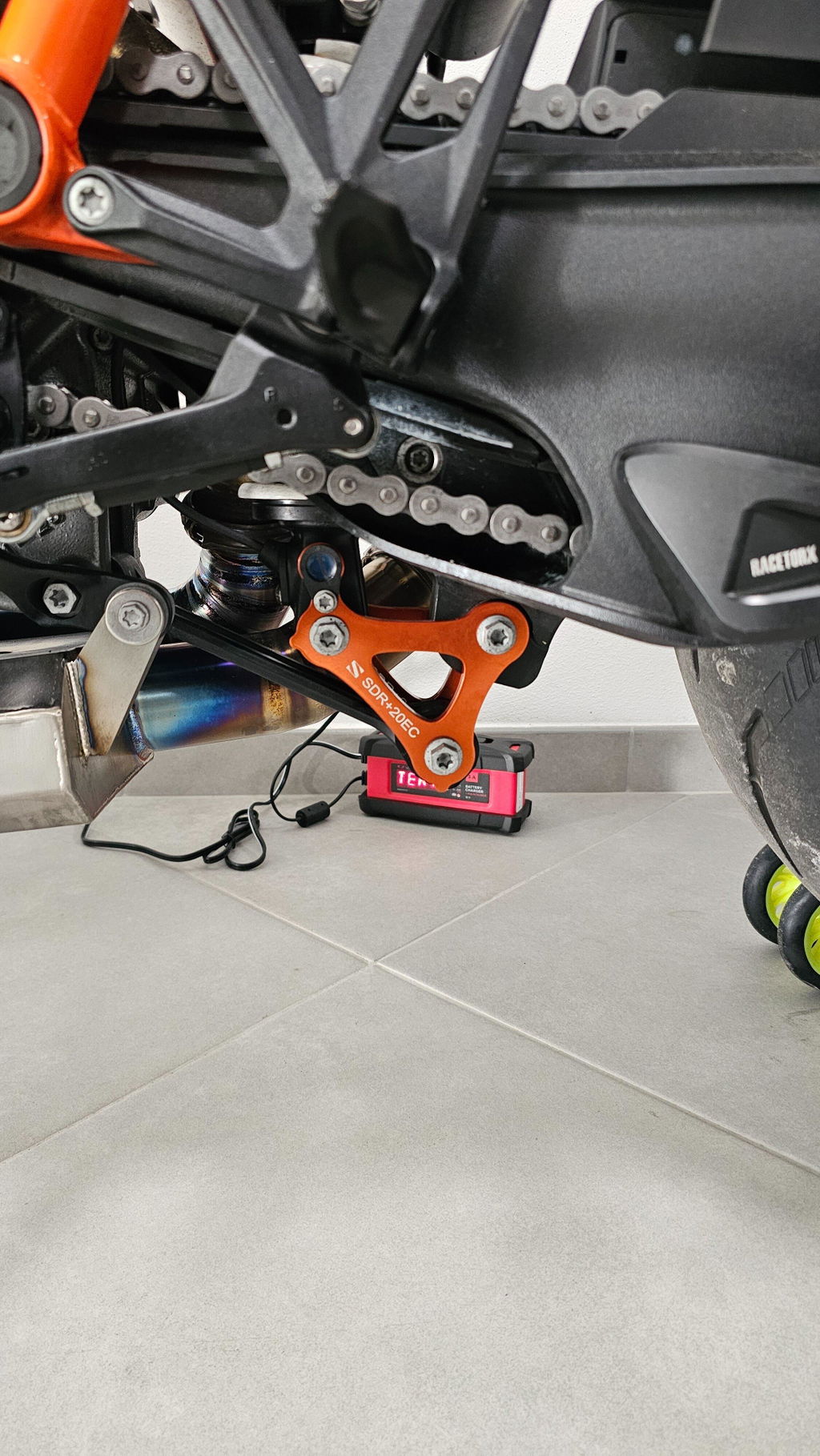
Adjusting your offset with a Superclamp or altering the rear ride height with a Superlink is an incredible way to sharpen your Superduke's handling. However, before you start making changes, you need to establish a perfectly accurate baseline. One of the most frequent errors we see in the paddock is riders taking chassis measurements incorrectly.
The Golden Rule
Whether you are measuring rake, trail, swingarm angles, or overall ride height, there is one rule that cannot be ignored: the suspension must be completely hanging with zero weight on the tires.
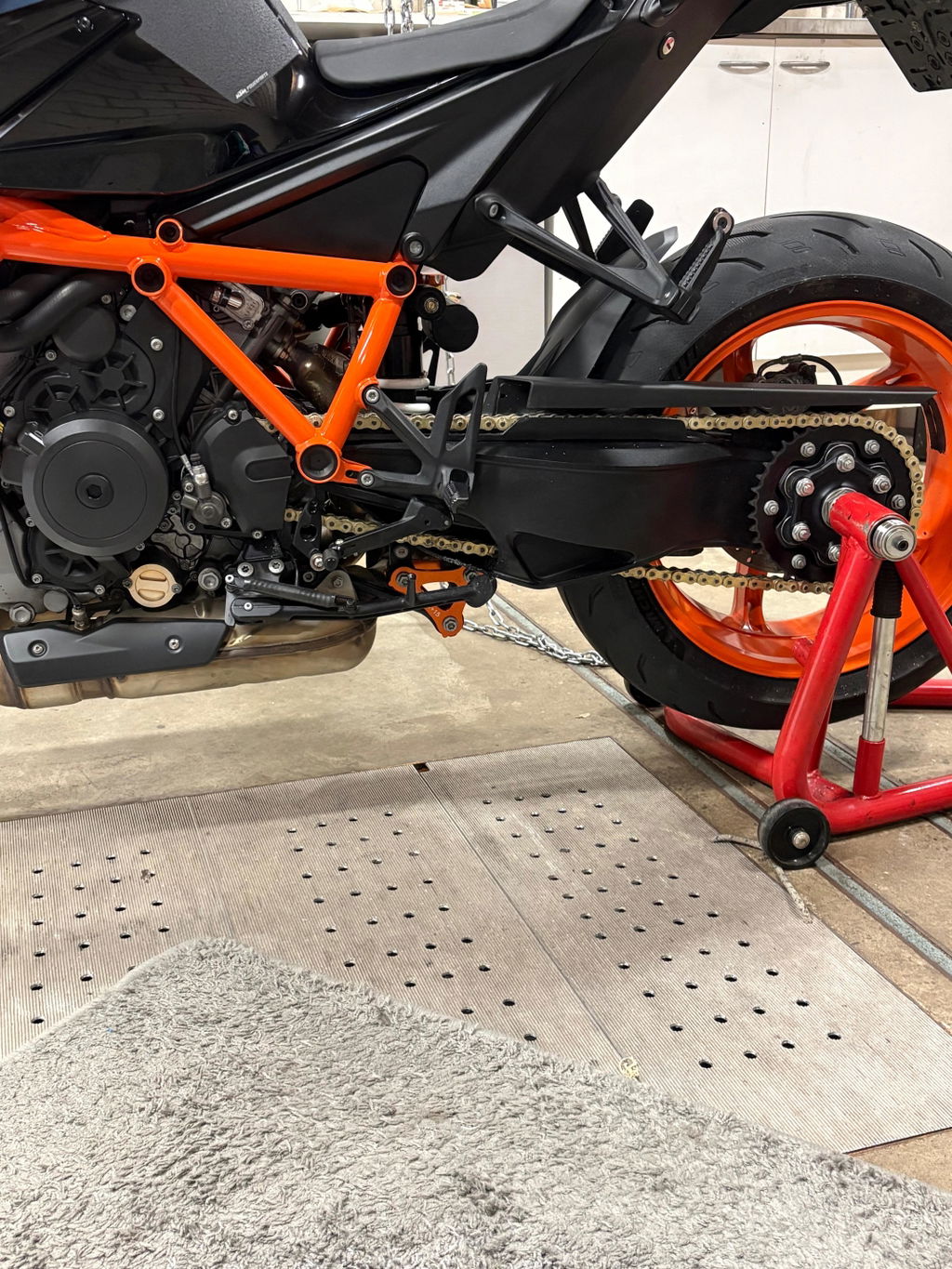
If you try to measure the chassis while the bike is resting on its side stand — or even straight up on standard front and rear paddock stands — the static sag and the weight of the motorcycle itself will compress the suspension. This instantly skews your angles and gives you false data.
How to Set Up for an Accurate Measurement
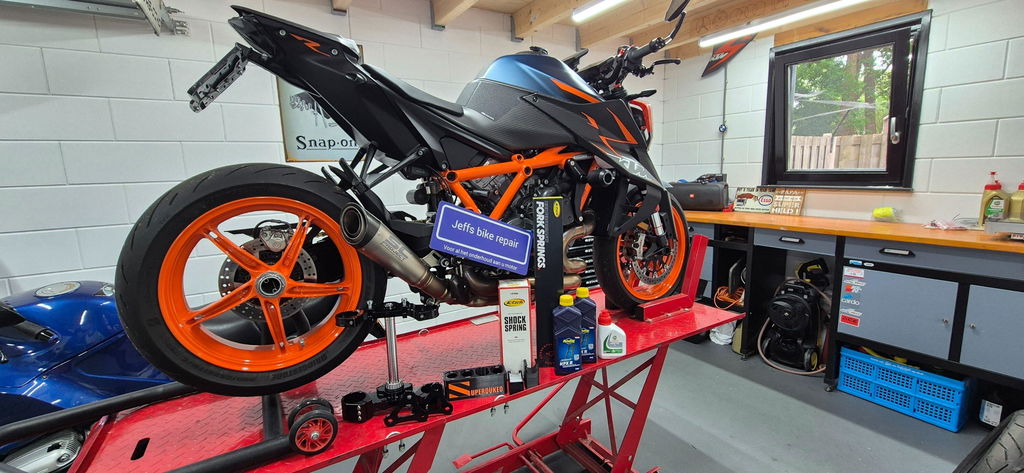
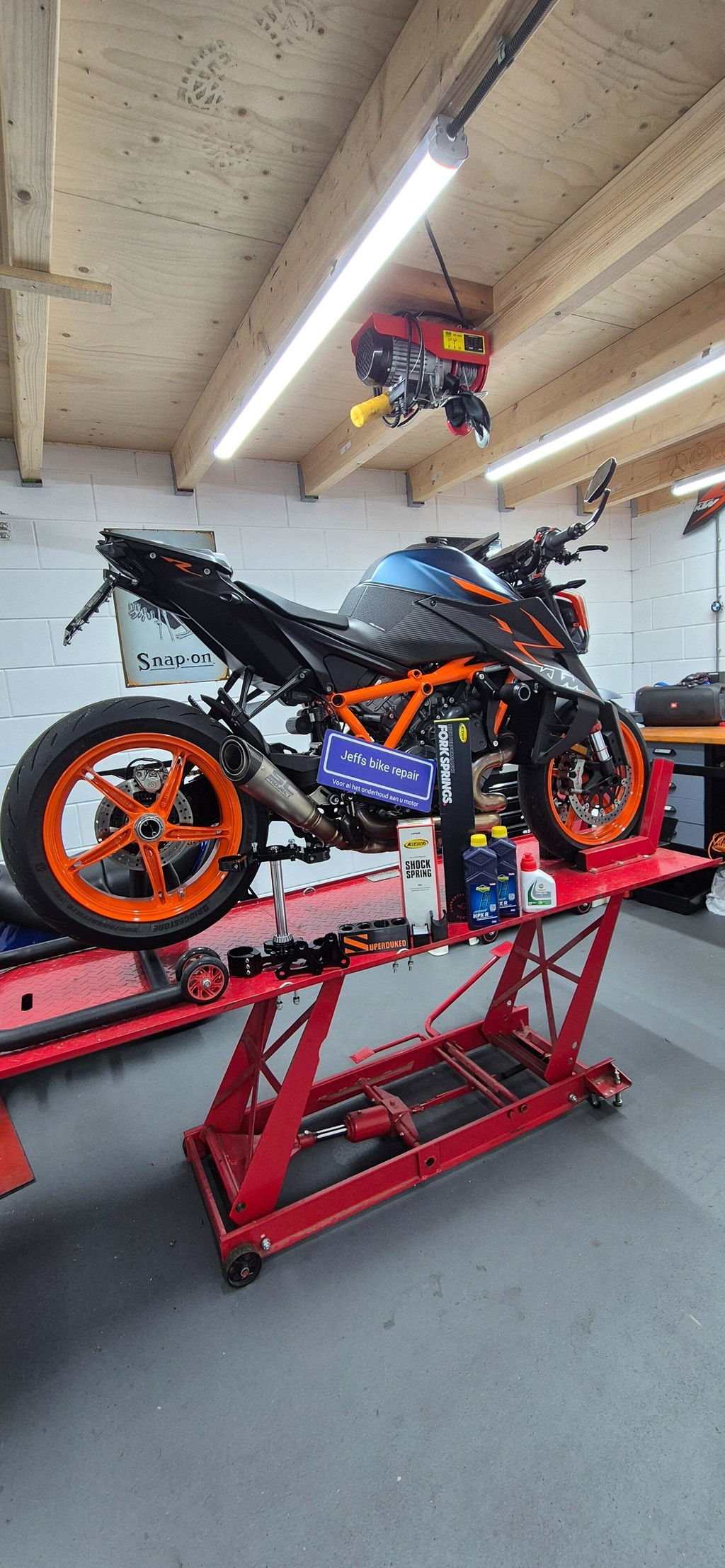
To get true, repeatable chassis measurements, the bike must be supported by the frame or a specialized central stand so both the front and rear wheels are entirely off the ground and the suspension is fully topped out. Only in this position are your angles and ride height numbers actually meaningful.
Always record your zero-weight baseline first. Only then can you calculate exactly how much your new inserts or linkages are altering the geometry — and make confident, informed adjustments from there.
Need a tool built specifically for this job? Our Ride Height & Chassis Tool is designed specifically for the KTM 1290/1390 Superduke and takes the guesswork out of getting accurate, repeatable numbers every time.